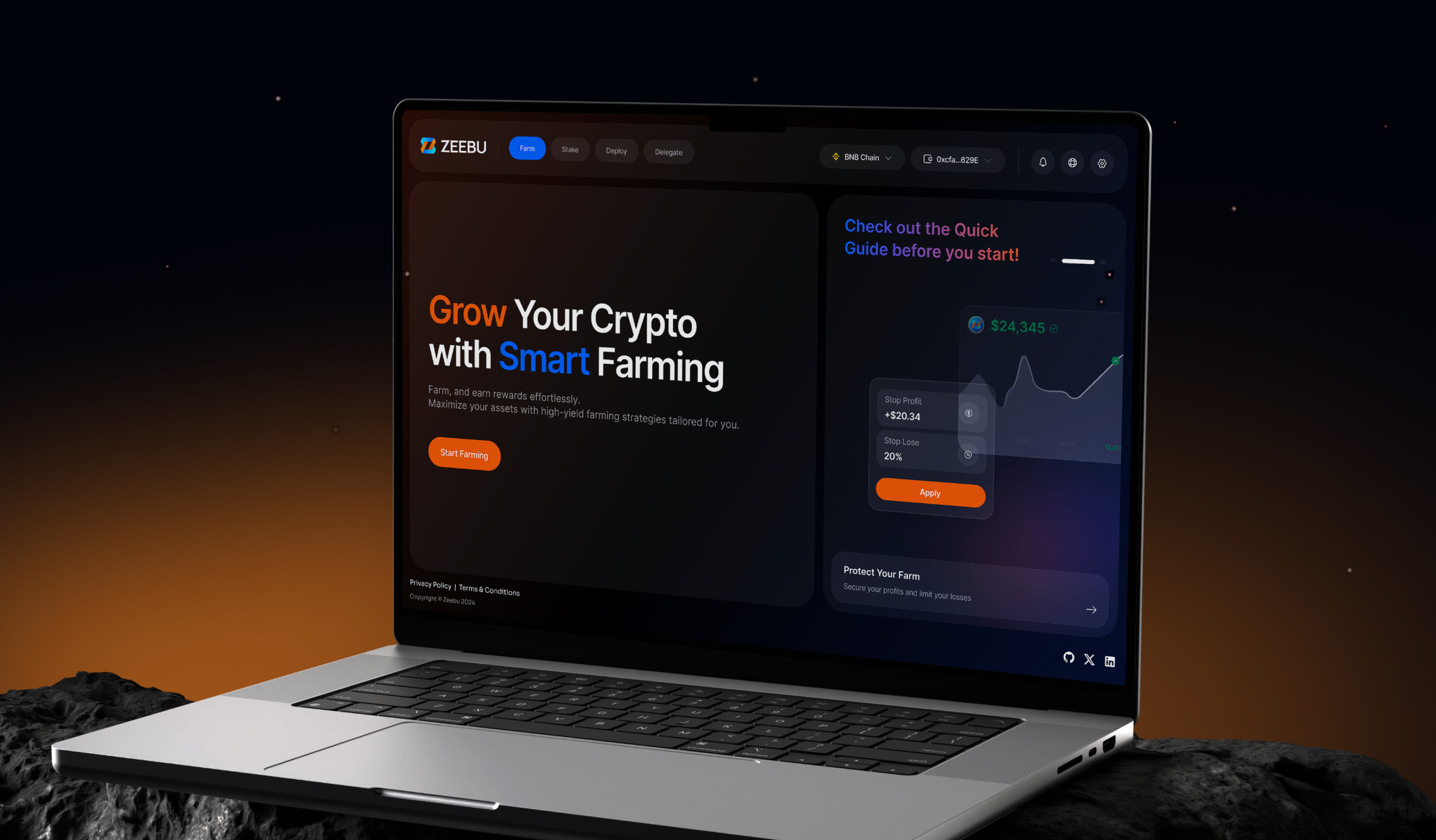
DeFi staking and AirDrop platform UX/UI redesign



About the project
About Zeebu
Zeebu is a programmable, decentralized settlement protocol for global B2B finance, powering over $10 billion in cross-border payments.
Visit ZeebuChallenge
Zeebu came to Merge with an existing brand book, an early UI kit, and a platform that already supported token swaps. The goal was to launch and grow the token ecosystem by expanding the product, while keeping the Zeebu “vibe” and making the overall DeFi UX feel lighter than competitors.
User feedback highlighted blockers, such as:
- First-time users didn’t know where to start.
- Wallet connection felt unintuitive.
- Dashboards were cluttered.
- Rewards and airdrop eligibility were hard to understand.
Zeebu also needed to support two distinct audiences: temporary users focused on ZIP points and airdrops and long-term users who needed fast access to actions like node setup or liquidity provisioning.
What Merge delivered
Our team delivered end-to-end UI/UX design for Zeebu, expanding the platform from swap-only into staking and farming, AirDrop functionality, dashboards/stats, user invites, and the core Deployer and Delegator flows.
We extended the existing UI kit with new components and states, provided interaction/animation assets for implementation, and handed off a complete Figma package. We also designed an MVP for a Zeebu non-custodial wallet as a Chrome extension, aligned to Zeebu’s style.


Work process
We first reviewed Zeebu’s current platform and collected direct user feedback on onboarding, dashboards, rewards, and mobile needs. After persona segmentation, we also studied patterns from other DeFi and Web2 products to understand what users already expect.
We mapped the core platform journeys step by step, starting with the deployer flow: uploading a node/token and tracking participation, allocations, and distribution. Afterward, we designed the delegator journey for staking, liquidity, and farming, reusing the structure and constraints carefully to maintain consistency.
Once the main platform flows were shaped and delivered ahead of schedule, we used the remaining time to design an MVP for a Zeebu non-custodial wallet as a Chrome extension. The wallet followed the same visual direction and usability principles for consistency.
We expanded the UI kit with components, states, and templates needed for staking, airdrops, dashboards, and invites. We also supplied Lottie/GIF-style animation assets developers could implement as needed.
Delivery was completed within the planned six-month engagement and finished early. We delivered fully organized Figma files, components, and flow documentation, and ran walkthroughs across key journeys, screens, and states to ensure smooth implementation.

“We appreciate that Merge is proactive enough, and I like that they are looking for new ideas and solutions. This helps us explore different approaches to design challenges.”
Mrudul Chauhan
VP of Product & Growth at Zeebu


Designing for two types of users in one product
Zeebu needed to serve two very different groups in the same platform. Our team designed a segmented experience so users see a clear starting point and a “next step” after onboarding.
Temporary users are guided to airdrop tracking (eligibility, deadlines, earned ZIP), while long-term users see direct routes to staking, delegation, and liquidity actions.
Deployer flow
The "Deployer" functionality was the technical heavyweight of the project. It required a user to upload code and run a node, a task usually reserved for developers.
Our team spent significant time iterating on this flow to make it accessible. We introduced a dashboard that allows deployers to track how many users are staking on their node and view the distribution of commissions between liquidity providers and delegators.

Delegator journey
We started with Deployer flows first because they define the rules and data the rest of the platform depends on. Delegators, on the other hand, need a simple path to stake, add liquidity, farm, and track returns without reading protocol details.
Once the Deployer logic was clear, we designed Delegator journeys and reused patterns to keep the overall UX consistent.
Reducing friction with on-chain actions
After user feedback revealed gaps in people's understanding of where to start, how to connect a wallet, what a successful transaction looks like, and even the clarity of rewards, we responded with a more guided transaction experience design. Our designers made clearer entry points, progress indicators for pending actions, and success screens that include receipts and transaction hash links for verification.
On the information side, we designed dashboards around core questions: what is staked, what is earning, and what is ready to claim. We also kept screens responsive to support a mobile-friendly staking experience.


In conclusion
Outcome
Our collaboration with Zeebu resulted in a high-UX platform that successfully merges the world of telecom with decentralized finance. The product now competes with major DeFi protocols while remaining accessible to corporate clients. It supports a complete user journey without the friction typically associated with blockchain applications.
We managed to simplify the learning curve for traditional B2B users, providing them with a transparent view of their investments, staking returns, and airdrop eligibility.
The project was delivered fully and ahead of schedule, allowing us to provide additional value through the design of the crypto wallet MVP.
Final words
Special thanks to Zeebu for proactive communication and mutual trust.

What our clients say

“Overall, it’s been a great experience. The team’s been super responsive. The speed of implementing the designs in Figma and the speed of responding to our feedback and implementing changes were really good. Pleased with the amount that we got done.”
Winston Chenery, Senior Director of Marketing at Everyday Speech