We believe design drives business value. That's why our approach goes beyond aesthetics. We focus on creating user experiences that seamlessly support your business goals. Partner with us, and you can finally focus on growing and nurturing your business, knowing the experience of your users will be seamless. Share your vision, and we can take it from here.
Hire usIt’s not enough for a product to just be beautifully designed. Your customers expect clarity, efficiency, and a sense that their time is valued. Most companies face a tipping point where their digital product either evolves into something people genuinely want to use or dissolves into a costly mistake. When you notice high drop-off rates, it’s time to seek help. Invest in a user-first approach, and let every click, swipe, and scroll support your business goals.
We offer a wide range of design services to meet the diverse needs of various companies:
1
Discovery
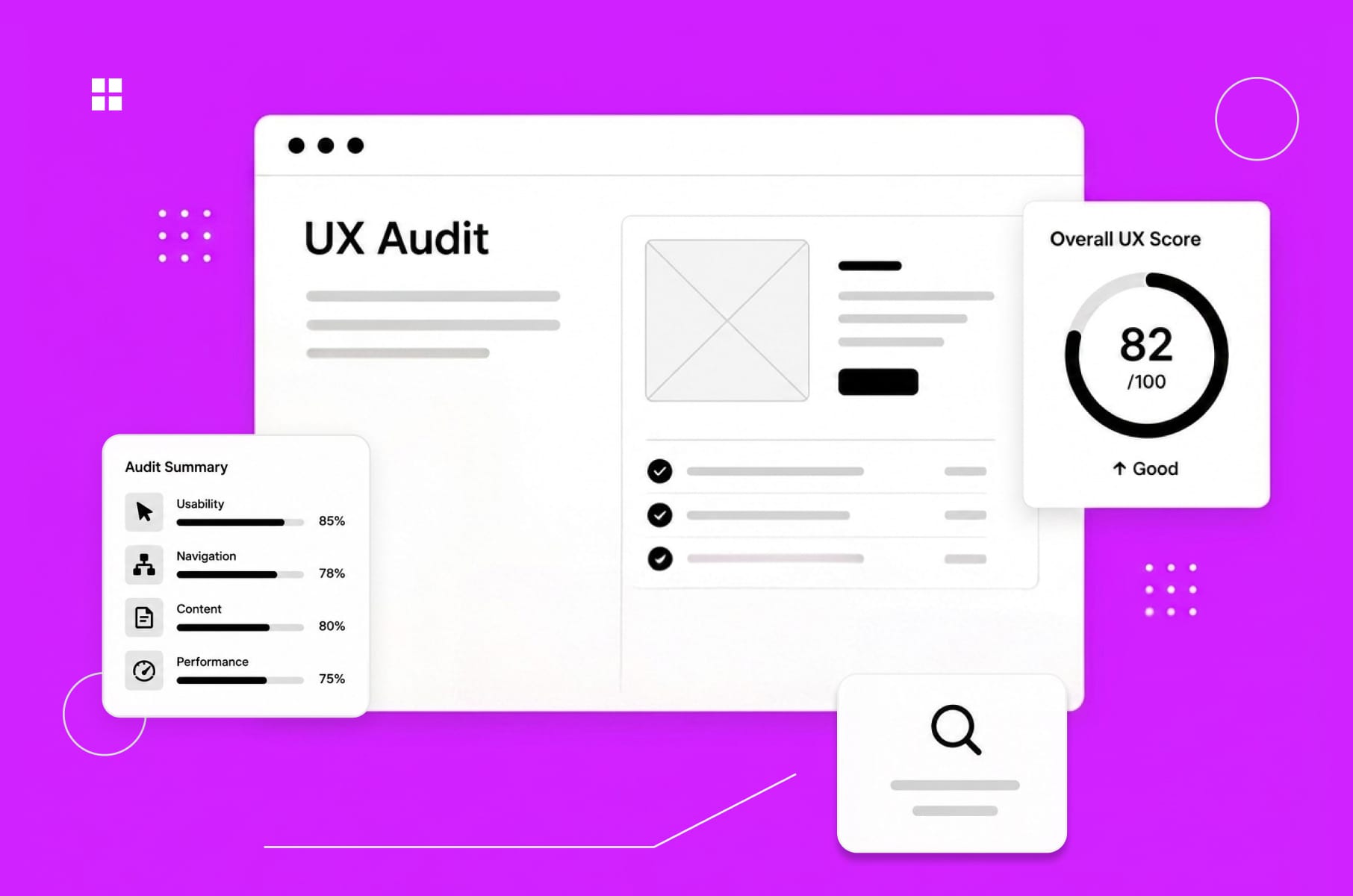
We listen, engage stakeholders, review existing user flows, and conduct UX audits if needed. We identify user pain points and priorities upfront to secure an informed foundation.
2
Concept
With the groundwork laid, we propose a visual direction. We refine the UI and the design system to meet world-class standards and focus on establishing a cohesive look and feel.
3
Design
We create all user flows with a focus on UX. Our goal is to ensure pixel-perfect precision in our designs and make each interaction feel natural, seamless, and meaningful to end users.
4
Validation
Before finalizing, we test, measure, and validate. We work to make sure that all the design outputs cater to the needs of both the business and end-users.
We have a rich background in turning product ideas into user-friendly designs that work. Our experience across multiple industries helps ensure flexibility and depth in our approach.
We prioritize results that are actionable and directly beneficial to your business. Connecting the dots between user needs and tangible business results helps drive measurable impact.
We partner with engineers and stakeholders for accurate and efficient design. It helps us maintain a streamlined process that meets deadlines and upholds quality.
Needs change, and we’re ready. We offer a blend of adaptability and optimized skill utilization to guarantee a seamless flow of productivity.
We ensure the best user experience from the start through user testing, deep-use research, and analysis. We also prioritize aesthetic longevity and usability over fleeting trends.
Prioritizing transparency and alignment, we keep you looped in at every stage, so you can feel confident about your product’s trajectory.
At Merge, we've worked on various digital projects in various industries that highlight our branding expertise. Here are some of the best examples from our portfolio.
Salon Tonight
Salon Tonight is a beauty booking platform that connects users with local services. Their website needed a fresh look and better functionality to improve UX and increase conversions. We provided UX/UI design, restructuring the site, crafting a new visual style, and making it mobile-friendly. As a result, the platform’s navigation, aesthetics, and overall usability vastly improved.
View caseProfessional UI/UX design services help design digital products and services with an emphasis on usability and customer experience. UI services are hardwired to make software, applications, devices, digital appliances, or websites visually appealing and improve customer satisfaction. Turning to UI/UX design services is a must for any professional company with digital solutions that treats its customers with respect. Moreover, UI/UX can bring that needed oomph to your business. The industry is full of look-alikes. Make sure your product stands out by working with a user experience agency that understands your customers' needs.
Usually, people don’t really complement UI/UX design unless they're also in the design field. When it’s right, UX design just works. Only when there’s something wrong with the UX design will people start to notice even the slightest inconveniences. And then it straight away distracts your existing and potential customers from your product or app. Then they only remember the bad experience. That’s why it’s crucial to include UI/UX when creating an application or a digital website. You show users your professionalism and willingness to go the extra mile to make them happy. And your product only wins from it as it becomes the main star of your business. Additionally, UI and UX make your product or app more intuitive so more people can use it.
The “UX” stands for “user experience,” while the “UI” stands for “user interface” and is a subset of UX. They are inseparable, but while their main goal is the same—to make the experience of using your product as seamless as possible—they use slightly different approaches. Overall, UX provides structure and puts people first while doing it. UX designers build a so-called foundation and functionality for the future project’s design, and to do that, they first gather knowledge by researching their target customers. UI, on the other hand, is all about the details. UI designers take the prototype and add layers made with essential elements - buttons, texts, animations, lists, menus, interactive components, icons, bars, etc. UI design experts choose colors that best represent your company’s brand. The final step of UI is to make sure everything is responsive.
We primarily calculate the project's cost by your product’s complexity and the number of customizations and modifications needed for your mobile app design. The total work done on the project is measured by specific business tangibles previously discussed and agreed on with the client. Each stage, from research to the final UI tweaks, will have its own deliverables, and based on your unique requirements, we estimate the prices for each of them. The overall cost will also depend on the designer’s rate, the team’s composition (meaning the more specialists we need to involve, the higher the price would be), the team’s location, and the technology involved in creating the user content. Not to mention the scope of the work. For example, design from scratch will obviously be more expensive than a redesign solution. We can say that, on average, the design can cost from $5,000 to $100,000 and more.
While there isn’t a universal standard for design processes, nearly all of them, especially UI/UX design, follow the most logical outline and course of action to ensure commendable quality of work. We are no exception. The first step is to explore through discovery and planning. We introduce the project to the whole team, define goals, and talk to the stakeholders to try to draw out as many details as possible. Then, we create the initial work plan. After that comes the research stage, where we use different research tactics to study the users and change our tactics according to our findings. We test the early mockups, make more changes, and move to the conceptual and then detailed design solution. That includes information architecture, low-fidelity wireframes, UI design, and then finally, high-fidelity interactive prototypes and design systems. At last, comes deployment, where usability testing takes place, then front-end, QA, and then your project comes to life. All that we mention above is oversimplified and is meant to give you a clearer understanding of the process without delving too deeply into how UX design works.
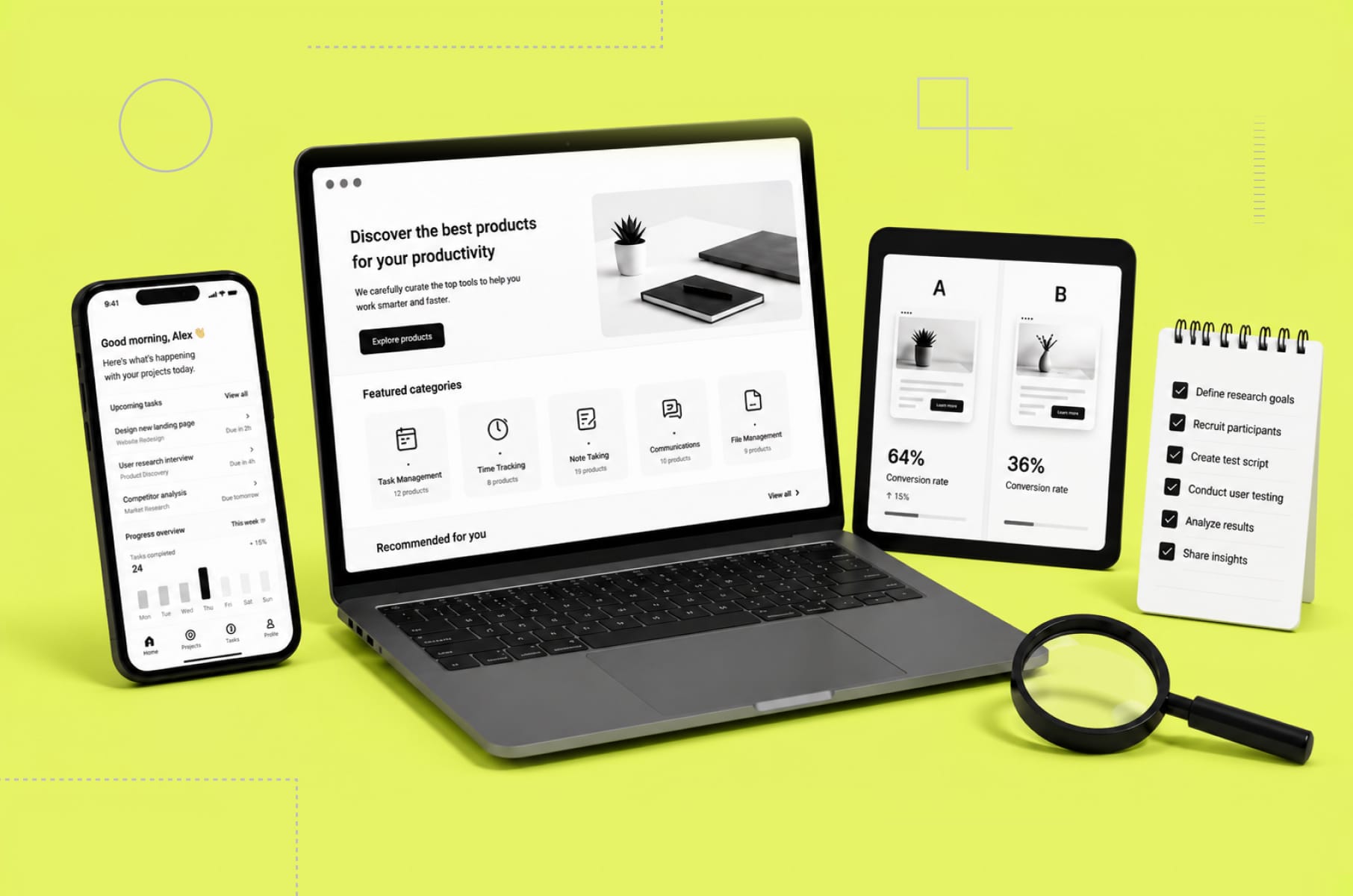
The main types of standard and user research we do are the following: • Stakeholder interviews • Online or in-person user interviews and surveys (questionnaires, focus groups, ethnographic studies, etc.) • Business, market, and competitor analysis • UX audit if we’re doing the redesign • Quantitative research based on open-source statistics • Quantitative research - A/B testing, analytics, card sorting, tree testing, eye-tracking, etc. • Usability testing
As we’ve established in previous questions, every element that influences the project’s cost can also directly affect the timeline for creating a UX design. The main factors remain the project’s scope and complexity (for example, making an enterprise-level product from scratch is a lengthy process), the platform, the technology stack, and the number of iterations. From the client’s side, the project's duration may be influenced by budget and feedback throughout the said project. Typically, a UI/UX design process can last a minimum of 1 month for something simpler and up to 6 months for average-sized projects. Large enterprise-grade solutions can require up to one year of work by a design services company.