0
Table of Contents
How to write website copy and why using AI for website copy ruins your brand strategy
Do this, or you might end up with generic text trained on everyone else's content.
Website copy is that text on your site that turns visitors into customers. It includes headlines, subheadings, body paragraphs, calls to action, and microcopy on every page of your site (home, pricing, blog, etc.).
If you are a founder or product leader about to write (or rewrite) your site's copy, this article walks you through exactly how to do it and explains why letting AI handle it will cost your brand more than it saves.
Here is the short answer for anyone in a rush:
Writing website copy that converts requires these three things:
- Knowing your audience's specific problems;
- Writing in a voice that only your brand owns;
- Structuring every page around one clear action.
AI tools cannot do this the right way because they still produce generic text trained on everyone else's content, which means your web copy ends up sounding like every competitor who used the same tool.
The rest of this article explains how to get it right, based on our own experience as a web design agency.
What is website copy and why does it deserve its own strategy?
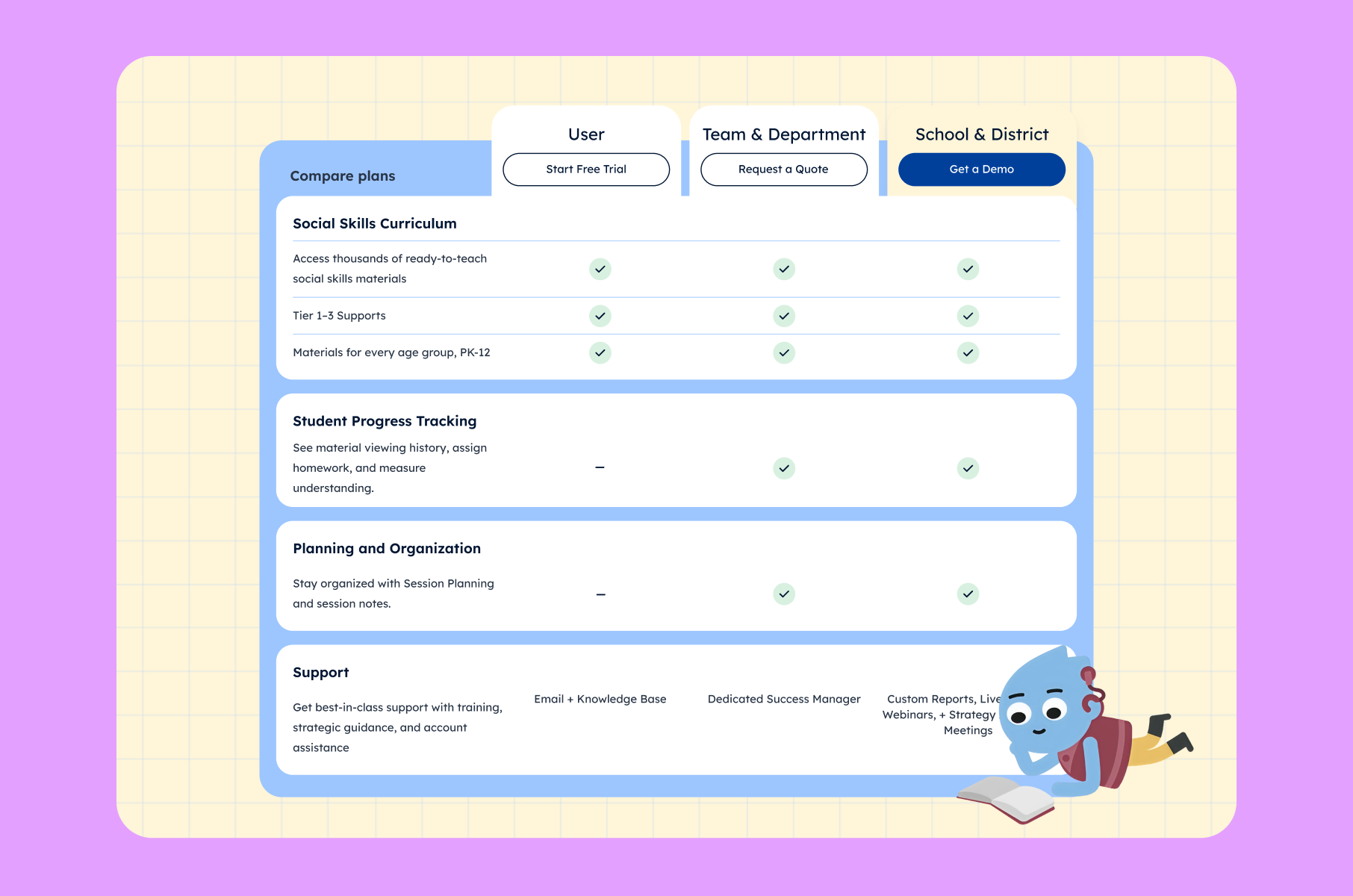
What is website copy? It is every word on your website that serves a commercial purpose. Blog posts, help docs, and knowledge bases are content. Website copy is different. It lives on your homepage, product pages, about page, landing pages, and pricing page. Its main duty is to persuade.
Your web copy is part of your sales team.
A good sales team knows the prospect's problems, speaks their language, and knows when to ask for the close. A bad copy for website pages talks only about the company, uses vague language, and buries the call to action beneath three paragraphs of boring background info.
You can see the difference between these two approaches directly in revenue. Landing pages written at a 5th- to 7th-grade reading level convert at 11.1%. That is more than double the 5.3% rate of pages written at a professional level. That gap exists because clear, direct website copy respects how people actually read online.
Nielsen Norman Group's research confirms that 79% of users scan web pages rather than read word by word. Your web copy has seconds to land its point before the visitor moves on.
This is why website copy deserves its own strategy, separate from your blog calendar and separate from your social media voice.
The stakes on each page are commercial.
How to write website copy that converts
The guides ranking for "how to write website copy" tend to give you a list of tips without a process. Tips are fine if you already know what you are doing. If you are writing copy for a website for the first time or rebuilding your site's messaging from scratch, you need a sequence. Here is one that works.
Step 1: Define your brand voice
If you write website copy without a defined brand voice, chances are you will make dozens of small decisions that contradict each other, and the result will feel inconsistent to visitors, even if they cannot explain why.
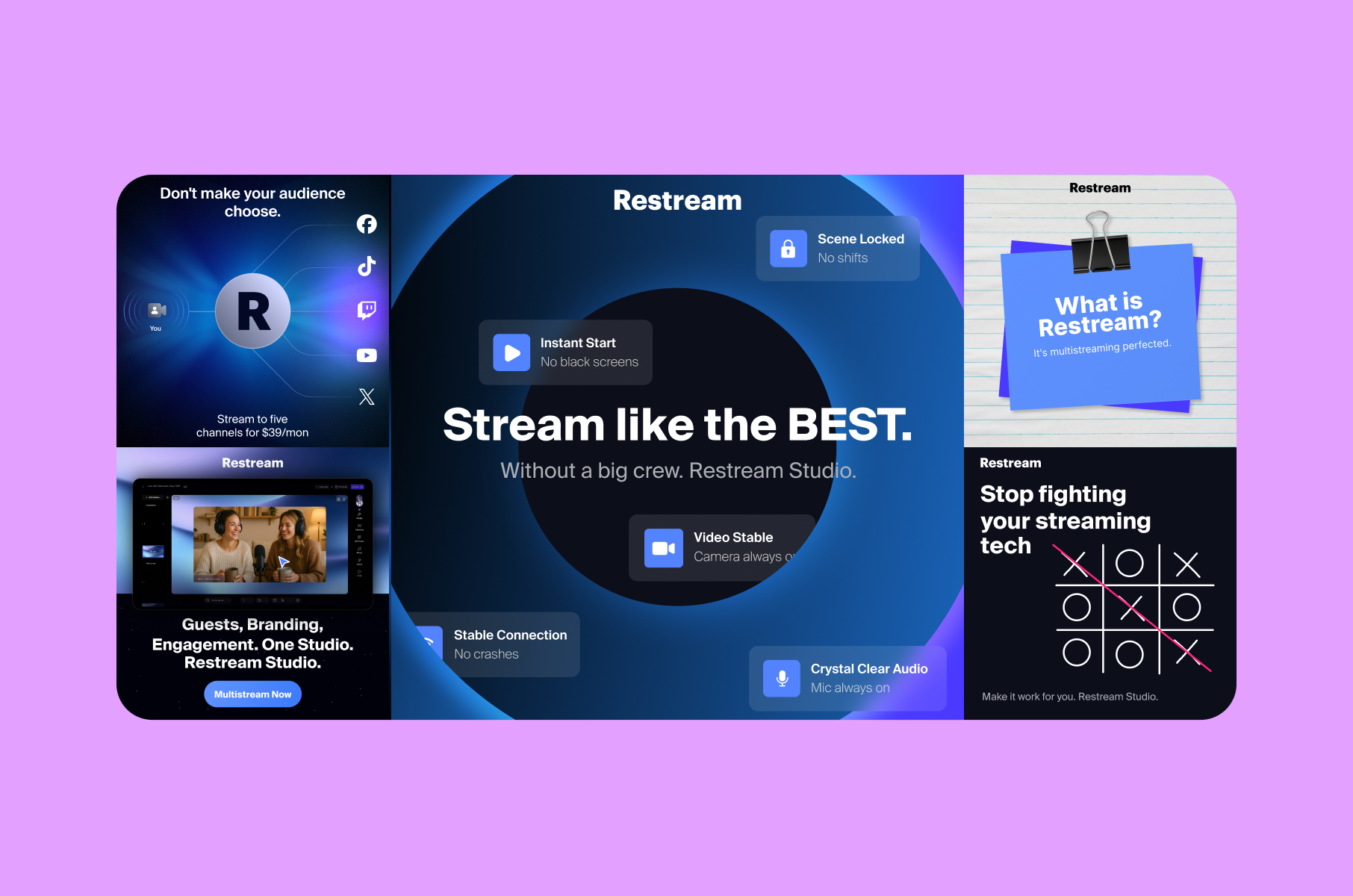
Your brand voice is the consistent personality expressed through your word choices, sentence structure, and tone. It should reflect three things: who your company is, who your customers are, and what makes you different from competitors selling similar products.
Write a one-page brand voice document before you open a blank page. Include three to five voice attributes (for example: "direct, technical, slightly irreverent") with examples of what each attribute sounds like in practice. Then include anti-examples of what your voice is not. This document becomes the standard every piece of website copy gets measured against.
For example, if you are a startup that needs a B2B SaaS branding service, your brand voice document will often emerge from the broader brand strategy engagement. But even without outside help, you can build one by studying how your best salespeople talk to prospects. The way your team naturally explains what you do in conversation is almost always closer to your real voice than whatever corporate language ends up on the website.
Step 2: Select a goal and a reader for every page
Each page on your site should answer two questions before you write anything:
- What is the one action I want the reader to take?
- Who specifically is reading this page?
Your homepage serves a different reader than your pricing page. Someone on your homepage may not know what you do yet. Someone on your pricing page already understands the product and wants to know if it fits their budget.
Writing copy for websites fails when every page uses the same level of explanation and the same calls-to-action regardless of where the reader is in their decision.
Here’s an example of a simple spreadsheet you can map out before you start writing:
Page name | Primary reader | What they already know | One desired action |
Homepage | First-time visitor | Nothing about us | Understand what we do, click to learn more |
Product page | Evaluating buyer | General category awareness | Understand specific value, start a trial |
Pricing page | Ready-to-buy prospect | Knows the product, comparing options | Choose a plan, enter payment |
About page | Investor or partner | Heard about us, wants context | Understand team and credibility, reach out |
This map prevents the most common mistake in writing web copy: writing every page as if the reader had just arrived for the first time.
Step 3: Lead with the outcome
Most website copy reads like a spec sheet. "Our platform offers real-time analytics, customizable dashboards, and AI-powered insights." That sentence tells the reader what the product has. It says nothing about what the product does for them.
Better web copy has it the other way around:
- Instead of "real-time analytics," write "see which campaigns are working before you waste another dollar on the ones that aren't."
- Instead of "customizable dashboards," write "build the exact view your team needs in five minutes, no developer required."
The pattern is simple: take every feature and ask "so what?" until you reach the outcome the reader actually cares about. Features describe your product. Outcomes describe your reader's life after using your product. Website copy best practices consistently point to outcome-first writing as the single highest-impact change most sites can make.
This principle applies everywhere, including on your SaaS product landing pages. For example, we recently reviewed common SaaS landing page mistakes and found that feature-first headlines were the most frequent offenders. The headline of every landing page should describe a result, not a capability.
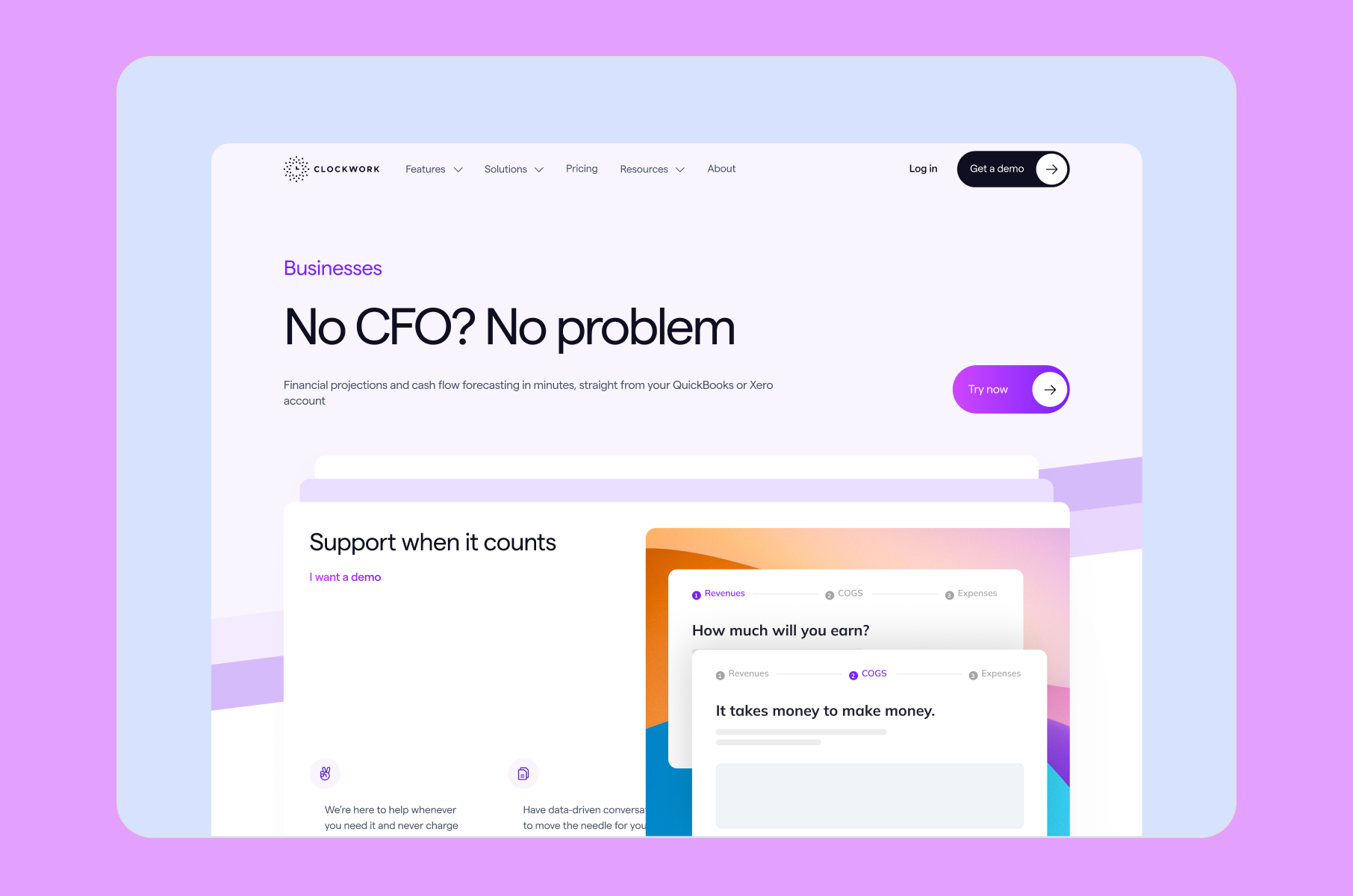
Step 4: Use the PAS framework
How to write copy for a website that needs to convince skeptical buyers?
Use Problem-Agitation-Solution (PAS). This framework works because it mirrors how people actually make purchasing decisions.
Problem: Name the specific pain the reader experiences. Not that vague industry problem, but the thing that makes their days frustrating. "Your team spends three hours every week manually updating reports that are already outdated by the time they are finished."
Agitation: Show what happens if the problem continues. "That is 150 hours a year your team spends on data entry instead of the strategic work you hired them for. And the numbers in those reports? Stale before anyone reads them."
Solution: Present your product as the logical fix. "Our platform pulls data from every source into a single dashboard that updates itself. Your team gets accurate numbers without touching a spreadsheet."
PAS works because it starts where the reader is (frustrated) rather than where you want them to end up (buying). This framework is particularly effective on service pages and landing pages where the reader needs to feel understood before they will trust your solution.
Step 5: Write for scanners first
Depending on the mood or whatever you are reading, you are either a scanner or a reader. Most of us are rather scan than read web pages, so your website copy needs to work for both yet focus on scanning first.
A scanner should be able to read only your headlines, subheadings, bold text, and bullet points and still understand your core message. A reader who goes line by line should get a richer, more persuasive version of the same argument.
Here are web copywriting tips for making your copy scannable:
- Front-load every paragraph. Put your main point in the first sentence. The sentences that follow should support it, not build up to it.
- Use headings that carry meaning. "Our Approach" tells the scanner nothing. "We Build Your MVP in 12 Weeks" tells them exactly what to expect.
- Keep paragraphs to three or four lines on a desktop screen. Long blocks of text signal effort to the scanner's brain, and effort means they skip to the next section.
- Bold your key claims. Not every other word, but the one sentence per section that carries the core argument.
Strong scannable structure does not mean dumbed-down writing. It means organized writing. The best copy respects the reader's time.
Step 6: Write CTAs that describe what happens next
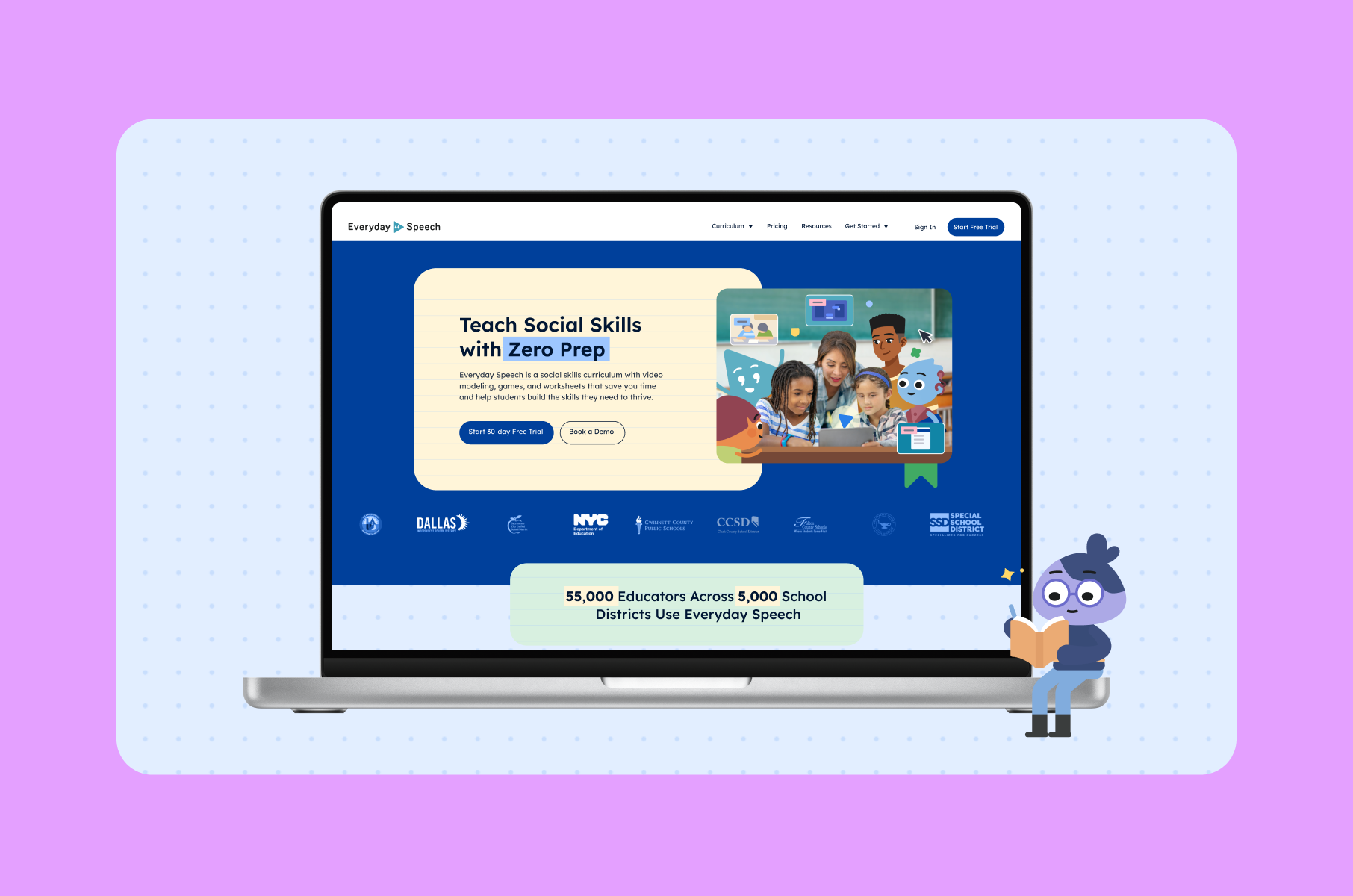
"Learn More." "Get Started." "Submit."
These calls-to-action are everywhere because they are safe. They are also vague enough to create hesitation. The reader does not know what will happen after they click.
Better CTAs describe the outcome: "See pricing plans," "Start your free 14-day trial," "Book a 15-minute demo call."
Each of these tells the reader exactly what clicking that button will do.
Match your CTA to the page's position in the buyer's journey:
- Homepage CTAs should be lower commitment ("See how it works").
- Pricing page CTAs should be higher commitment ("Start building today").
A CTA that asks for too much too early drives people away, and the one that asks for too little too late wastes a ready buyer's momentum.
Step 7: Edit. Then edit some more
First drafts of website copy are always too long, too vague, and too focused on the company rather than the reader. The editing pass is where the copy gets good.
Run through three editing passes:
Pass 1 - Cut.
Delete every sentence that does not directly serve the page's one goal. If a sentence is interesting but does not move the reader toward the desired action, remove it.
Pass 2 - Sharpen.
Replace vague words with specific ones. "Improve your workflow" becomes "cut report-building time from three hours to fifteen minutes." Numbers and timelines are always better than just adjectives.
Pass 3 - Read aloud.
If a sentence sounds awkward when spoken, it reads that way too. Reading your web copy out loud will make you spot that weird phrasing, unnatural rhythm, or perhaps overly long sentences.
Web copywriting tips that most guides leave out
These web copywriting tips rarely appear in other guides, yet they make a measurable difference when writing web copy that is going to improve how others see your brand.
Match your reading level to your buyer
Unbounce's conversion benchmark data shows that simpler language converts better across virtually every industry. This does not mean writing for children, though. You just need to cut the jargon, shorten sentences, and choose common words over impressive ones.
Your website copy should feel like your smartest team member explaining the product to their friends over coffee.
Write different copy for different traffic sources
A visitor arriving from a Google search for "how to write copy for websites" has a different context than someone clicking a link from your newsletter.
When possible, create landing page variants that match the expectation set by the traffic source.
Your organic search visitors need more explanation because they might be encountering your brand for the first time. Your email list already has context. Your paid ad traffic has been primed by whatever the ad said. Matching your website copy to the context the reader brings with them improves both engagement and conversion.
Personalized website experiences consistently outperform generic ones in conversion benchmarks, largely because they meet users where they are rather than forcing everyone through the same generic funnel. If you are exploring this, our guide on website personalization with AI covers the technical implementation.
If you are planning a website redesign, this is the right moment to build personalization into your site architecture from the start rather than bolting it on later.
Treat your About You page as your sales page
Most About pages are an autobiography, such as the founder's story with the company timeline or the mission statement. Visitors click your About page because they want to answer one question: can I trust these people?
Write website copy for your About page that answers that trust question directly. Lead with your track record and results. Include specific numbers: years in business, number of clients served, measurable outcomes you have delivered. Then show your team. Real photos and real bios signal that actual humans stand behind the product.
The About page is often the second- or third-most-visited page on a site. Don’t treat it as filler and waste one of your highest-traffic pages.
Don’t forget the microcopy
Form labels, error messages, button text, tooltips, and confirmation screens are all website copy. They are also the moments where users are most likely to feel confused or uncertain.
Good microcopy reduces abandonment during checkout, form completion, and onboarding. For starters:
- Write every error message so the user knows what went wrong and what to do next.
- Write every button label so the user knows what happens after they click.
Why using AI for website copy ruins your brand strategy
Here is where most "how to write website copy" guides stop. They tell you how to do it. They do not warn you about the fastest way to undo all that work: handing your website copy to an AI tool and publishing whatever comes out.
AI writing tools are now faster than human writers. Nobody argues that.
The question is whether speed is the right optimization when the output represents your brand's voice to every person who visits your site.
AI copy sounds like everyone else's copy
One of the biggest problems with AI-generated website copy is homogenization.
Large language models produce text by predicting statistically likely word sequences based on their training data. When thousands of companies use the same tools to write website copy, the output is basically the same tone with the same vague claims.
Analysis from The AI Journal confirms that content generated by popular language models appears more similar to other AI-generated content than human-written content does.
In marketing, this means your copy starts sounding interchangeable with your competitors'. Symphonic Digital's analysis frames the cost clearly: when every brand sounds like every other brand, differentiation disappears. You are spending money to build a brand, then using the same text generator as your competitors to communicate it.
This is especially damaging for startups trying to stand out right now. The brand strategy for startups exists to carve out a position that competitors cannot easily copy. Using AI to write your website copy hands that position back.
Consumers already detect AI copy and trust it less
Half of surveyed consumers can now correctly identify AI-generated content, and 52% report reduced engagement with content they believe was written by AI.
A study published by the Nuremberg Institute for Market Decisions found that labeling an ad as AI-generated led to more critical evaluation. Consumers rated these ads as less natural and less useful, even when the content was identical to ads labeled as human-made.
And now come the implications for your site's copy. If your text reads as AI-generated, most visitors will trust it less and convert at lower rates. The speed advantage of AI becomes meaningless if the output triggers skepticism in the people you are trying to persuade.
It’s not just the copy. A Gartner survey found that 53% of consumers distrust AI-powered search results, and that skepticism extends to AI-generated marketing content. That number will likely grow as readers become more familiar with AI-generated patterns.
AI cannot write from your brand experience
The best website copy comes from direct experience with the product, the customer, and the market. When a copywriter spends time with your sales team, listens to customer calls, and uses the product themselves, that experience shows up in specificity. They know the exact moment a customer gets frustrated or the specific feature that users like most.
AI has no experience. It only has patterns extracted from text.
It cannot tell you that your best customers consistently mention the same three-minute setup time as the reason they chose you. It cannot know that your enterprise buyers care more about SOC 2 compliance than about your AI features. It cannot write a sentence that makes a person think, "these people actually understand my problem," because it has never understood anyone's problem.
What is a web copy that converts?
It is copy written by someone who knows things that a language model trained on the public internet does not. Your competitive advantage in writing website copy is the insider knowledge that no AI tool can replicate.
The SEO risk of AI-generated website copy
Google does not automatically penalize AI-generated content. But Google does penalize thin, unoriginal content that fails to demonstrate experience, expertise, authoritativeness, and trustworthiness (E-E-A-T). AI-generated website copy often fails this test because it produces text that is competent but generic.
Domains publishing AI-generated content at scale saw ranking volatility spike within 60 to 90 days, with sites losing first-page positions across entire topic clusters. Google's March 2024 helpful content update specifically targets what it calls "scaled content abuse," which includes using generative AI to produce many pages without adding user value.
For your site's pages, this means that AI-generated text might rank initially but carries long-term risk. If Google's algorithms detect patterns consistent with mass AI production across your site, the ranking consequences affect all your pages, not just the ones written by AI.
The safer path is writing web copy that contains original insights, specific examples from your business, and a voice that clearly belongs to your brand.
When AI helps vs. when it hurts your website copy
This article is not an argument against using AI anywhere in your website copy process.
Just don’t use AI as the voice of your brand.
AI tools are good for:
- Research and ideation. Ask an AI to summarize competitor positioning, generate headline variations to react to, or identify angles you have not considered. Use the output as input for your thinking, not as final copy.
- First-draft acceleration. If staring at a blank page paralyzes you, an AI draft can give you something to react against. Rewrite it entirely in your voice. The blank page problem is real, and using AI to get past it is reasonable as long as the published version is yours.
- Microcopy and utility text. Error messages, form labels, and standard UI text are low-brand-risk areas where AI can save time without damaging your positioning.
AI tools hurt your brand when:
- You publish AI output with minimal editing on high-stakes pages. Your homepage, product pages, and pricing pages are too important for generic copy.
- You use AI to scale page production. Creating dozens of landing pages with AI-generated copy for website purposes triggers exactly the patterns Google penalizes.
- You skip the brand voice step. If your AI prompt is "write homepage copy for a SaaS company," the output will sound like every SaaS company. The tool cannot apply a brand voice it was never given.
AI content with human strategic oversight performs 4.1 times better than fully automated output. That ratio tells you everything about where AI belongs in the process: behind the scenes, not on the stage.
What good website copy actually looks like in practice
Theory helps, but we all like to see some examples. Here are a few. Sure, they are not perfect; however, they are enough to prove a point and show the difference.
Weak homepage headline:
"The All-in-One Platform for Modern Teams"
This literally could describe any product in any category. It uses no specifics and triggers no emotion.
Stronger homepage headline:
"Ship 3x faster with designers and developers who have built 200+ SaaS products"
Here you at least have:
- a measurable outcome (3x faster),
- a credibility signal (200+ SaaS products),
- a clear description of who is offering the service.
A visitor knows exactly what is website copy on this page trying to accomplish.
Weak product page opening:
"Our platform provides a comprehensive suite of tools designed to help businesses streamline their operations and maximize efficiency."
Every word in that sentence could be replaced without changing the meaning.
Stronger product page opening:
"Your engineering team is spending 40% of their time on manual deployments. Our CI/CD pipeline cuts that to zero and ships your code to production in under 90 seconds."
This names:
- the problem (40% time waste),
- the reader (engineering teams),
- the outcome (zero manual deployments, 90-second deploys).
The gap between these examples is a process. The weak versions come when you think, "What should we say?" The stronger versions come when you start with "what does our buyer need to hear?"
When you are working with a website design service, your copy should be finalized before the design phase begins. Our analysis of the best SaaS website designs shows that top-performing sites always start with messaging, then design around it. Designers need to know what the page says before they can decide how it looks. Writing website copy after the design is already set forces you to fit your message into boxes that were not shaped for it.
A quick brief of what you need for website copy
If you are hiring a copywriter or tackling writing copy for a website yourself, a good brief prevents wasted drafts. Include these elements:
- Brand voice document. The three-to-five voice attributes with examples and anti-examples described earlier.
- Page map with goals. The spreadsheet linking each page to its primary reader, what they already know, and the one action you want them to take.
- Competitor examples. Show two or three competitor pages and note what you like and dislike about each.
- Proof points. A list of specific metrics, case study results, customer quotes, and product capabilities that the writer can use.
- SEO keywords. The primary and secondary keywords you want each page to rank for.
If your site needs a complete overhaul of both copy and design, a website redesign service that handles strategy, copy direction, and design together will produce better results than briefing a copywriter and designer separately.
Website copy is your brand asset
What we’ve come to realise these past couple of years is that when companies treat website copy as a content task, they optimize for speed and volume. They use templates and hand the task to whoever is available, after which they accept "good enough" and move on.
When they treat it as a brand asset instead, they invest in getting it right. They define voice before writing and test their copy against real users. They edit a lot and recognize that the words on their site shape how every visitor perceives their company, their product, and, most importantly, their credibility.
AI tools are what you use if you choose the first approach.
Since they are built for speed and volume, they are good at producing competent text quickly. But competent text is sadly not enough to be persuasive. Competent text does not build a brand anyone remembers.
Your website copy is the voice of your company that speaks to every potential customer at once. It shapes first impressions, influences purchasing decisions, and determines whether visitors see you as a credible choice or just another option.
That voice should belong to you and you only.
If you need help building a brand and website that is different from your competitors that use the same AI tools and templates, our branding team works with startups and SaaS companies to define positioning, voice, and visual identity before a single page gets designed. We want to make your website copy strategy rooted in who you actually are, not in what a language model thinks you should say.
FAQ
What is website copy?
We’ll answer “What is a website copy?” one more time for good measure in case you accidentally scrolled all the way down to FAQs without reading anything above. Happens…
Anyway, it is the persuasive text on your website's commercial pages, including headlines, body copy, calls to action, and microcopy. Website copy differs from blog content or documentation because its primary goal is to drive a specific action, such as a purchase, signup, or inquiry.
How is website copy different from content writing?
Website copy persuades. Content writing (blogs, articles, guides) educates or entertains. The two work together in a marketing strategy, but they require different approaches. Web copy is shorter, action-oriented, and tied to specific conversion goals. Content is longer, informational, and tied to building audience trust over time.
How long should website copy be?
The length depends on the page type and the complexity of what you are selling. Homepage copy should be scannable and concise, usually 300 to 800 words. Product pages for complex B2B software might need 1,500 to 2,500 words to address all buyer objections. Pricing pages should be as short as possible while clearly explaining each tier. The right length is the minimum number of words needed to move the reader to the desired action.
Can I use AI to write my website copy?
AI can assist with research, brainstorming, and first drafts. Publishing AI-generated website copy without significant human rewriting is risky because 52% of consumers report reduced engagement with AI-detected content, and the output tends to sound generic rather than brand-specific. Use AI as a starting point, not as your published voice.
How often should I update my website copy?
Review your website copy every quarter or so. Update it whenever your product changes, your positioning shifts, or your analytics show pages with high traffic but low conversion. Regularly updated copy signals freshness to search engines and ensures your messaging stays aligned with what your customers actually need to hear.
What makes website copy convert better?
The biggest factors are specificity, reader focus, and clear CTAs. Website copy best practices include leading with outcomes instead of features, writing at a reading level your audience is comfortable with, matching copy to the reader's stage in the buying process, and testing your messaging against real user behavior. Copy that describes specific results ("saves 10 hours per week") outperforms copy that makes vague promises ("improves efficiency").