0
Table of Contents
15 red flags to check before hiring a web development agency
With our checklist, you can quickly spot agencies that skip discovery or vanish after launch.

Did you know that the sales process is the best behavior you will ever get from an agency? Everybody’s on their best behavior at the beginning, which is not a flaw - it’s just how humans are, trying to leave a positive impression.
The specific problem here is that this is when the agency is trying its hardest to win you. So, every flag below is a preview of the delivery phase, seen while everyone is still on their best behavior.
This guide is for SaaS founders and product owners comparing web development agencies who want a practical way to filter out the ones that will burn their budget. We'll go through 15 flags, grouped by where they show up: the sales process, the paperwork, the delivery, and everything after launch.
Why trust us on this? We at Merge have spent 8+ years building and rebuilding websites for B2B, SaaS, and Fintech, and quite a few of those started as rescues of somebody else's work.
Why vetting a web development agency matters so much
A web development agency, in simpler terms, is a team you hire to plan, design, build, test, and hand over your website or web app. The catch is that "build" is the only part every agency actually does. Discovery, QA, documentation, and measurement are the parts weaker web development firms quietly skip, and they get skipped mainly because you can't see them from the outside. Nobody notices a missing measurement plan the way they notice a broken layout.
That's also where projects suffer. Unclear requirements show up in 39% of failed projects, and almost none of that is caused by bad code. It's two sides agreeing to different things. Which is oddly good news, because it means you can spot the problems early, as long as you know which behavior to watch. Let’s find out then.
Red flags in the sales process
How an agency sells tells you how it will write things down. A team that won't do the work of understanding your business now won't describe it properly in a contract later. The first four flags are versions of that gap.
1. The "discovery call" is actually a sales call
Real discovery digs into your business goals, your users, your funnel, and what success looks like in numbers. A sales call pretending to be discovery asks what you want, nods along, and sends a proposal to your inbox 48 hours later. That's qualification, not discovery.
An agency that skips discovery isn't saving you time. It's just moving the questions. They still get asked, only later, by a developer who is halfway through a build. By then, the answer isn't free anymore, because there's already code built on top of the assumption.
So count the questions on the first call. A good salesperson asks plenty of them, and what matters is what they're about. If you did most of the talking and nobody asked how your business makes money, that's your first flag.
2. They quote a price before asking a single question
Ballpark ranges are fine, and we give them too. A fixed quote before anyone has looked at your requirements is a different thing entirely. The problem is that number was made up. The gap between the made-up number and the real one comes out of your pocket later as change requests.
When comparing companies for web development, treat a suspiciously fast, suspiciously low quote as a cost you haven't seen yet rather than a discount.
3. The portfolio is screenshots with no live links
Screenshots hide a lot of stuff. Ask for a few live URLs and click through every one on your phone. Then ask what each project achieved. Serious web development companies are also sure of their outcomes, not just visuals. And if the newest work is three years old, ask where the recent clients went.
4. You can't find out who will actually build your site
Plenty of agencies sell you their senior team and then hand the work to subcontractors you've never met. That's not automatically bad. Hiding it is. Ask directly: who is my developer, who is my project manager, and can I meet the lead before signing?
Vague answers here mean nobody is clearly responsible later, because you can't chase a person you were never introduced to. You want one named person who owns the project, since "the team is handling it" is how deadlines get missed.
Red flags in the proposal and contract
The paperwork tells you what happens the first time you disagree. While a project goes well, the contract is a file nobody opens. It matters on the day your expectations and theirs stop matching, and on that day, whatever wasn't written down didn't happen.
5. The scope of work is explained too little
If it only says "Website design and development, $25,000", that’s too little information. What about:
- How many pages?
- Which integrations?
- How many revision rounds?
- Who writes the content? Etc.
A thin scope is a near-guarantee of arguments later, since neither side can prove what was promised. Here's a comparison:
What the proposal says | What it should say instead |
"Website design and development" | Page-by-page list, CMS setup, named integrations, revision rounds included |
"SEO included" | Redirect map, meta structure, sitemap, performance targets in numbers |
"Delivery in 6 weeks" | Milestone schedule with staging reviews and your approval points |
"Ongoing support" | Defined warranty window, then a support plan with response times and pricing |
6. Code and IP ownership is left vague
Under copyright law, the developer keeps the rights to code they write unless the contract explicitly transfers ownership to you. That catches a lot of founders off guard, and the important part is that it's a default, not a negotiating position.
So watch for the vague language: "shared ownership," "retained rights for reusable components," "license to use." Each leaves the agency with an ongoing claim on a piece of your own product, and the reusable components are exactly the parts you'd need most if you ever switched teams.
Also, apparently, formal ownership and practical control are not the same thing. Owning the IP on paper means little if the repository sits in the agency's account and you've never logged into it. One is a legal argument. The other is handing your codebase to somebody else next week. Insist on both: full transfer on payment, and repo access in your name from day one.
7. Everything runs on their proprietary platform
Some providers of web development services build on an in-house CMS or keep hosting under their own accounts. Convenient, right up until you try to leave and find the site can't come with you. Your domain, hosting, and analytics should be registered in your name. A portable website development solution - Next.js or a mainstream platform like Webflow - means any competent team can pick it up tomorrow. Ironically, the agency that makes itself easiest to fire is usually the one you won't want to.
8. They ask for 100% of the payment upfront
A 30-50% deposit is standard and protects both sides. Full payment before work starts is a well-documented red flag that removes every incentive to finish on time, or at all. Tie payments to milestones you can see instead, like discovery done, design approved, staging live, site launched, etc.
9. Guaranteed rankings and one-week miracles
Nobody can guarantee Google rankings, and Google says so itself. A "full custom site in a week" means skipped QA or a template with your logo on it. Realistic web development firms talk in trade-offs instead: what's achievable by when, and what gets cut if the deadline is fixed.
Red flags in process and delivery
Delivery habits tell you what the handover will be like, because it's the same habit underneath.
10. Nobody can explain their QA process
Ask a plain question: "How do you test before launch?" A good answer will name things like staging environments, cross-browser and device testing, forms and integrations checked end to end, accessibility, a pre-launch checklist. A bad answer is "we review everything carefully." This is just an intention, but what you are looking for is a process.
QA is the first thing cut when a deadline tightens, and deadlines always tighten. An agency without a written process doesn't decide to skip testing. It runs out of days and finds out it never budgeted any in the first place.
When we rebuilt the marketing site for Everyday Speech, the launch had to happen before the school year started, which is the kind of date you can't move by a week and negotiate about. Structured testing was in the plan from the start, and that's the only reason a fixed date was safe to promise.

Ask any agency to walk you through their last launch week. The ones with a real process will give you a long, detailed, slightly boring answer, and that is exactly what you want to hear.
11. Performance is not on top of the priority list
Site speed directly affects your revenue, so it’s not just a simple technical question. For example, Google's own case studies tie Core Web Vitals straight to business results, and Rakuten's conversions climbed 33% once they improved theirs.
So ask any website development company what performance budget they build to and how they plan to prove they hit it.
When we built the Shopify site for Test Ettir, performance tuning sat in the core scope from day one, because the site had to work on an investor's first visit and there is no second one.
12. Communication is already messy before you've signed
Signs like slow replies, answers that dodge the question, or three different agency members telling you three different things, etc. Usually, none of this improves after kickoff. It's the top complaint in founder forums for a reason, right alongside scope creep and post-launch ghosting.
What you want instead is at least:
- A named project manager;
- A shared channel;
- A board you can open anytime;
- A predictable update rhythm.
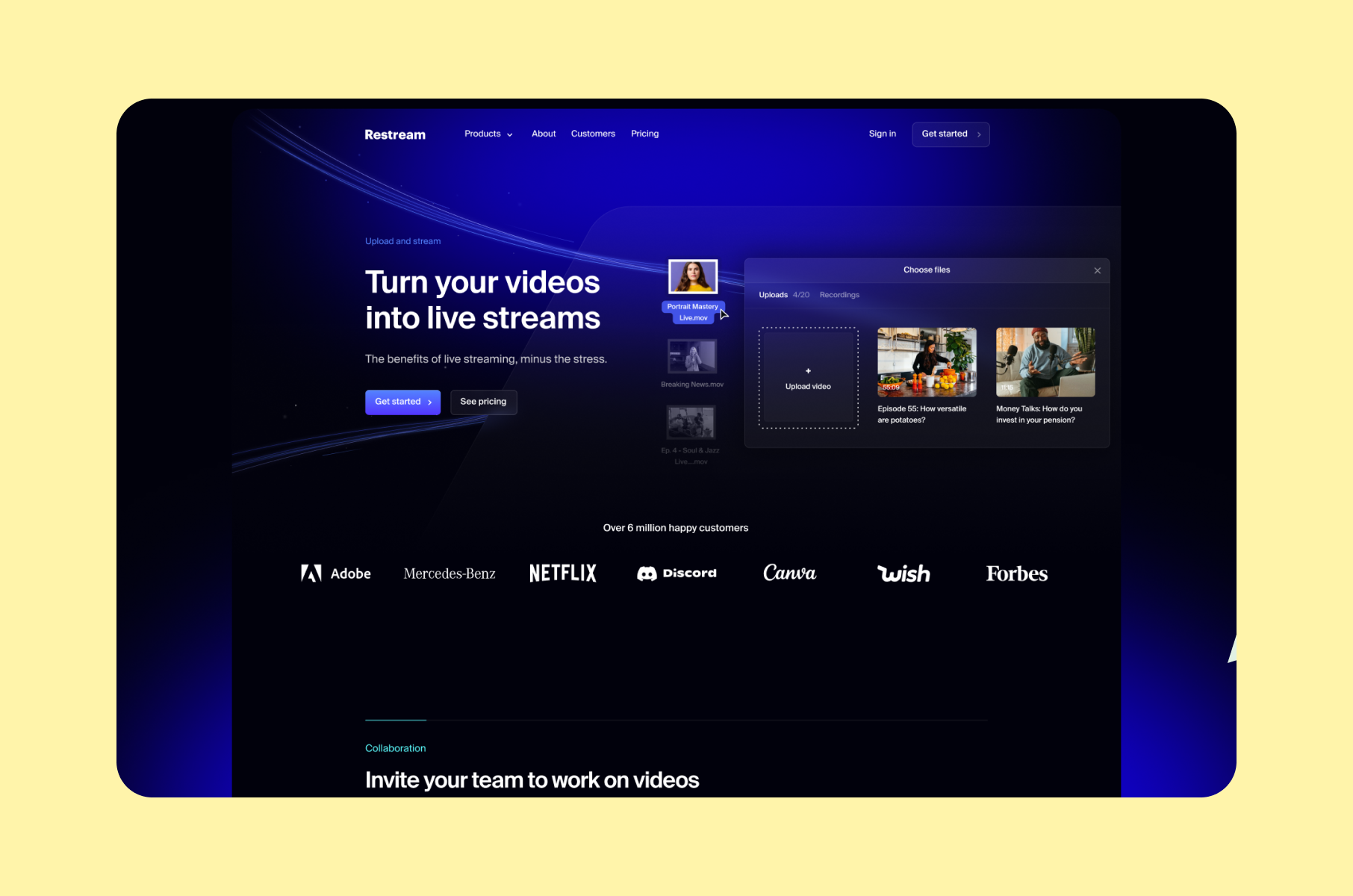
Our longest engagements, like the ongoing website work for Restream, run on exactly that. An agency that can't manage communication while it's still trying to win you won't manage it while handling five other clients too.
Red flags for life after launch
The last three flags are the ones you can only catch after you have launched. Everything above eventually shows up during the project. Handoff and measurement stay hidden until the day you need them, and by then the agency has your money and a new client. The sales process is the only sample you get.
13. There's no process for changing scope
Requirements change, and that's completely normal, but an agency with no defined way to handle it is a red flag.
Without a change-request process, every new idea can turn into either a fight or a quiet budget leak. Ask how mid-project changes get estimated, approved, and billed.
A mature answer would be something like: written request, impact estimate, your sign-off, then the work.
14. Handoff means "here's your login, good luck"
A real handoff transfers everything you need to run the site without them: hosting and domain access in your name, CMS credentials, the code repository, an integrations list, a redirect map, and documentation of how it all fits together.
Good agencies also train your team, ideally with a recorded walkthrough of the jobs your marketers will actually do, like publishing a blog post or editing a landing page.
Check this before signing, because handoff quality gets decided long before handoff day. Documentation is written while the work happens, or it isn't written at all. An agency that has never produced a handoff package isn't going to invent one for you under deadline pressure.
So ask to see a real one. If it doesn't exist, you'll be the first client they try it on, and that rarely goes well.
15. There's no measurement plan
How will you know the new site works?
A measurement plan starts from your business goals and works backward to the handful of events worth watching - demo requests, trial signups, pricing page visits. The alternative is tracking everything "just in case" and drowning in numbers.
There's a reason this flag is last, and it isn't because of its importance. The answer here tells you what the agency believes it was hired to do.
So agree before launch on which metrics define success, who watches them, and when you'll review them together. And ask what happens in the first 30-90 days, because there needs to be a defined warranty period covering build defects.
The full checklist
Here are all 15 flags with one question each that exposes them.
# | Red flag | The question you need to ask to spot it |
1 | Discovery is a sales call | "What do you need to learn about our business before proposing?" |
2 | Instant fixed quote | "What assumptions is this price based on?" |
3 | Screenshot-only portfolio | "Can you share 5-10 live URLs and their results?" |
4 | Mystery team | "Who exactly will work on this, and can I meet them?" |
5 | One-paragraph scope | "Can you break this down by pages, integrations, and revisions?" |
6 | Vague IP terms | "Does full code ownership transfer to us on payment?" |
7 | Proprietary lock-in | "Can another team take this over without you?" |
8 | 100% upfront | "Can we tie payments to milestones?" |
9 | Guaranteed rankings | "What exactly can you commit to, and what can't you?" |
10 | No QA process | "Walk me through your testing before launch." |
11 | Performance ignored | "What Core Web Vitals targets do you build to?" |
12 | Messy communication | "Who is my single point of contact and how often do we sync?" |
13 | No change process | "How do mid-project change requests get approved and billed?" |
14 | No handoff standard | "Can I see a handoff package from a past project?" |
15 | No measurement plan | "Which metrics will tell us the site worked?" |
How to quickly vet web development companies
Here's the routine we'd recommend that doesn’t require much technical knowledge from you or your team:
- Test the live sites. Open 5-10 portfolio URLs on your phone. Slow or broken ones disqualify the agency on the spot.
- Read third-party reviews. Clutch and similar platforms verify reviewers, so patterns there mean more than testimonials on the agency's own site.
- Run the discovery test. Book a call and count who asks more questions. If it's you, move on.
- Ask for a sample scope and a past handoff package. Two real documents, not slides. Five minutes of reading beats any pitch deck.
- Check the contract for IP transfer, milestone payments, and a warranty period. If one is missing, ask why.
This plan works whether you're evaluating web developer firms for a full build or comparing website redesign services for an existing site.
And if you're still assembling a shortlist, our roundup of the top web design companies of 2026 is a decent place to start.
Wrap-up
Hiring a web development agency will turn out to be a process of filtering out the teams that are not a great fit for you if you want things to be as smooth as possible. This process, however, doesn’t need to be tedious. With our checklist, you can quickly spot the agency that skips discovery or vanishes after launch.
Our 15 flags only ask you to treat the sales process as evidence, because it's the best version of that agency you will ever see. Whatever you see now, assume a slightly worse version of it later. Get the vetting right and the payoff is real: a site that loads fast, converts visitors, and stays fully in your hands.
And if you'd rather skip ahead to a team that treats discovery, QA, handoff, and measurement as non-negotiables, that's exactly how we run our web development services at Merge.
FAQ
What does a web development agency actually do?
Writing code is one part of it. A web development agency should also run discovery to establish what the site needs to do, design the user experience, test the build, set up hosting and integrations, hand over documentation, and agree on how you'll measure whether it worked. Our full stack web development services cover that whole chain, from Webflow marketing sites to Next.js web apps. Projects that skip parts of it are the ones that later land on somebody's desk as a rescue.
Should I hire a freelancer instead of an agency?
For a simple landing page, a good freelancer will usually do the job for a fraction of the cost. Once integrations, a CMS, or revenue targets are involved, web development agencies give you cover that one person can't: someone designs, someone builds, someone tests, and someone keeps the schedule honest. Work out what a two-week delay would cost you if your single developer went quiet for a week. If the answer is "not much," hire the freelancer.
How do I compare web development services providers on price?
Compare scopes. A cheaper quote that leaves out QA, handoff, and a measurement plan usually costs more by the end, because you pay somebody else to fill each gap later at a worse rate. Ask every one of the web development services providers on your shortlist to itemize, then read only the lines where they differ. Our pricing page shows how we break ours down, if you want a reference point.
Do I need custom development or a no-code platform?
Most companies land somewhere between the two. Marketing sites usually run better on Webflow development services, which keeps publishing in your marketing team's hands instead of a developer's queue. Anything with accounts, logic, and data behind it needs custom code, like the home-buying platform we built for Agentless. The right website development solution is the one your own team can operate without an agency on retainer.
How do I hire a web development agency?
Three passes. Shortlist five or six teams from portfolios, Clutch reviews, and referrals, and open their client sites on your phone before you contact anybody. Then run discovery calls and notice who asks more questions, because the agencies that dig into your goals before quoting are the ones that will scope the work properly. Last, read the paperwork for IP transfer on final payment, milestone billing, a named QA process, and a warranty window. Choosing the right web development agency is mostly elimination, and the 15 flags above exist to knock teams off your list before you've signed anything.
How do I evaluate a web development agency's portfolio?
Skip the screenshots and open the live URLs. Does the site still load quickly on a phone today? Is the agency's work still up, or has the client rebuilt it since? Does the case study name a business result, or only show the visuals? A portfolio weighted toward unnamed concept projects usually means the work never shipped, and one where every project looks like a different studio made it usually means freelancers assembled per engagement. Our case studies are live sites you can open and check yourself, which is what we'd ask of anyone.
How do I choose a web development agency for an MVP?
An MVP is a different job, so the questions change. Can they ship something usable in weeks rather than quarters? Will they build on a stack an in-house developer can take over later? Will they argue you out of features? An agency that agrees to your whole feature list is the warning sign here. Ask what they would cut from your brief and why, because a team that has built MVPs before will have an opinion ready. That's the thinking behind our MVP development services, and it's why our builds often end up smaller than what founders walk in describing.