0
Table of Contents
Want to find the best web design company? Here’s our top 10 of 2026
Picking a web design company in 2026 is more about fit than ranking.
We’ve heard a funny analogy recently. A former client of ours joked that picking a web design company right now feels a little like living in a big city with too many great restaurants. The reviews are all suspiciously good, and the moment you choose one, two more pop up that you wish you'd tried.
The difference, though, is that with design companies, the decision shapes how your product gets perceived for the next two to four years. You can always just go to the next restaurant in the list a week after.
We run Merge, a UX design agency, and our list is written with the double perspective – what we genuinely respect about other studios in our space, and what we'd mention privately if a founder asked us.
Also, we recently published a website design pricing guide that breaks down the dollar side of this question. This piece is a continuation and is about who's actually building great websites today, how to compare them, and what to ask.
What separates a great web design company from the rest
Before we start naming names, let's agree on the criteria. A website design company is not just a Figma-and-Webflow shop with a nice portfolio. The good ones have product understanding, conversion thinking, and don’t forget - visual taste. They also make sure those don't fight each other on the page.
What you're really paying for, when you hire a serious website designing company, breaks down into roughly this:
- A strategy layer. Someone in the room is asking, "Who is this site for, what should they do, and why aren't they doing it today?" before anyone opens Figma. This is what separates a real website redesign service from a fresh paint job over the same broken structure.
- A design system, not a one-off design. Pages are made of components, components have rules, and the rules survive a year of marketing edits. If your agency hands you a beautiful homepage with no design system or reusable blocks, you're going to feel the pain by month three.
- Developer-ready output. Designers who think about handoff write fewer bugs. Studios that own both front-end development and design avoid the classic "the Figma looked great" tragedy.
- Conversion sense, not just aesthetics. Visitors take roughly 50 milliseconds to form an opinion about a site, and 94% of that first impression is design-related. The right team builds for that exact moment, not for a Dribbble shot.
These four things are the basis, though. The top web design agency for your situation also gets your industry, your budget bracket, and your timeline. Now, who actually does this well in 2026?
Our top 10 web design companies of 2026
Here's the list. We've kept it to ten, and we've put studios from different cities, sizes, and specialties on it on purpose. The "right" choice depends on what you're building, of course, so don't read this as a strict ranking.
Interestingly enough, most public rankings, including those on Clutch and DesignRush, are partly pay-to-play and partly review-driven. We've cross-referenced ours against both, plus our own peers in the field, and tried to pick studios that consistently show up because of the work, not because of marketing spend.
1. Merge
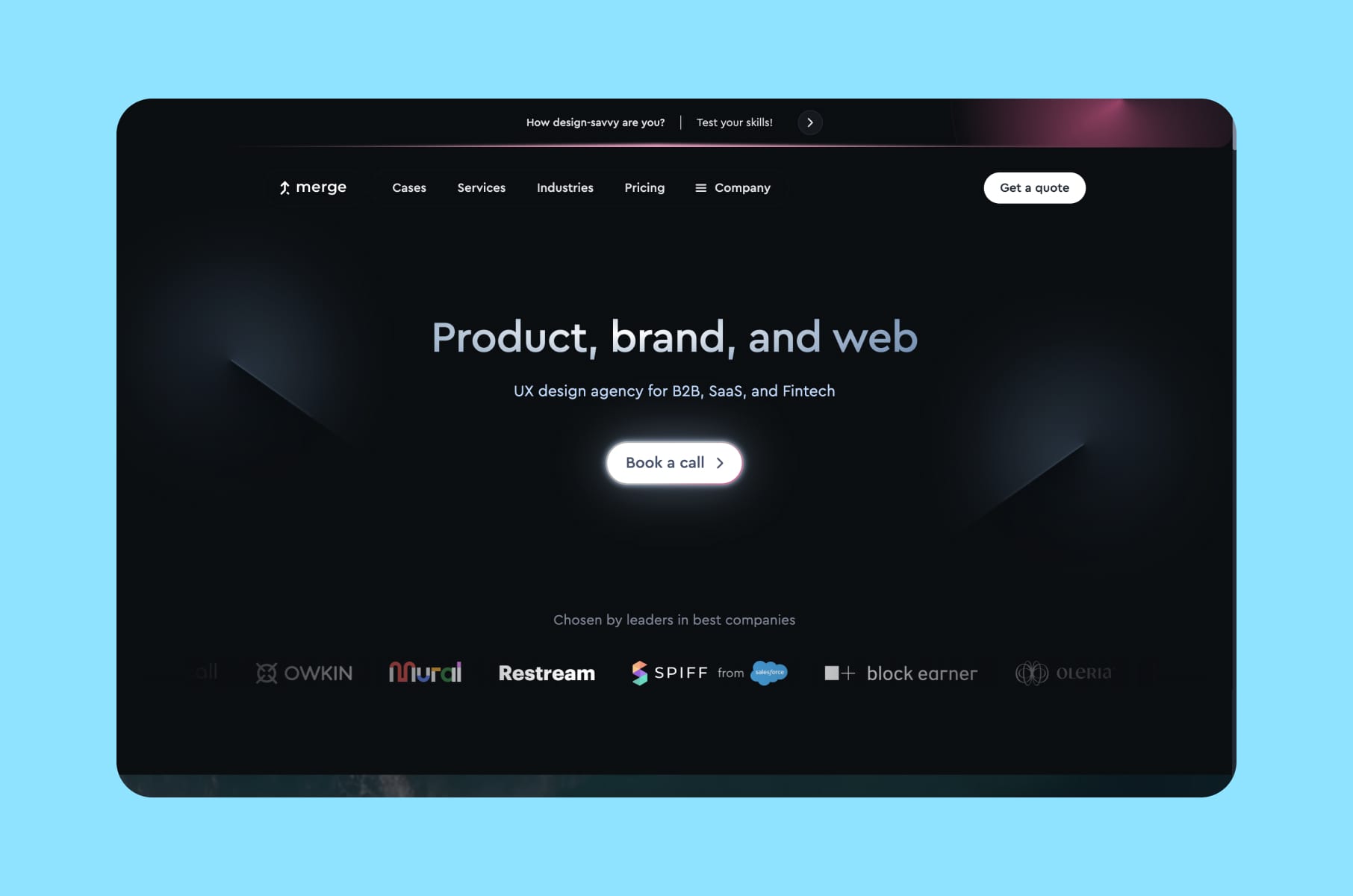
We'll start with our own crew, but keep this section honest, because the rest of the list is. Merge is a UX design studio focused on startups in SaaS, fintech, AI, and Web3. Our startup web design service runs in a four-phase loop (discovery, wireframing, visual concept, polishing), and most marketing sites we ship in 6 to 12 weeks.
What we think we do well: we treat the website as a product, not a brochure. Our designers come from product backgrounds, so the conversion logic, the dashboard design considerations, and the user onboarding flows tend to be baked in from day one. We're also a Webflow Professional Partner, which keeps the Webflow development handoff side clean.
A few of the projects we'd point at if you wanted to see the range:
- CoinLedger, where the ground-up rebuild doubled their conversion rate and helped them earn a 4.8 Trustpilot score.
- Bytek, an AI-marketing platform we repositioned for a younger global audience with a product-focused site and a new visual system.
- Agentless, an AI real-estate platform whose site had to explain an entirely new home-buying model on mobile before it could ask for a signup.
- DGC Production, a single-scroll film studio site with a custom intro animation and a tight component library.
Who we're a good fit for: pre-seed to Series B startups who want a SaaS design agency partner that understands product, design, and front-end as one workflow. All that without the enterprise-agency price tag.
2. Clay
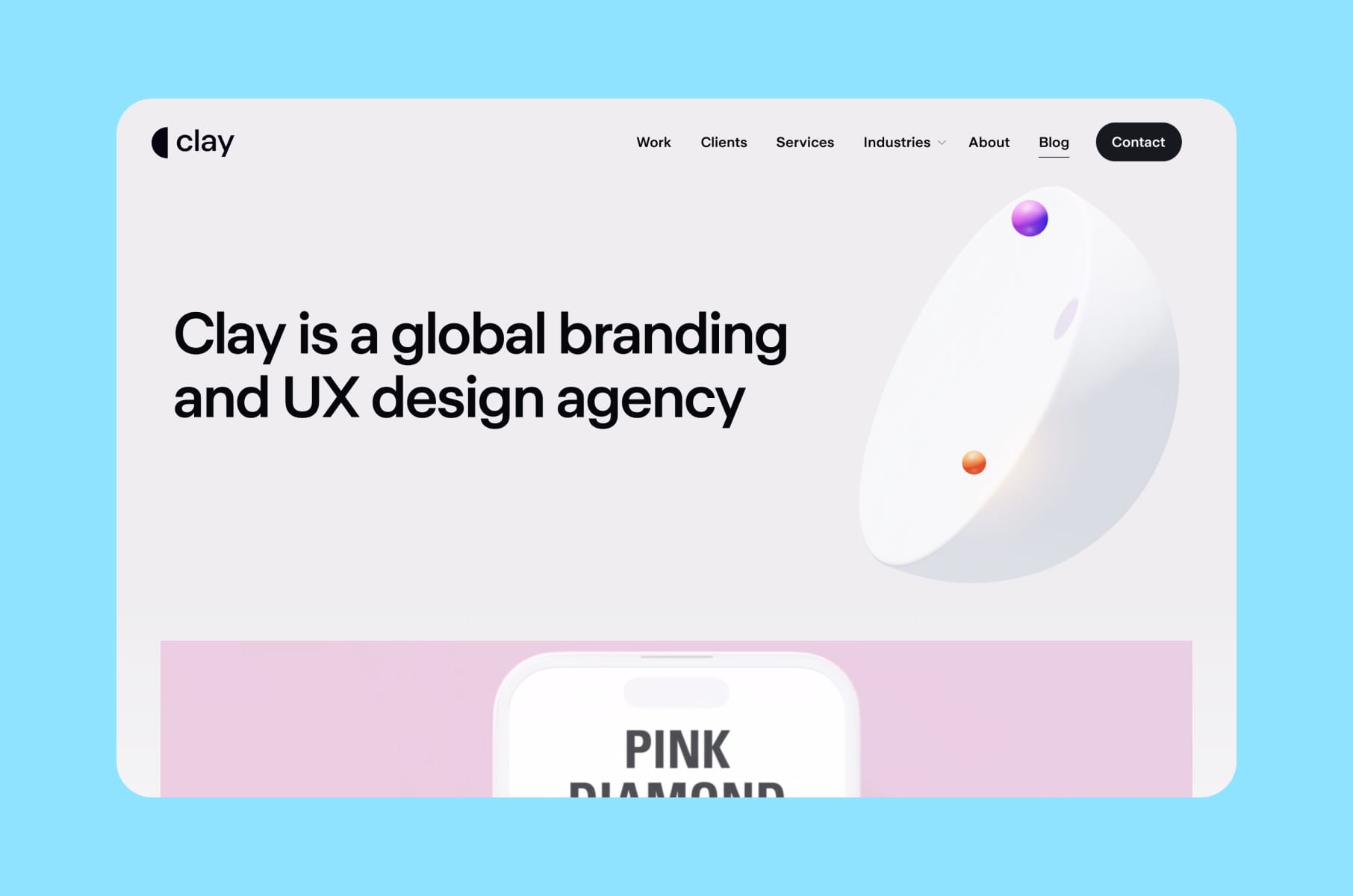
Clay is a design and branding firm that pretty much everyone references at the top of the best web design companies lists. Founded in 2013, they've shipped websites for Meta, Google, Slack, Coinbase, Amazon, and Coca-Cola, and they're equally comfortable with a Fortune 500 brand site and a Series B SaaS launch.
What stands out about Clay, beyond the obvious polish, is the consistency. You can recognise a Clay site from sharp typography, deliberate motion, restrained colour palette, and that recognisability is a good feature - we like and appreciate it as a design agency ourselves. They've effectively built a house style strong enough to elevate whatever brand they touch.
When they're the right fit: when your budget is comfortably six figures, your brand stretches across multiple touchpoints, and you want a website that wins design awards as well as conversions.
3. Ramotion
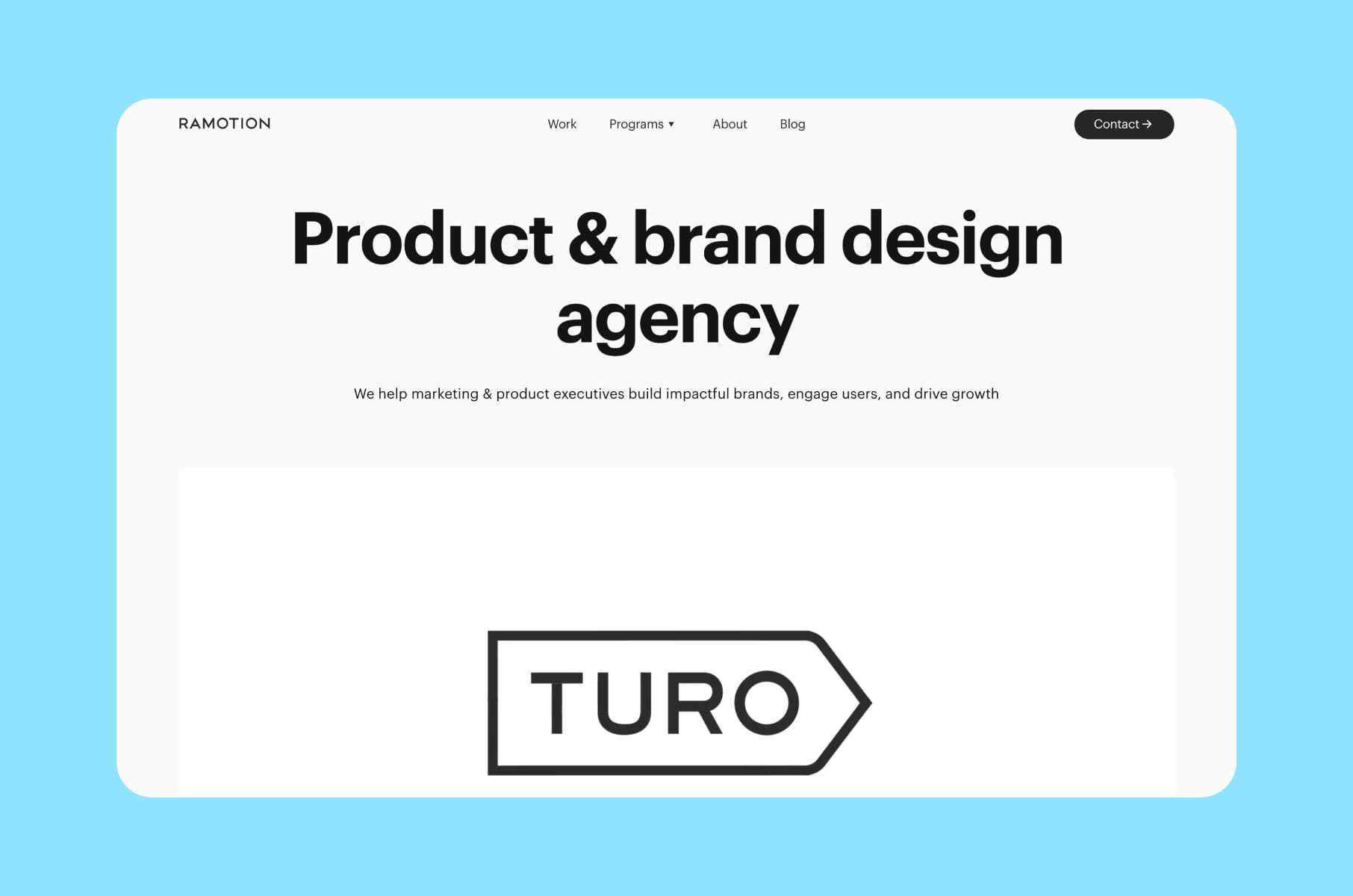
Ramotion is the San Francisco studio that quietly built a reputation for SaaS-focused brand and web work over the past fifteen-plus years. Founded in 2009, they sit at the intersection of brand identity and product UI, and that combination is rarer than you'd think.
A lot of agencies do logos. A lot of agencies do websites. Far fewer do both well, in one sprint, with one team that actually talks to itself. Ramotion does, in our opinion. Their work for venture-backed SaaS companies tends to feel cohesive end-to-end – from the wordmark all the way down to the dashboard.
Who they're great for: B2B SaaS founders who need branding service and website design company work delivered together, and who care about the marketing site looking like it belongs to the product (and the other way around).
4. Huemor
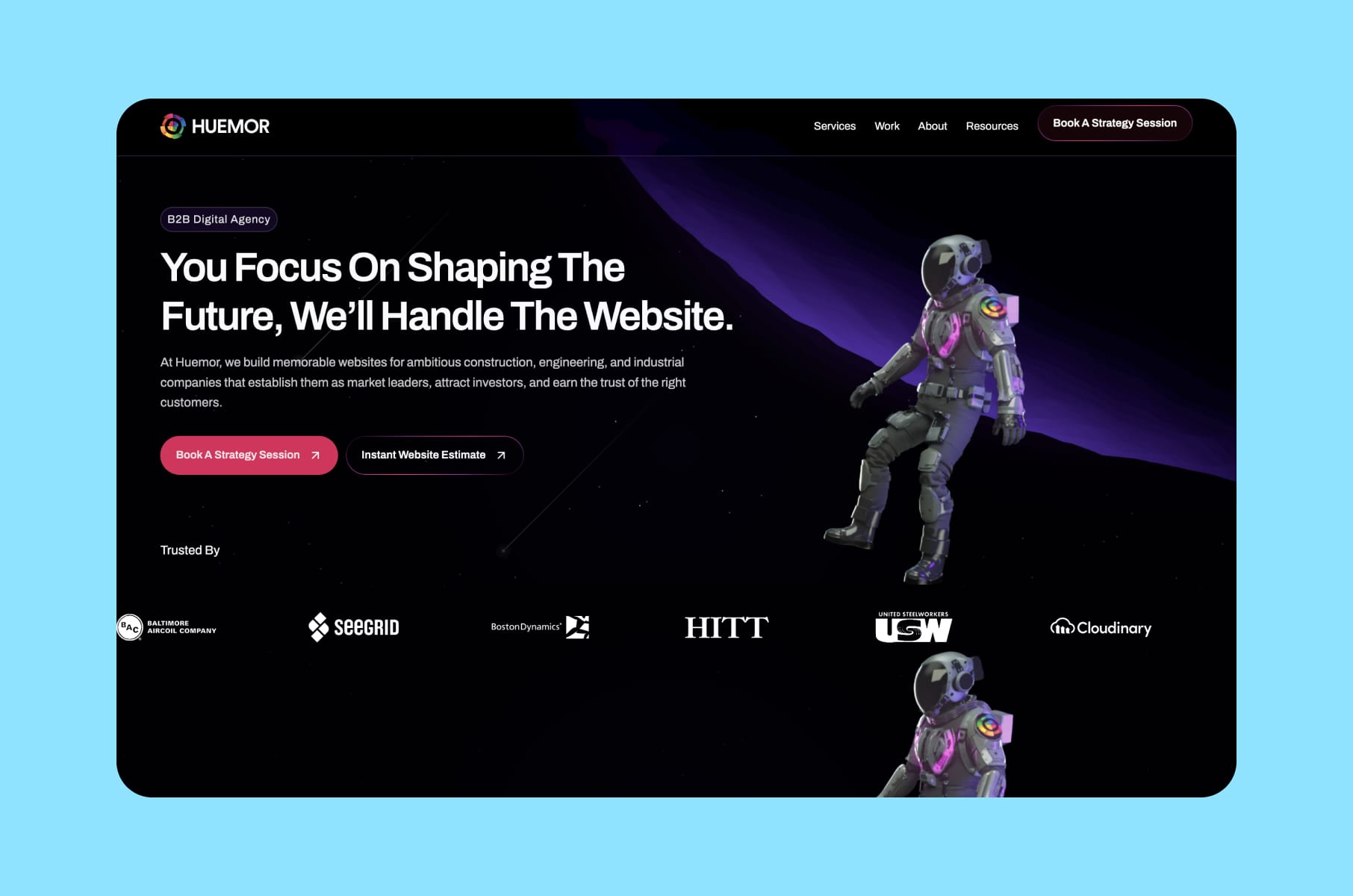
Huemor splits the difference between a creative studio and a conversion shop. With offices in Pittsburgh and New York, they've built a reputation for what they call "memorable" web design – sites with personality that still move metrics. That balance is harder than it sounds. Most agencies pick one and quietly sacrifice the other.
The Huemor approach starts with a fair amount of strategy work upfront (discovery, brand voice, conversion mapping) before any visual concepts get made. The result is sites that feel like marketing assets, not portfolio pieces. If your founder energy is more "we need leads" than "we need a Webby," Huemor is the safer bet.
5. Focus Lab
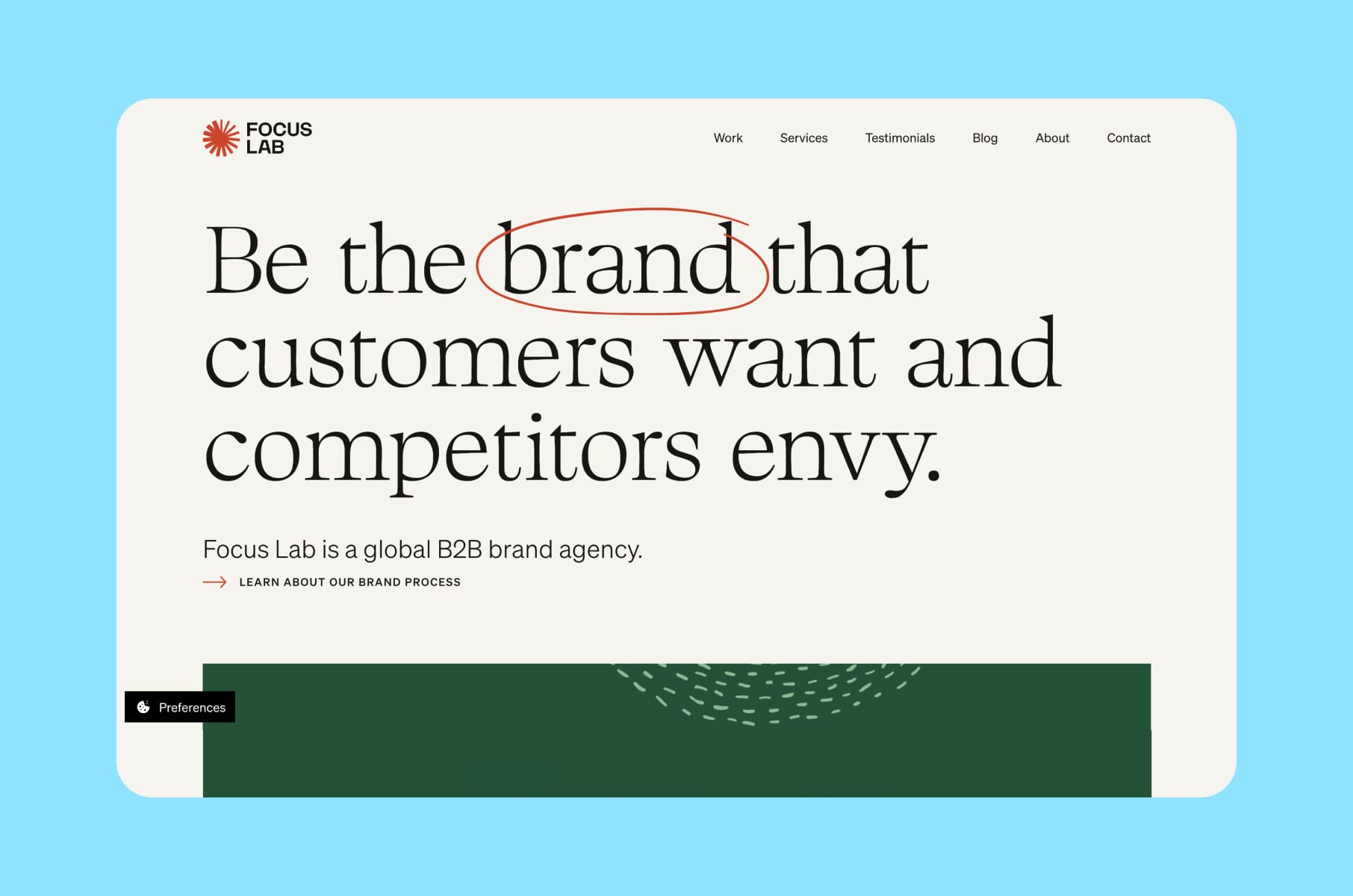
Focus Lab is the studio that is liked by a lot of branding-led founders. Based in Savannah, Georgia, they've built a name for brand identity work that translates cleanly into web. Companies like MongoDB, Webflow, and BambooHR have worked with them at different stages, and their portfolio reads like a checklist of well-positioned B2B SaaS brands.
Focus Lab isn't the cheapest website design company on this list, and they're not pretending to be. If brand-first is your starting point and you want a team that will push back on bad positioning, they're an easy recommendation.
6. Digital Silk
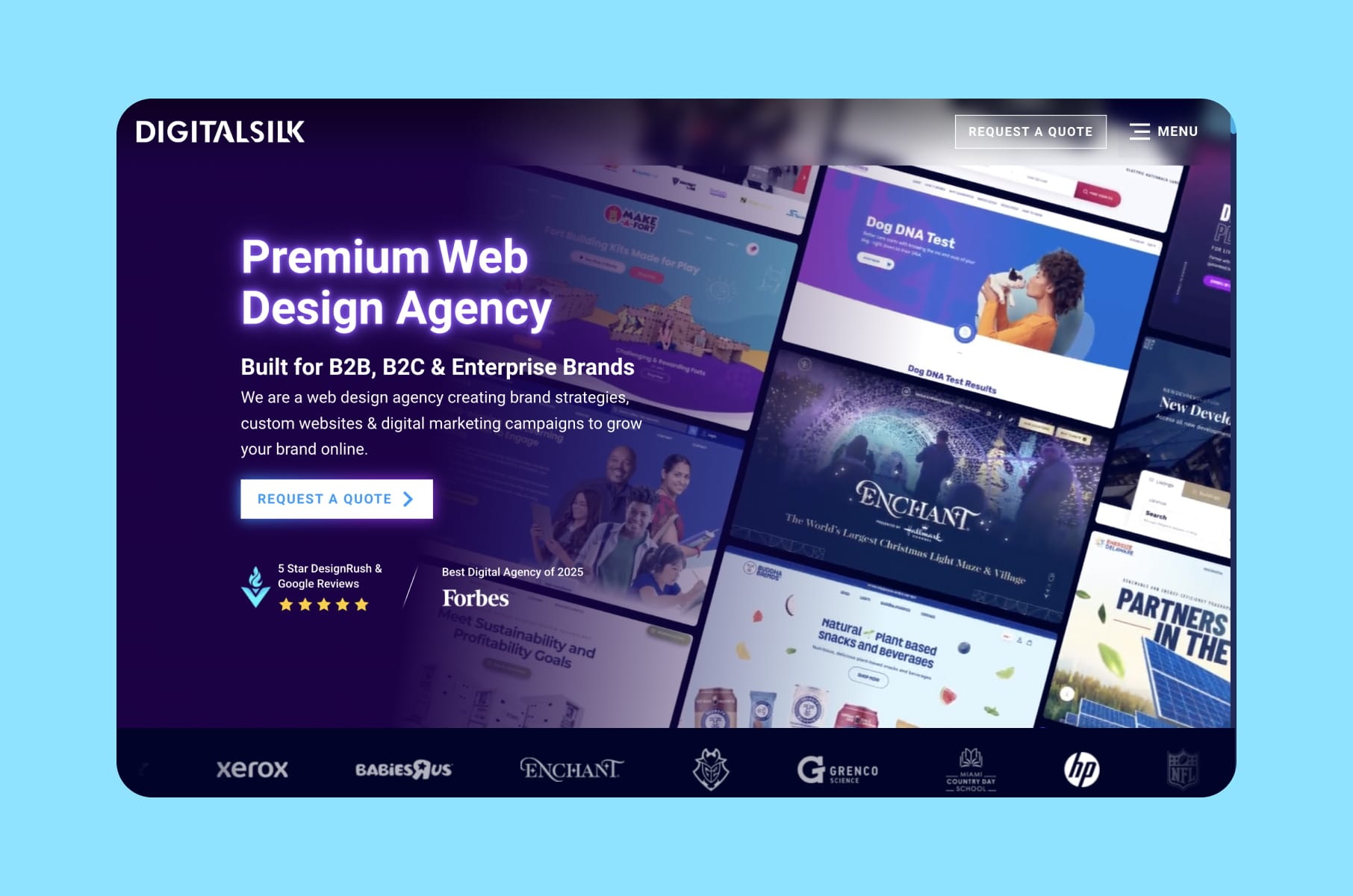
Digital Silk is the New York agency that consistently lands on enterprise shortlists. They've built sites for Sony, P&G, and the NFL, and they show up at the top of DesignRush's web design rankings for "results-driven" work. Their portfolio is broad – healthcare, manufacturing, e-commerce, consumer tech – and the case studies usually lead with measurable outcomes rather than visual flair.
If you're a larger company with multiple stakeholders and compliance considerations, and you need everything coordinated across web, branding, and digital marketing, Digital Silk is built for that. Smaller startups might find them oversized for the brief.
7. Baunfire
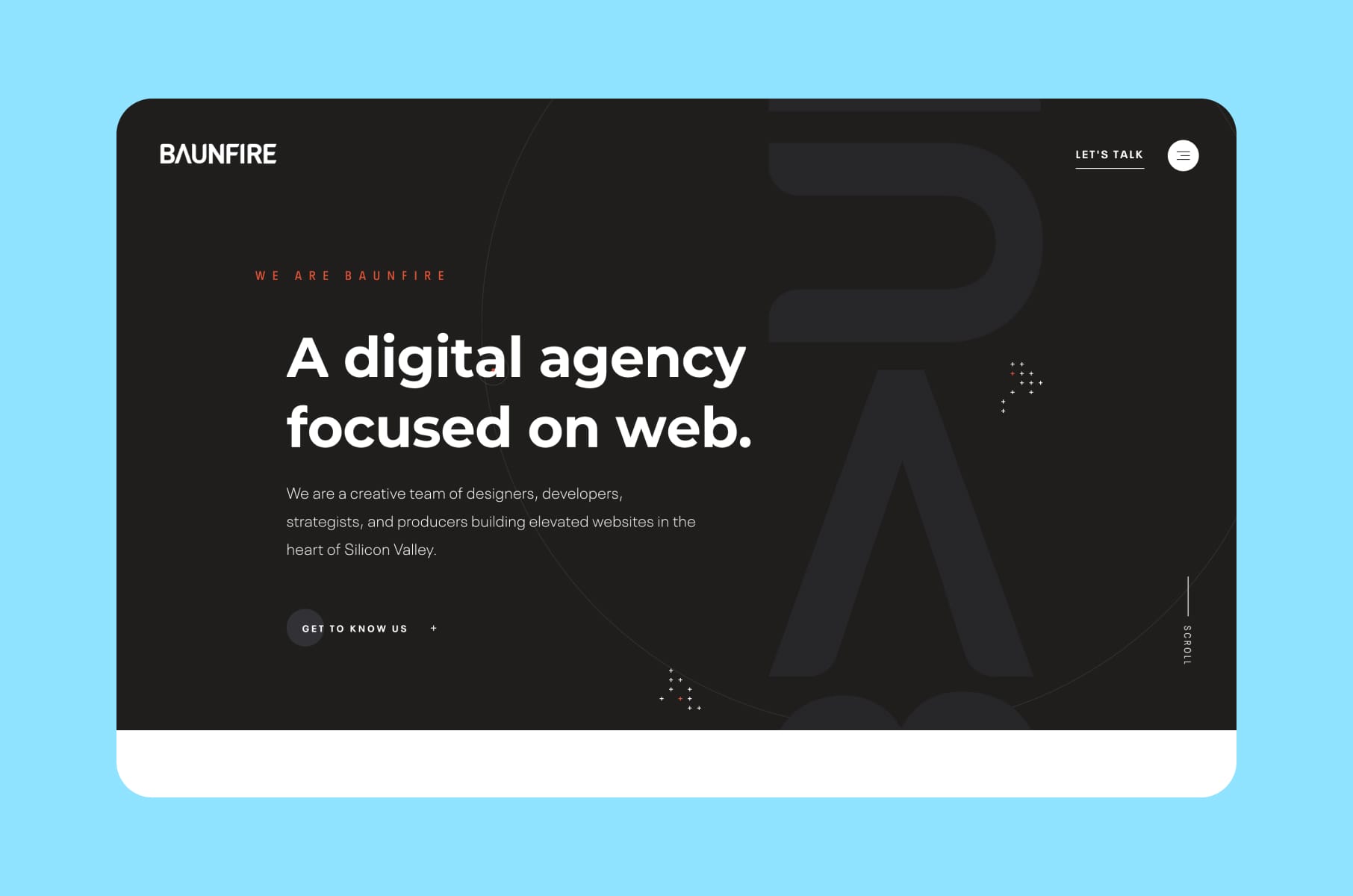
Baunfire is the Silicon Valley shop that grew up alongside the companies it now designs for. Headquartered in San Jose, they've shipped work for Google, Nike, Cisco, Honda, and Yahoo, and they've stayed in business doing it (which, in agency-land, is its own kind of achievement).
Their sweet spot is post-Series-C enterprise and large-tech marketing sites – the kind that need to look the part for procurement, marketing, and engineering audiences at the same time. The work is consistently strong. The trade-off, as with any agency at that scale, is that founder-stage budgets won't get founder-stage attention.
8. Eleken
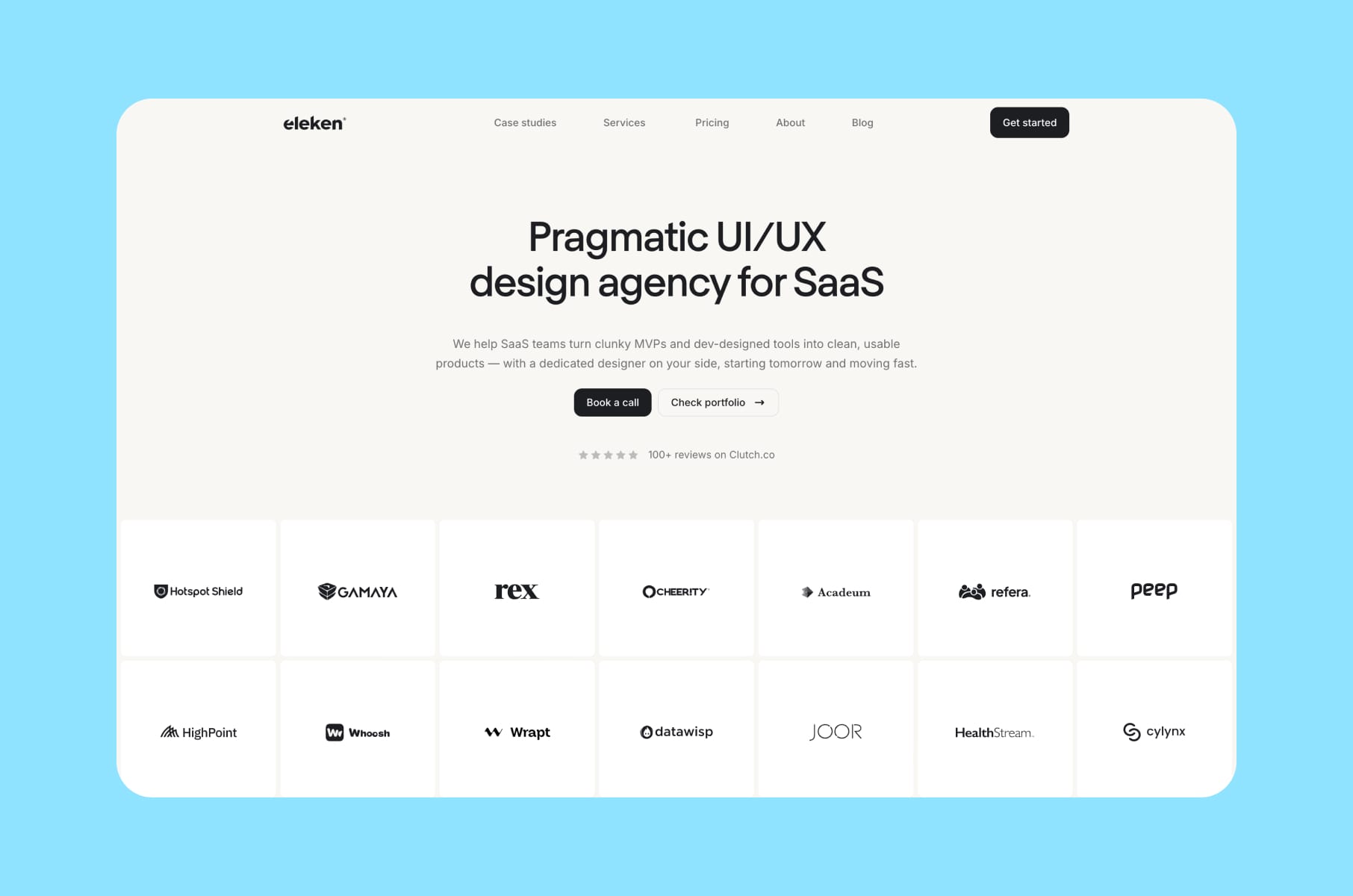
Eleken is another Ukrainian studio (besides us) that rocks the "dedicated SaaS designer" model. Founded in 2014, they pair one designer with one company on a continuous engagement, rather than scoping one-off projects. For a SaaS in active product evolution, that subscription model can be a godsend (you get continuity, not a new face every sprint).
Eleken's strength leans more toward product UI than marketing site work, so we'd flag that distinction. If you need a marketing site and a product designed together, you'll want a partner who does both well. If you need a steady design hand on the product itself and you're tired of freelancer churn, Eleken is a fair shout.
9. Lounge Lizard
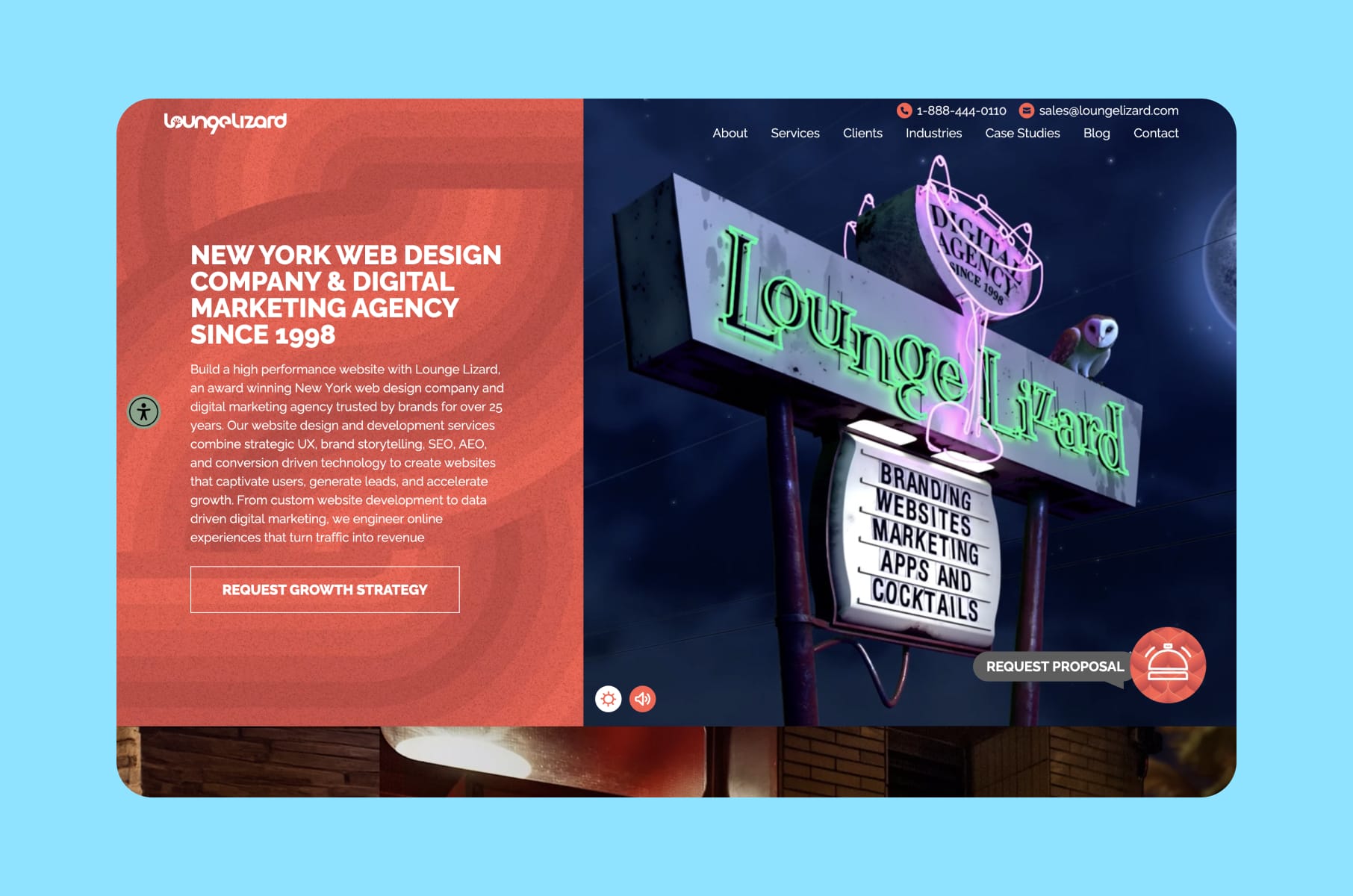
Lounge Lizard is one of the older names on this list. Founded in 1998, based in New York with offices in LA and Long Island, they've been around long enough to have done work for Disney, Canon, and National Geographic. That kind of longevity tells you something about consistency. It also tells you they've outlived three or four design trends, which has its own value if you want a partner who isn't going to chase every shiny thing on Awwwards.
Where they shine: full-service work where SEO, content, and visual design all need to ship together for a mid-market brand that doesn't necessarily need an avant-garde aesthetic to win.
10. Instrument
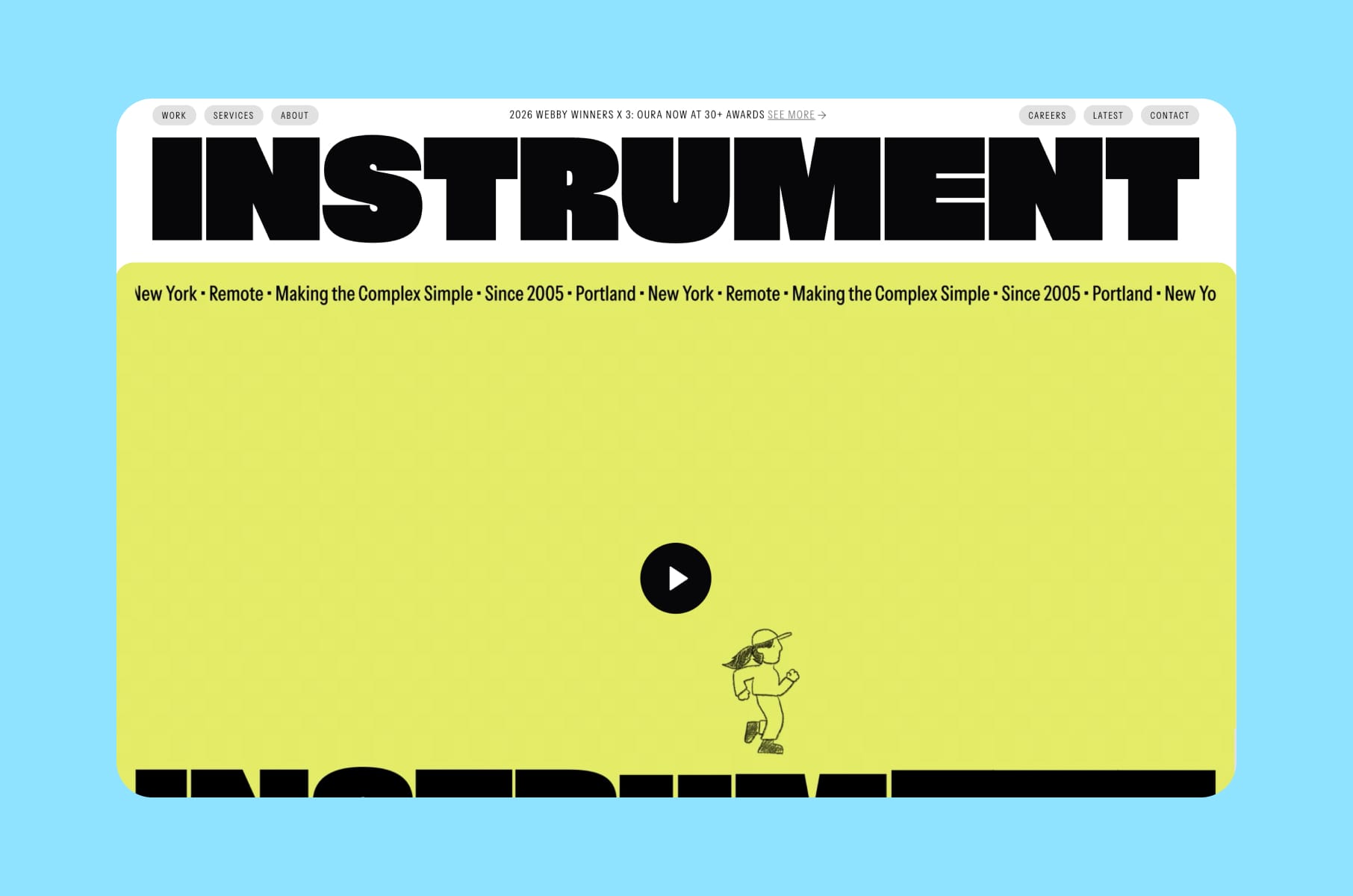
Instrument is the Portland studio that does the kind of work that gets quoted in case-study decks for years afterward. Their roster has included Google, Nike, and Spotify, and the team has scaled past 200 people, which puts them firmly in the enterprise-creative-agency camp.
If your project is the kind where a custom storytelling experience matters as much as a contact form – say, a brand campaign site, a product launch microsite, or a multi-region corporate site – Instrument is one of the few names that consistently delivers at that altitude. They're not a fit for a 6-week marketing rebuild, and they're not pretending to be.
How to actually compare web design companies before you sign
Lists are useful, but they don't pick the agency for you. To narrow a shortlist of three to five down to one, here's the rough sequence we'd run if it were our own money. (Mind you, we'd recommend doing this even with us. A founder who picks well is a happier client.)
- Compare portfolios in your category. Every top web design agency has a few showcase pieces that look incredible. Those are usually not what you're going to get. Ask to see three projects most similar to yours in budget, industry, and timeline. If they can't show three, that's information.
- Talk to a past client whose project is similar in shape. Reviews on Clutch and Google are useful as a first filter, but a 20-minute call with a past founder gives you the truth. Ask what went wrong, not what went right. Every project has a "what went wrong" moment, and how the agency handled it is the actual signal you want.
- Sit in on a working session. A pitch is a polished performance. A working session (even 30 minutes of a strategy review or wireframe walkthrough) tells you whether the senior people will actually be on your project. Or whether you're being sold by partners and delivered to by juniors.
- Pressure-test the process. Ask what happens in week 3 if you don't like the visual direction, what happens in week 6 if scope changes, and who owns the design system after launch. The answers tell you whether they've shipped real projects or just made pretty mockups.
- Get a written scope. Anything verbal will be remembered differently by both sides three months in. A real website design company will hand you a scope that includes deliverables, revision rounds, a timeline, file ownership, and what happens if either side wants to exit.
These five steps, run honestly, will rule out about half of any shortlist. The remaining half is people you can actually trust with a working relationship.
Red flags when you're dealing with a web design company
A few patterns we've seen come up enough times that they're worth flagging out loud. None of these are deal-breakers on their own – but if you see two or three on the same agency, it's worth a longer conversation before you sign.
- They quote a price before they ask about goals. Pricing without context is guessing. A serious best web design firm wants to understand the business outcome before naming a number.
- The portfolio is all the same kind of site. Variety is a sign of range. If every case study looks like the same template with different colours, that's not house style, that's a template.
- No process documentation. Real studios can walk you through their process in three or four named phases. If yours can't, you're hiring someone who's going to make it up as they go (and that's expensive).
- They don't talk about handoff. A site that "looks done" in Figma but can't be built in the agreed-upon stack is a six-figure mistake waiting to happen. Ask who codes it, how the design system is structured, and which files you get on day one of launch.
- No senior designer on the call. If the salesperson is the only person you've met before signing, you'll meet the junior delivering the work after. That's a common failure mode at the larger end of the top web design companies spectrum, where the rainmaker and the doer are two completely different people.
- They oversell speed. A real five-page marketing site takes 4 to 8 weeks done well. Anyone promising you 10 days is either reusing a template (fine, if you know that's the deal) or planning to ship something underbaked.
What to expect from a great web design process
We've written about our own process on the service page, so we won't replay all of it here. The high-level point is that any good website designing company in 2026 should be able to walk you through a four-stage rhythm – research, structure, design, finish – and tell you exactly what happens at each step.
For us at Merge, those four stages look like discovery (what is this site for, who's it for, what's it competing with), wireframing (page architecture, content order, key flows), visual concept (the actual design system applied across the pages), and polishing (the motion, the micro-interactions, the responsive details that make a site feel finished rather than functional). Most marketing-site projects we run land in the 6 to 12 week range, with weekly check-ins and direct access to the designer working on the file.
That cadence is more or less the industry default for serious work. When we partner with growth-stage clients like Restream on an ongoing basis, for example, the same rhythm just keeps rolling with new pages, new campaigns, new sections, instead of being a one-time project.
Basically, the right one depends on whether you're shipping a website or running a long-term website operation.
A note on geography: do you really need a US agency?
We get this question often enough that it deserves a section of its own. Founders often start a search assuming the best web design companies in the US are automatically the safer pick. That's sometimes true, but it's worth pressure-testing.
What we’ve seen is that US agencies generally bring deeper context for US-market positioning, easier time-zone overlap for East Coast and West Coast founders, and a thicker layer of strategy and account management.
Studios in Eastern Europe, the UK, Bulgaria, and Argentina often bring comparable design quality at 30 to 50 percent lower rates, plus design teams that have shipped a lot of SaaS work for global-facing clients. We're based in Eastern Europe ourselves, and most of our clients are US- and Europe-based founders who liked the math.
The right answer is mostly about your communication style and your appetite for asynchronous work.
If you want a weekly call with someone sitting in San Francisco, a US-based top web design agency is the cleaner choice.
If you're comfortable with Slack-first collaboration and want to spend the difference on more design hours instead of more account-management overhead, an international team is worth a look.
FAQ
What is the best website design company in 2026?
There isn't one. There is a best one for your stage, your industry, and your budget. What is the best website design company for a $250K enterprise rebrand is a different question than what's the best one for a $15K seed-stage marketing site. Use the criteria above – portfolio fit, process, communication, senior involvement – to find your best, not a universal best.
Are the best web design companies in the US the right pick for everyone?
Not always. Some of the best web design companies in the US are world-class and worth every dollar. Plenty of strong studios live elsewhere and bring 30 to 50 percent lower rates with comparable design quality. The right pick depends on time-zone overlap, communication preferences, and where your project sits on the risk-vs-cost curve.
How does this list of the top 10 website design companies compare to Clutch's ranking?
Our top 10 website design companies list overlaps a few names with the Clutch and DesignRush lists, but we've curated for shape and fit, not popularity. Many published lists are partly paid placements. Treat ours, and any other, as a starting shortlist – then run the comparison steps yourself. The names worth cross-checking against most rankings include Clay, Ramotion, Huemor, Focus Lab, and Instrument.
Should I work with a freelancer instead of a top web design agency?
Sometimes, yes. If your scope is tight, your brief is unambiguous, and your budget is below $10K, a good freelancer can ship something solid. The trade-off is that you, the founder, become the project manager, the strategy lead, and the QA reviewer. With a top web design agency, those roles are filled for you. Both are legitimate paths.
How long should a top 10 website designing company project take?
A serious top 10 website designing company marketing-site project takes 4 to 12 weeks, depending on size. Anything under that is either a template fit or a corner being cut. Anything over that is either a large enterprise scope or a process problem. Our typical timeline at Merge is 6 to 12 weeks for a full marketing site, including discovery, design, and Webflow build.
How much should I budget for a web design company?
Budget brackets vary widely, and we wrote a detailed website design pricing breakdown on this exact question. As a quick anchor: a small business marketing site lands at $5,000 to $15,000 with most professional teams, a SaaS marketing site at $8,000 to $30,000, and an enterprise rebuild at $50,000 to $500,000 plus.
Wrap-up
In our experience, picking a web design company in 2026 is more about fit than ranking. The team that wins design awards isn't always the team that wins your sales meetings, and the agency with the longest client list isn't always the one that's going to care about your launch the most.
Run the comparison properly, ask the awkward questions, and look at projects shaped like yours rather than the marquee ones. The best partner is the one whose process matches the way you actually want to work.
Whichever way you go, we hope this list narrows the field a little. And if you'd like a second opinion or a quick estimate, Merge is one call away. Stay tuned for more from us!