0
Table of Contents
MVP development for startups. What to build first and why
A lot of founders still hear “MVP” and imagine a mini version of the final app. It’s not true, though.
MVP development usually starts with a question:
"What should we actually build first?"
However, in our experience as a UX design agency that often designs and builds MVPs for our clients, the better question is:
"What is the fastest thing we can put in front of real users that tells us whether this business has a shot?"
That is what an MVP is for.
So what should you build first, then?
The first thing you need is the smallest proof that a real customer has a painful enough problem to try your solution, come back, or pay.
So, if you are planning to build your first product, welcome, and we hope you find this article useful – we'll cover the build order and first features, as well as common mistakes.
What MVP development actually means
A lot of founders still hear "MVP" and imagine a mini version of the final app. That's not true, though.
An MVP is simply the minimum product that can validate your hardest assumption while still delivering real value to a specific user.
Or, as Eric Ries defined it in The Lean Startup, it is the
"version of a new product that collects the maximum validated learning with the least effort."
Here's a little table that will help you differentiate between the three concepts that are all sometimes thought of as MVPs:
| Concept | Purpose | Who uses it | Output |
|---|---|---|---|
| Proof of Concept (PoC) | Tests whether a technology or idea is feasible | Internal team | Technical validation – answers "Can we build this?" |
| Prototype | Shows what the product will look and feel like | Stakeholders, test users | Interactive mockup – answers "What will this look like?" |
| MVP | Tests whether real users will adopt the product | Early adopters, paying customers | Functional product – answers "Should we build this?" |
A proof of concept confirms feasibility. A prototype confirms usability. An MVP confirms market demand.
In practice, MVP development means picking one user, one problem, and one workflow. You build the thinnest version that still delivers value for that combination. Everything else can wait until you have a signal. This applies both to planning MVP app development for a consumer product and to scoping MVP software development for an enterprise tool.
This guide stays on one decision: what the first release should prove and what it should contain. What that build costs, how to test the idea before you build, and how long delivery takes are separate questions, and we keep them out of this guide on purpose.
Now, before you begin, your MVP software design should answer these three questions:
- Who is the first customer?
- What painful job are they struggling to do today?
- What specific result will your product help them get?
The best MVP development order that will save you money
This is the four-step process we use for MVP development. Each phase has a goal and a clear set of deliverables.
Phase 1: Validate the offer
Build positioning, a landing page, a prototype or demo, outreach or ads, and a waitlist or calendar link. The goal is to learn whether there is demand before you write production code.
For early-stage startups, this is often the smartest first "build." A landing page and a clickable prototype can test whether the problem is strong enough without committing you to engineering work first. Merge's MVP development services start by clarifying the first-release scope, core user flows, and interface decisions before engineering begins.
The reason for that exact order is that feature prioritization, early prototypes, and the first wireframes come out better when the same team that will build the product helps decide what gets built.
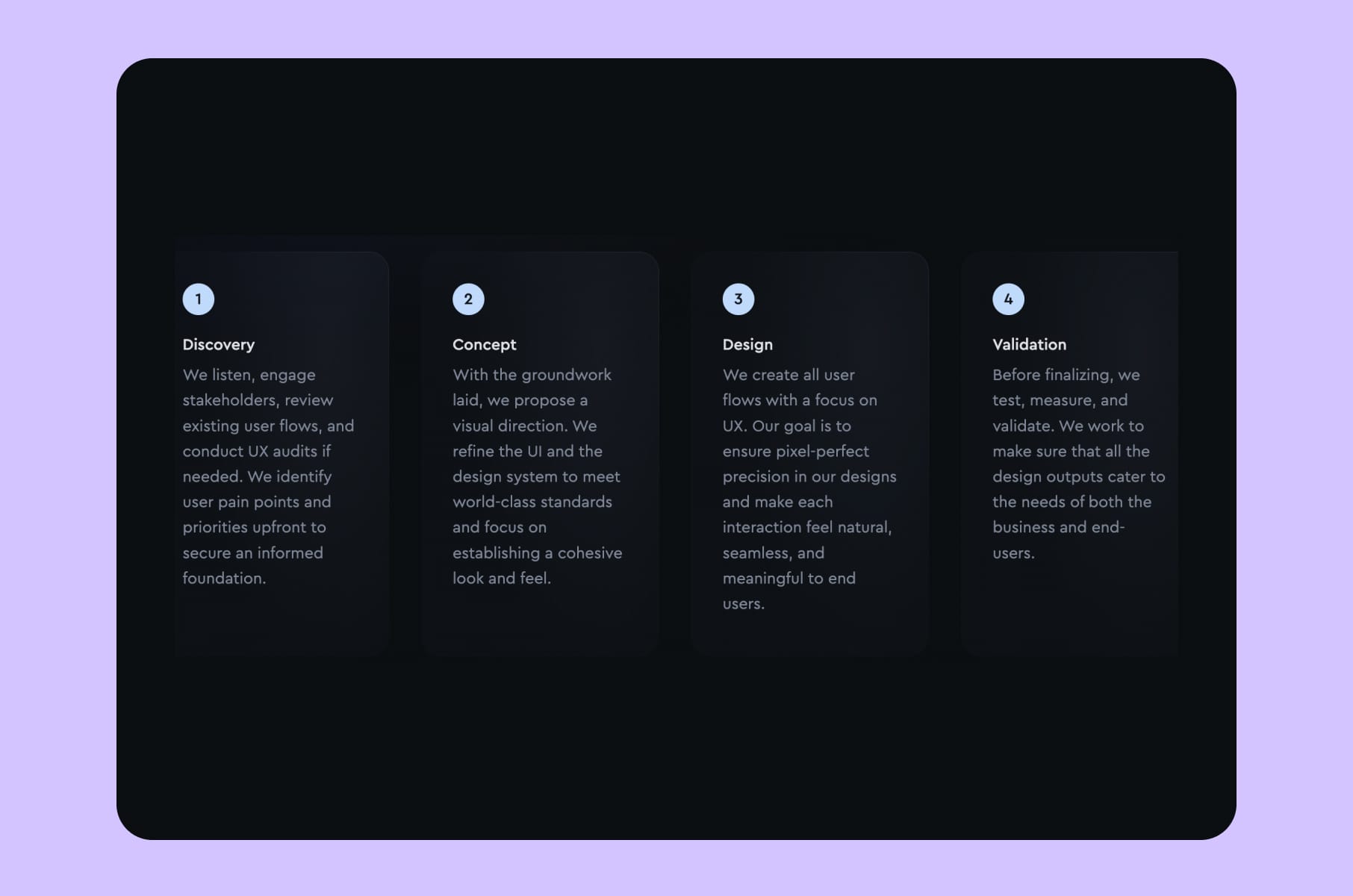
Merge structures the work in four phases – distill scope into a lean strategy, ship a functional prototype to validate it, prioritize feature delivery in agile sprints, then refine through user feedback. We found that, this way, the design and engineering decisions are in the same conversation.
Phase 2: Validate the workflow
Build onboarding, one core task, one output or result, and a manual back office if needed. The goal is to learn whether users complete the main job and get value.
Phase 3: Validate retention or monetization
Build usage tracking, session replay, feedback capture, a payment flow if needed, and feature flags for safe experiments. The goal is to learn whether users come back, stick around, and pay.
Phase 4: Improve and expand
Build speed improvements, reliability, self-serve onboarding, secondary workflows, better design polish, and growth loops. The goal is to scale what is already working.
What your MVP must include
Now that we have defined when to build, the next question is what the build actually contains. Every MVP software development project needs a core set of components to produce useful data. Here's a simple list for your V1 (a.k.a. your very first MVP version) that will get you started.
| Component | What it does | Why it belongs in V1 |
|---|---|---|
| One core workflow | The main task users came to do | Without it, there is no product to test |
| Simple onboarding | Gets users to first value fast | Drop-off here distorts every other metric |
| Basic authentication | Only what the use case requires | Users need accounts to return and be tracked |
| Feedback mechanism | In-app prompt, email, or support widget | Qualitative data explains what analytics cannot |
| Basic analytics | Shows where users drop off | You need to know what breaks before you fix it |
| Billing (conditional) | Payment flow if willingness to pay is the assumption being tested | Include only if monetization is the core risk |
That's it – just six components.
Just remember: if a feature does not help a user reach value in the first session or prove willingness to return and pay, it does not belong in your MVP.
What not to build first
This is where one might overspend during MVP app development. The features below feel important. In our experience, they are not, at least not yet.
- Skip multi-role admin systems.
- Avoid granular permissions and advanced settings pages.
- Do not build mobile and web apps at the same time.
- Cut the full design system, referral mechanics, and notification layers across every channel.
- Leave complex dashboards, deep third-party integrations, and custom AI wrappers with unclear value for later.
- "Future-proof" architecture, edge-case workflows, localization, and enterprise security compliance belong after enterprise demand exists.
A useful filter for every feature request: ask "What breaks if we do not build this now?" Only four answers justify including it:
- Users cannot complete the core job without that feature.
- You cannot test your core assumption.
- Users will not trust the product enough to try it if you don't have that feature.
- Without it, you cannot measure whether your product is working.
Everything else will come later.
What to build first by startup type
The components above apply universally. The priority order, however, depends on your business model. The right MVP software design differs by startup type. The core workflow, the riskiest assumption, and the first thing to prove all differ.
| Startup type | Build first | Do not build first | Riskiest assumption |
|---|---|---|---|
| B2B SaaS | Landing page, founder-led demo, clickable prototype, one workflow that saves time or money, manual onboarding | Large admin layers, advanced reporting, integrations with everything | Will a specific buyer pay for this workflow? |
| AI product | One narrow input, one high-quality output, one editing/review step, one reason to trust the result | Generic chat UI, "AI everywhere," multiple generation modes, workflow branches nobody asked for | Will users trust the output enough to act on it repeatedly? |
| Marketplace | One side of the market manually, supply quality, demand intent, transaction or match success | Fully automated marketplace mechanics, ratings/reviews complexity, elaborate profiles | Can you create enough liquidity on one side to attract the other? |
| Consumer app | One compelling use case, low-friction onboarding, one habit loop, one retention mechanic | Broad feature catalogs, social graphs, over-engineered personalization | Will users come back after the first session without being prompted? |
In our experience, B2B buyers forgive a few rough edges here and there if your value is obvious to them.
- AI MVPs fail when they demo well but do not create repeatable value.
- Marketplaces need manual liquidity before software scale.
- Consumer MVPs fail on retention, not on launch polish.
Each type demands a different MVP software design approach, and getting this wrong at the start is how MVP software development budgets get overrun.
The MVP feature scoring framework
The table above just told you what to build by type. A slightly more difficult call is knowing which individual features to prioritize. So, here's a new table. Before approving any feature for your V1, score it.
This framework keeps MVP software development scoping more disciplined and keeps "important someday" features out of your first release.
| Scoring criteria | What to evaluate | Score 1–5 |
|---|---|---|
| Impact on core outcome | Does it directly enable the main workflow? | High = must include |
| Value for first-time users | Does a new user need this in their first session? | High = likely V1 |
| Importance for testing assumptions | Does it help you prove or disprove the core thesis? | High = likely V1 |
| Frequency of expected use | Will users interact with it daily, weekly, or once? | High frequency = V1 candidate |
| Complexity to build | How many dev days does it require? | High complexity = consider faking manually |
| Complexity to maintain | How much ongoing work will it create? | High maintenance = cut or simplify |
As a rule, high-impact and low-to-medium-complexity items go into V1. High-impact and high-complexity features should be redesigned or delivered manually first. Low impact at any complexity gets cut.
Where UX and design fit in MVP development
Just because it's an MVP doesn't mean it should be ugly or confusing. MVP just means narrow – that's it. There are parts that need good product design from day one – they are your homepage, onboarding, the first key action, the value-reveal moment, trust signals, and empty/error/success states in the core flow.
The parts that can stay minimal are secondary navigation, account settings, admin layers, advanced filtering, and secondary dashboards.
The right design question is "Can the right user understand us immediately and get value as soon as possible?"
An example from our work:
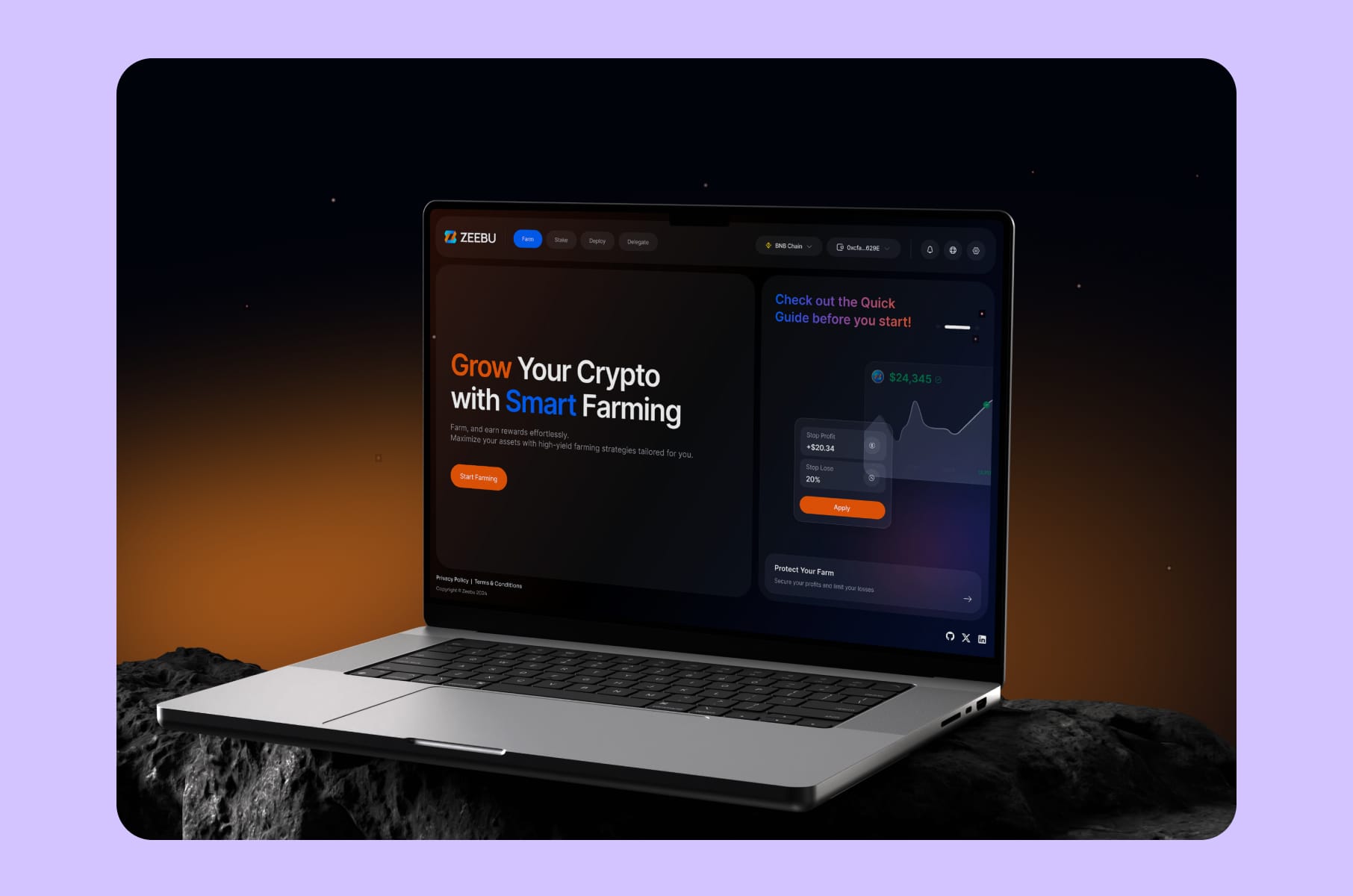
When Merge worked on Zeebu's DeFi platform, early user feedback showed two very different audiences sharing one interface. Designing for the wrong one would have hidden the core action. What we did was structure each flow around the job a specific user came to do, rather than exposing the full feature surface and hoping people would find their way.
So, we would advise putting UX design effort where confusion causes drop-off. A polished portfolio-style UI with weak product logic is still a weak MVP. Message clarity, information hierarchy, onboarding friction, trust signals, and fast time-to-value – these are the design priorities for an MVP developer working on a first release.
A practical MVP tech stack for 2026
Design decisions determine technical choices. For most startups, the sensible MVP software development stack separates the marketing site from the product app and keeps both lean.
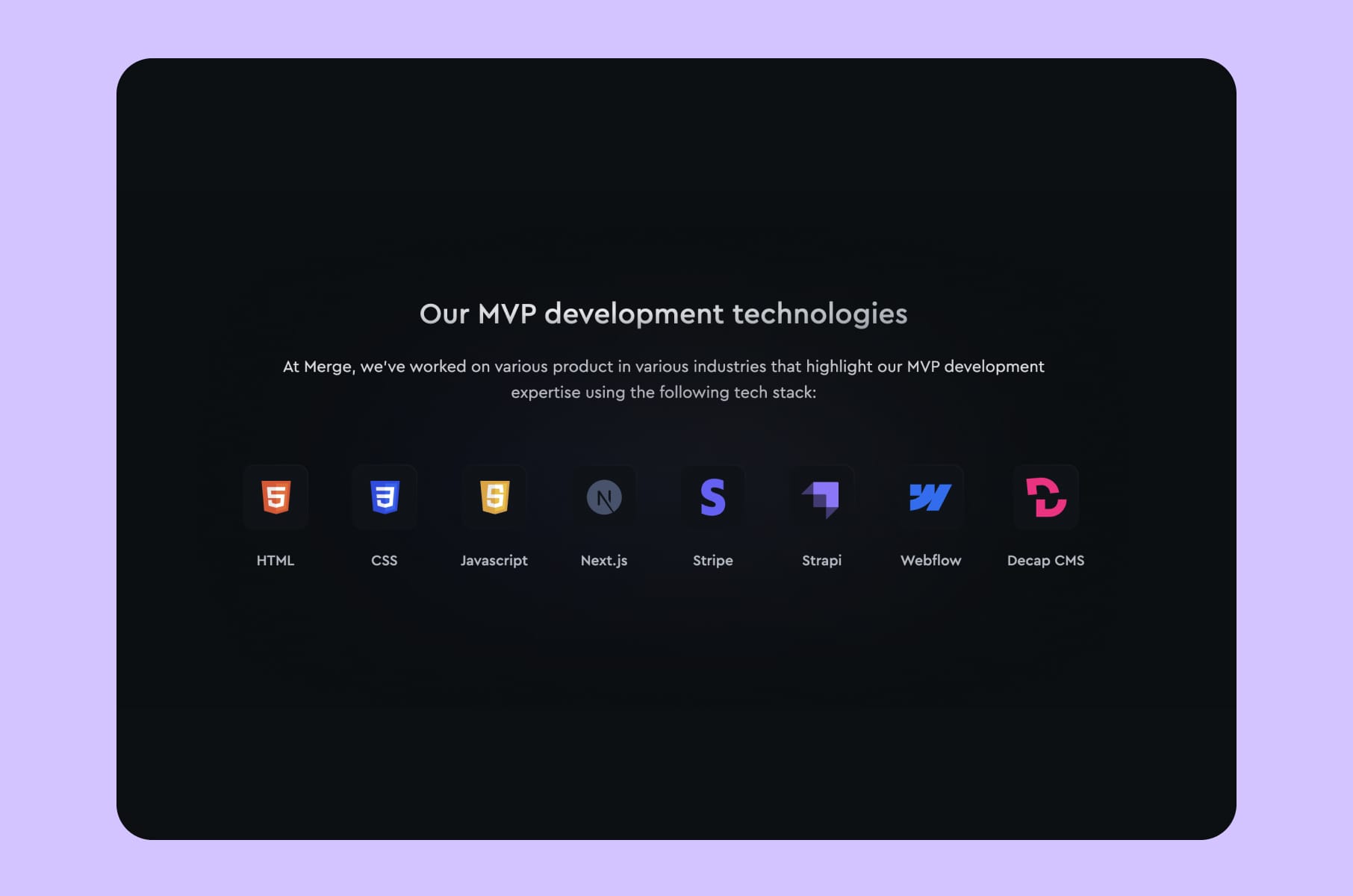
Marketing site: Webflow. Fast visual development, strong CMS and content handling, collaboration and staging environments, and easy iteration for non-engineers. Webflow development handles the public-facing site, landing pages, SEO pages, and investor-facing web presence. Webflow is the site layer here, not the product layer.
Product frontend: Next.js. The right default for a real web app that needs server-side rendering, API routes, and flexibility. Merge includes Next.js development in its MVP stack for exactly this kind of custom application work.
Backend and database: Supabase. Postgres at the core, with built-in auth, storage, and serverless functions in one project. Low setup overhead for a small team.
Payments: Stripe Checkout. Hosted or embedded, with subscriptions, tax handling, promotional codes, trials, and local currency support. Far less maintenance than building payments from scratch.
Analytics and experimentation: PostHog. Product analytics, session replay, and feature flags in one tool. You can run safe rollouts and test variations without redeploying.
This stack is not trendy, and that is fine for MVP software development: each piece handles one job and integrates cleanly. Having used it for SaaS design, our Merge crew finds it genuinely practical.
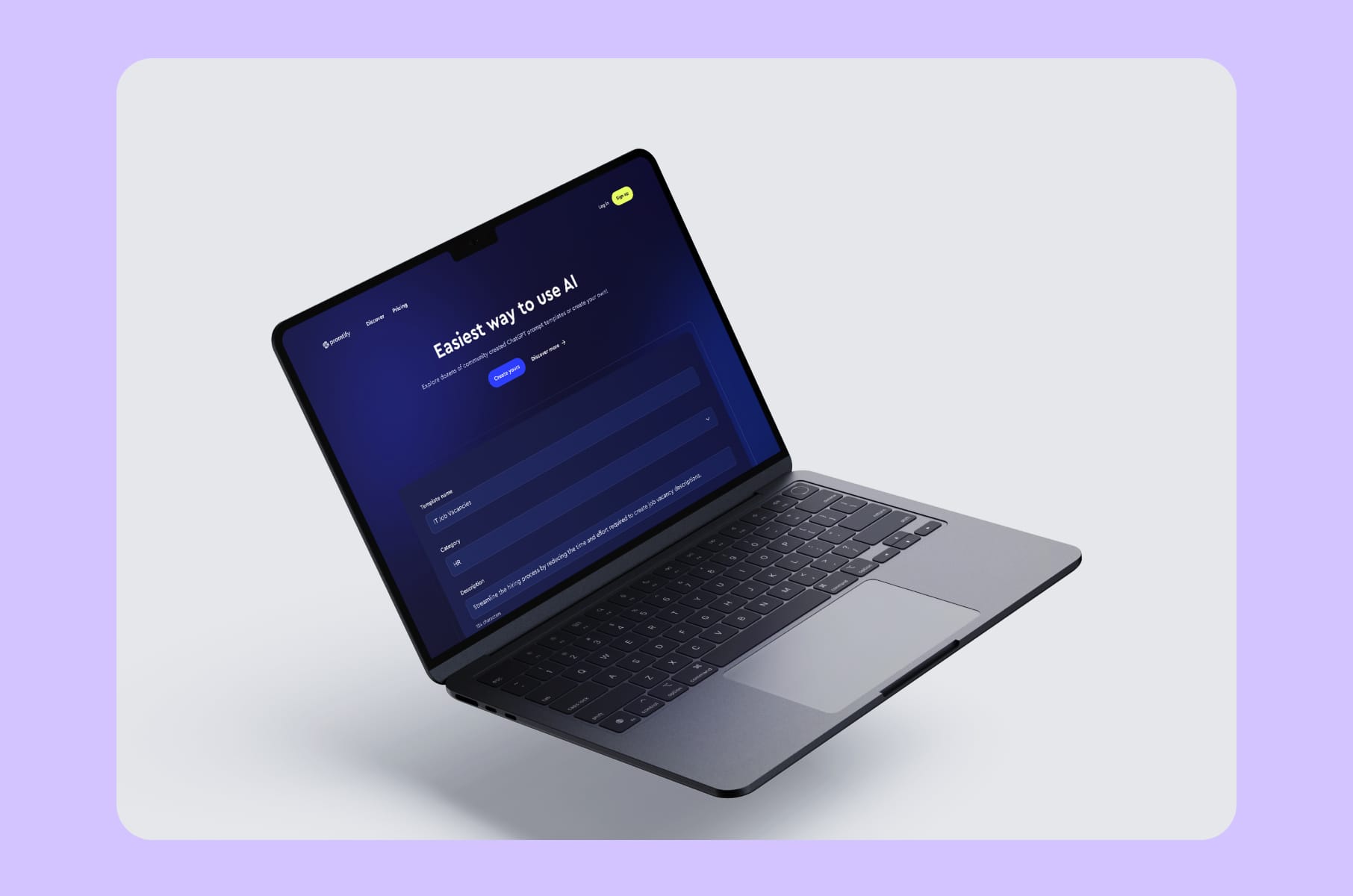
Merge's own Promtify was shipped on a near-identical stack (Next.js, Supabase, Vercel, plus the OpenAI API) and was in users' hands roughly two months after kickoff, with design and development running in parallel. The stack might've been a tad boring, yet the launch was fast.
How to measure MVP success
A good stack means nothing if you cannot tell whether the product is working. Do not measure MVP development success by "we launched." You need to get real user data, and it's better to know what you'll be measuring before your MVP development begins.
Set specific targets. Some examples:
- 30 qualified sign-ups from your ICP.
- 10 users completing the core workflow.
- 5 users returning within 7 days.
- 3 customers agreeing to a paid pilot.
- 40% of onboarding users reaching first value.
- Average time to first outcome under 5 minutes.
As a rule, it's good to track these metrics:
- Visitors to sign-up.
- Sign-up to activation.
- Time to first value.
- Core workflow completion.
- Drop-off point in onboarding.
- Repeat usage.
- Support requests.
The entire point of MVP development is to learn and to test your idea.
Also, for startups seeking funding, a functional MVP with real usage data gives investors more to evaluate than a pitch deck alone. It demonstrates execution ability, market validation, and a willingness to iterate based on evidence. When preparing for fundraising conversations, pair your MVP data with a well-designed pitch deck that explains the numbers.
As your product matures, your MVP development partner can help you scale from MVP to full product. You'll start building out secondary features, improving performance, adding integrations, creating a design system for visual consistency, and refining user onboarding to reduce drop-off.
For examples of what strong onboarding looks like, see our analysis of onboarding experiences from Dia, Superhuman, and others.
How to choose the right MVP format
Not every MVP development project for a tech startup starts with code. The fastest way to avoid overspending is to choose the right format before you hire anyone.
Build a prototype first when the concept is still fuzzy, you need to test comprehension, your buyers need demos before committing, or the workflow is new and unfamiliar. A product landing page combined with a clickable prototype can validate demand before any engineering starts.
Build a concierge MVP first when the real risk is trust, demand, or willingness to pay. The service can be delivered manually at first. You need that learning aspect more than just automation.
Build software first when the value only appears through product interaction, users need self-serve access, repeated usage is core to the business, or manual delivery would distort the test too much.
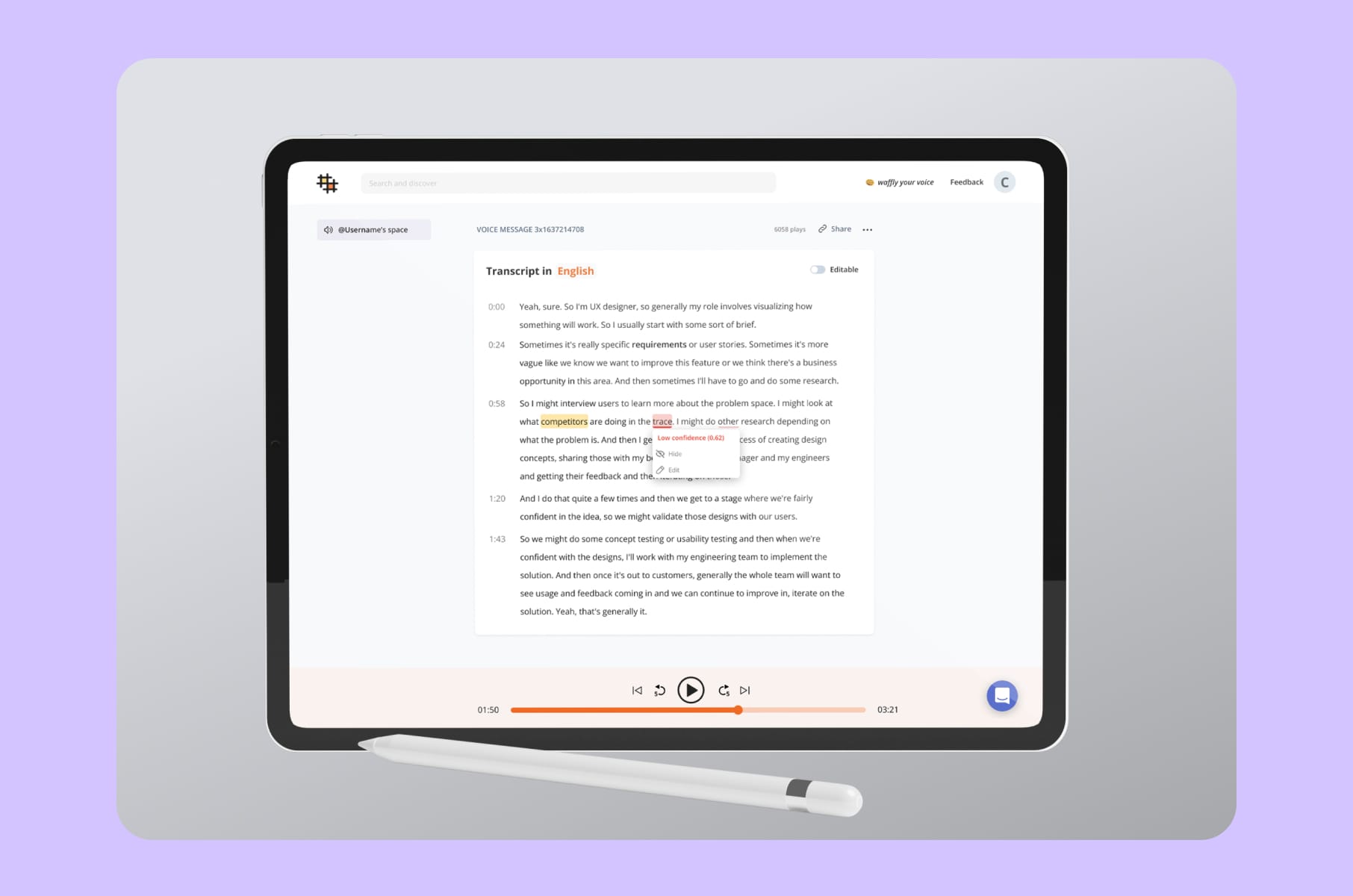
Often, the right answer might be a sequence rather than a single choice. For example, Waffly, an AI audio search product, started with a one-month proof of concept built just enough to demonstrate the core idea. That PoC was a sufficient signal for the team to close their angel round, after which the polished MVP took another two months. The point of the PoC was to show evidence that the core idea works.
A lot of founders should start with a prototype or a concierge model and skip unnecessary MVP software development work. The right MVP developer will tell you which format fits your risk profile better.
When to hire an agency for MVP development
Hire an MVP development company when you need product framing, design, and engineering execution in one team. It can also make sense when you have no in-house design function and need the product experience and launch site planned together.
Do not hire an agency yet when your ICP is still vague or your use case keeps changing. The same applies if you want the agency to invent the business for you, or if you are emotionally attached to a giant feature list.
What you want from an MVP developer team is not "we can build anything." You want to hear:
- We will challenge your scope.
- We will define the riskiest assumption first.
- We will separate marketing-site needs from product-app needs.
- We will ship a measurable core loop.
- We will tell you what not to build.
This is how Merge scopes and builds an MVP: the process starts with idea validation and user flow mapping, then moves into wireframes and prototypes, and then focuses on core functionality. Case studies like Promtify (launched in 2 months) and Waffly (launched in 3 months) show what a tightly scoped MVP development process can produce.
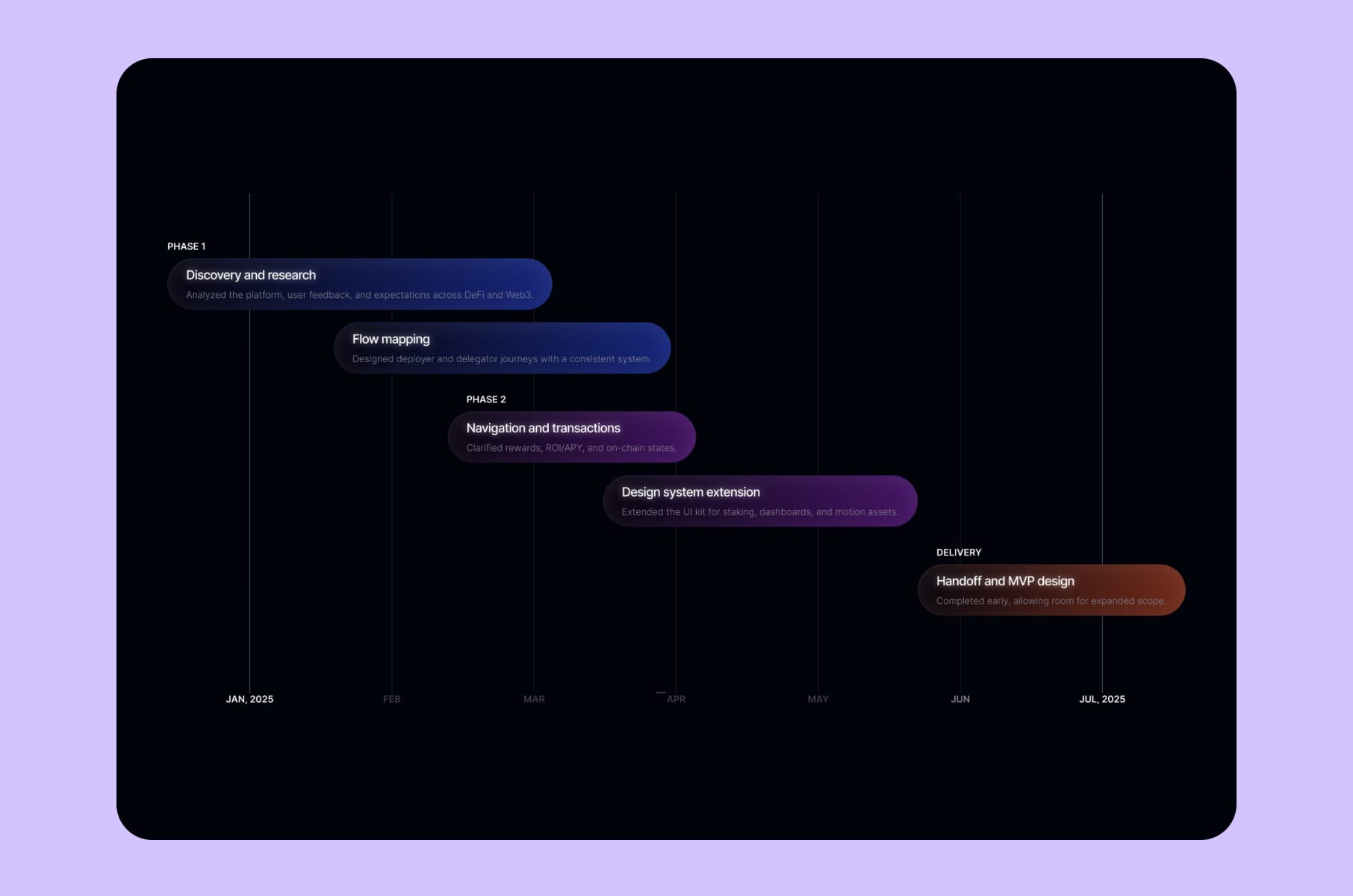
As for larger and more complex builds, when our Merge team expanded Zeebu's DeFi protocol from a single token-swap surface into a full platform with staking, farming, airdrops, dashboards, and a non-custodial wallet MVP, the project was still delivered ahead of schedule because scope was prioritized around the user journey.
FAQ
How long does MVP development take?
Most MVPs take 1 to 4 months to build, depending on complexity and team size. A landing page MVP is the fastest to launch. A single-feature MVP app development project with custom design and code typically takes 8 to 12 weeks. For example, Merge has shipped functional MVPs in as little as two months – for our own product Promtify and for NFT Bull.
How much does MVP development cost?
Costs vary heavily by complexity and team structure. A focused MVP app development project with one core workflow, basic onboarding, and analytics runs significantly less than a feature-heavy first release. Scope determines the real cost, not hourly rates. If you want to see which inputs move an estimate up or down, read what changes an MVP development estimate. Every feature you cut from your very first version saves both time and money.
What is the difference between a prototype and an MVP?
A prototype tests comprehension and desirability without delivering real value to real users, while an MVP delivers real value through a working product, even if that product is narrow. MVP development begins where prototyping ends – when you need to test whether users will complete a workflow, return, and pay.
Can I build an MVP without a technical co-founder?
Yes. No-code platforms like Webflow, Bubble, and WeWeb allow non-technical founders to build functional MVPs. For more complex products, hiring an MVP developer or partnering with a development agency gives you access to engineering expertise without a permanent hire.
Should I build a mobile app or a web app for my MVP?
Build one platform first, not both. For most B2B products, start with a web app. For consumer products where the use case is inherently mobile (location, camera, notifications), start with mobile design. A responsive web app built with front-end development best practices often covers both cases for an MVP.
What tech stack should I use for MVP software development?
Our default for 2026: Webflow for the marketing site, Next.js for the product frontend, Supabase for backend and auth, Stripe for payments, and PostHog for analytics. This stack separates concerns, scales when needed, and avoids premature complexity.
How do I know if my MVP is working?
Track whether:
- Your users reach the first value quickly.
- They complete the core workflow.
- They come back without being prompted.
- They discuss paying or actually pay.
- You know exactly where drop-offs happen.
If any of those signals are missing, fix the product before adding features.
When should I move from MVP to full product?
Move to full product development when your MVP data confirms three things: users adopt the core feature, they return after the first session, and they express willingness to pay (or already are paying). Building a full product before confirming demand means paying for features you cannot yet justify.