0
Table of Contents
Custom web design services anti-trends: what worked in 2020 but doesn't in 2026
The fix for all the web design anti-trends is to start treating your site as an asset.
Custom web design services anti-trends: what worked in 2020 but doesn't in 2026
Here’s our advice to any founder about to sign off on a website budget this year:
Most of what agencies sold as best practice in 2020 had rested on one assumption - that your website is a one-time art project - a brochure you replace when it starts to look dated.
That assumption is now wrong.
Your site is actually a sales asset.
It gets read continuously, by fewer people than it used to get, and often by a machine before any human sees it. Custom web design services are still one of the best things a startup can spend money on - the process behind them just has to catch up with how people (and their AI assistants) actually find and judge websites now.
We at Merge have designed and shipped websites for 100+ startups from Seed to Series B, so we know all about the web design services - how websites get scoped, bought, designed, and maintained. Now, we’re going to teach you in the form of anti-trends, because those are usually more entertaining to read.
We've also covered what to ask before hiring a B2B web design agency - consider this the follow-up on what to avoid once the work starts.
What counts as custom web design services in 2026
Custom website design services mean that a website is designed around your positioning, your buyer, and your funnel, rather than adapted from a pre-made theme.
FYI, website customization services (tweaking a purchased template's colors, fonts, and sections) often get sold under the same label, and AI site builders now produce something in between: fast, cheap, and interchangeable with every other site the model made that week.
So why pay for the real thing?
Because visitors form an opinion of your site in roughly 50 milliseconds. When a template is what they see first, it says, "we look like everyone else."
Lots of template vs custom comparisons agree that the template is cheaper upfront and more expensive per lead, because conversion is where custom work earns its price back.
But tailored web design isn't the answer for everyone, and any agency telling you otherwise is selling. Here are a few examples of routes you might take and why:
Your situation | What to do | Why |
Pre-launch, validating an idea, near-zero budget | Template or AI builder | Speed matters more than differentiation at this stage. |
Single campaign or test offer | Template, or custom web page design for one landing page | One well-made page beats a mediocre ten-page site. |
Funded startup where the website is the main lead source | Custom designed websites | Your site competes with funded rivals for the same buyer's trust. |
Competitive B2B, SaaS, or fintech category | Custom, with ongoing iteration | Credibility and message clarity decide deals before sales calls happen. |
Established product with a dated, underperforming site | You need diagnosis first, pixels second. |
That covers what you're buying. Now, why did the old way of buying it stop working?
Why the 2020 design services stopped working
Your website used to be a place people arrived at, got some info, and left. Getting found was the hard part, and being understood took care of itself once someone landed. That arrangement is over now, and here are the signs:
- Fewer visitors arrive at all, since in 2026 less than one third of Google searches still send a click to the open web, with AI answers taking the rest.
- Each visitor who does arrive is worth more, because something already briefed them before they got to you - Adobe measured AI-referred traffic converting around 31% better than non-AI traffic.
- An AI often reads your site before a human does, summarizing your pitch to a buyer who may never load your homepage.
So the job is different now. It used to reward volume, meaning more pages, more keywords, more slides in the hero, because the goal was catching whatever traffic Google handed out.
Now it rewards clarity and upkeep, because a smaller and more valuable audience (part of it non-human) reads you continuously rather than once every three years.
Eight anti-trends in custom web design services (and what to do instead)
Some of these worked in 2020. Some were always a bit lazy. Either way, if your team still pitches them, that's a signal they haven’t updated their methods and workflow.
1. Big redesign every few years
The 2020 way of doing it was to have a big show: six months of silence, then a grand reveal, then three years of slow decline until the next one. The result was not so good - it was estimated that traditional 12-to-18-month redesign projects fail about 80% of the time to deliver on schedule and value. Which isn't surprising once you notice what the model asks of you: guess what your buyers need and only after the launch, find out whether you were right after the budget is gone.
The 2026 way of custom web design services is to treat the website as a product.
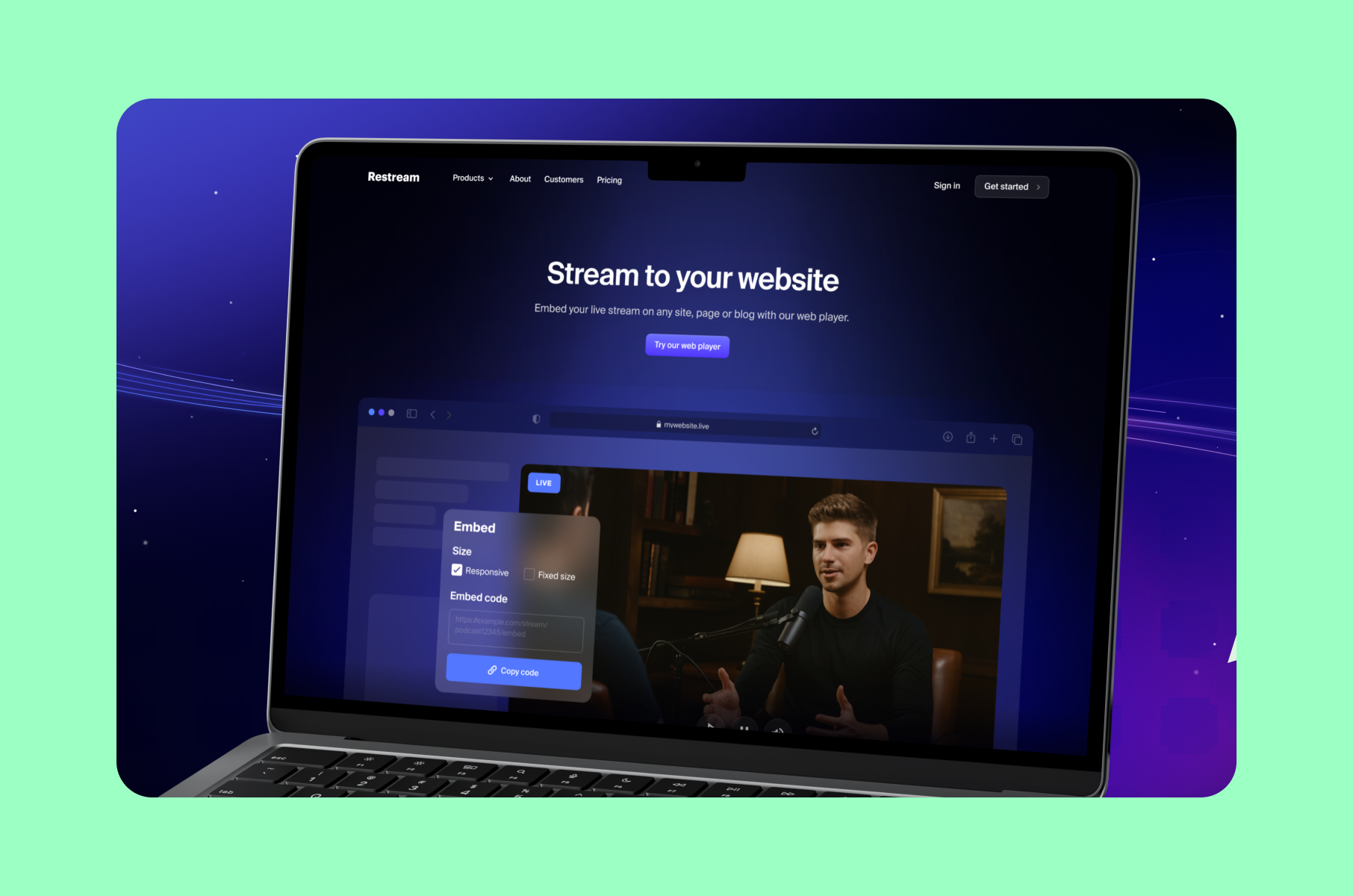
Our way: Launch the highest-impact pages in weeks, then improve them monthly based on what visitors actually do. It's how we work with Restream, for example, where ongoing web design and development support means launches speed up instead of piling into one giant project.
The case for iterating from real user data comes down to risk per dollar: small bets you can read the results of beat one big bet you can't. A site that changes monthly also gives crawlers the freshness signals they reward.
2. Buying a portfolio instead of a process
In 2020, many agencies were picked through Dribbble. We get why, but a portfolio also only tells you what an agency once shipped for someone else's business, under constraints you'll never see. It says nothing about whether they'll understand yours.
This is also how you spot a bad fit - the agency team starts talking about colors and animations before asking a single question about you and your revenue model, for example.
What you want instead is evidence of a process. Discovery before design, research before opinions.
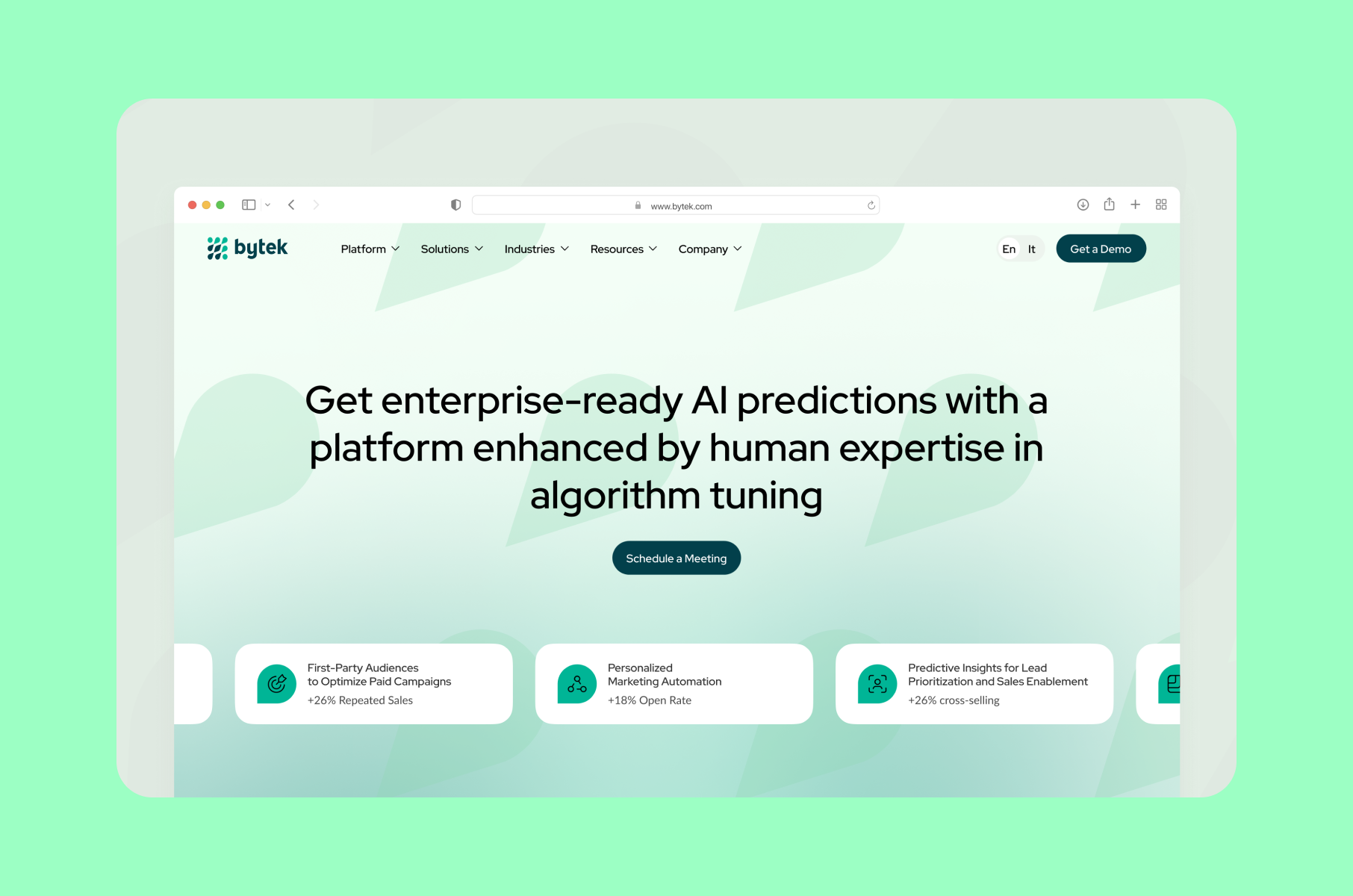
For instance, when we redesigned Bytek's site, the UX workshops and Figma prototypes came first, because the real problem was helping a younger, global audience understand complex AI features.
By the way, our article on a design process that prevents rebuilds will show you what disciplined discovery looks like.
3. Carousels and autoplays
The rotating hero carousel was the old way to avoid choosing. Did you know that, in the famous Notre Dame measurement, about 1% of visitors clicked a carousel, and nearly all of that 1% clicked the first slide. Which means slides two through five weren't underperforming - they were not seen at all.
The better replacement is a bit boring, but it works: one message and one primary action, visible before anyone scrolls.
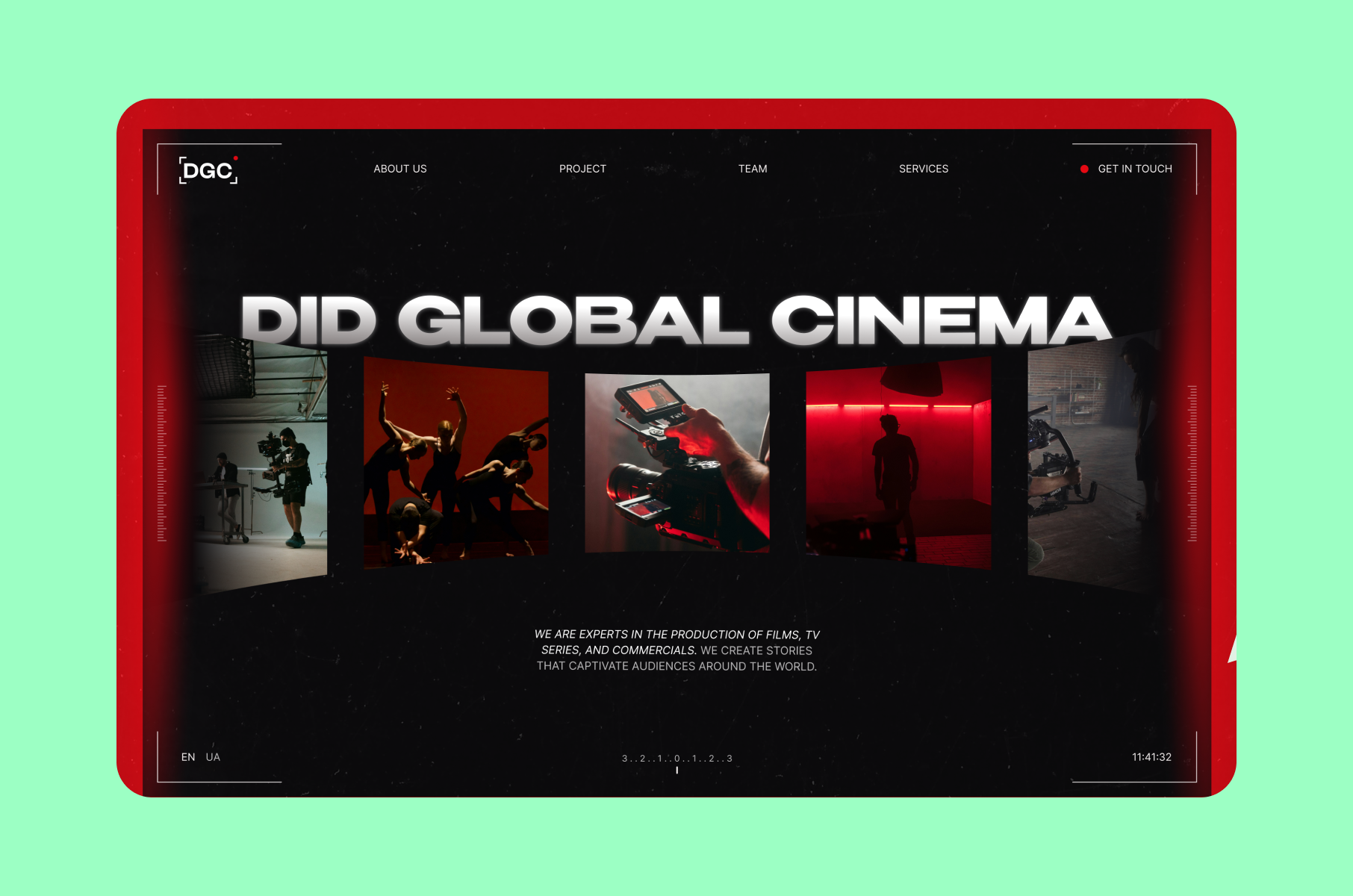
When we built the site for DGC Production, the whole thing became a single-scroll story because forcing a real choice about the one message beats rotating between five.
Entry popups that interrupt visitors should also go, as should the autoplaying videos with sound. And if your homepage can't commit to one headline, fix your positioning.
4. Showpiece effects that ruin your speed
Around 2020, heavy 3D scenes running in the browser, parallax on everything, and frosted-glass "glassmorphism" panels were very popular, and it was the way sites showed ambition.
In 2026, they are an anti-trend. A 3D hero running in the browser is too heavy, and all of it downloads and runs before your visitor sees anything worth looking at. Google also swapped its responsiveness metric in 2024 for INP, which measures how the page reacts when people click and type, and heavy scripts fail it.
The revenue link was documented by Rakuten, when they measured a 53% lift in revenue per visitor after fixing exactly these metrics. Nobody is saying your site should be a text file, and motion still earns its place when it explains something or adds personality at low cost. The anti-trend in question is when it’s a heavily loaded decoration that costs time and money.
5. Templates sold as custom work
Unless it was something clearly agreed upon, some custom website agencies build on purchased themes but charge custom prices, and few clients ever find out. You pay the price of custom web design services and get the output of a $60 template, plus the bundled plugin bloat that comes with themes built to please everyone at once. This gets more common, not less, now that AI builders make "custom-looking" output nearly free.
The fix is asking questions like:
- Will custom web design and web development happen under one roof, or is it outsourced?
- Which platform, and who owns it after handoff?
- Can they show working files, not just screenshots?
An agency that designs with the build in mind - the way we pair design with Webflow development services - will answer these easily.
6. Design first, words later
The classic 2020 style of workflow was to fill mockups with lorem ipsum and leave "the copy" for the client to sort out later. The result was sentences like "we help teams work better," which could describe roughly every B2B company on the internet.
Now, the message is the design. Layout, structure, and copy get decided together, and you deal with both a visitor who can now clearly tell what you are selling straight away, and an AI assistant that can easily summarize your site and your category.
Unfortunately, right now in 2026, you also have to care about AI visibility, because bots visit your site more often than humans these days, to then recommend you in chats and overviews.
In our Everyday Speech redesign, for example, best results came from clarifying value and simplifying navigation, with restyling being in a supporting role. And when we rebuilt CoinLedger's site around a clearer message, their conversion rate doubled.
7. Writing only for Google
We already started to explain this phenomenon in the previous anti-trend.
It used to be that you published thin keyword posts, collected clicks, and retargeted, assuming Google would keep sending traffic forever. It didn't, and you saw the numbers above.
Now, the job of your content moved from ranking on Google to shaping what AI assistants say about you when a buyer asks them a question you'll never see.
In practice, that means structured, answer-first pages: clear definitions, FAQ blocks, and clean markup that crawlers can read without running JavaScript. It also means saying the same thing about yourself on every page, because models pick up on contradicting versions of your story and average them into something blander than either.
What lasts is a site so clear that any reader, human or not, gets your pitch right on the first pass. Our SaaS product launch guide covers the same shift from the go-to-market side.
8. Desktop-first files and afterthought accessibility
In the past, some agencies designed pretty desktop mockups and "adapted" them to mobile at the very end. Honestly, even in 2020, that was old news. With mobile now (and a few years ago, as well) carrying most of the traffic for nearly every audience, that order is backward, and adapting down always loses more than designing up would.
Unfortunately, the same treatment went to accessibility. Since June 2025, however, the European Accessibility Act makes accessible websites a legal requirement for companies serving EU customers, including US-headquartered ones.
A good partner treats both as constraints from day one, with contrast, keyboard navigation, and screen-reader support built into the design system rather than added after a legal letter arrives. One of the rare cases where doing the right thing and avoiding fines are the same task.
TL;DR: Here's the whole picture in one table:
Worked in 2020 | What replaced it in 2026 |
Big-reveal redesign every 3 years | Continuous, data-driven iteration |
Picking agencies by portfolio | Picking agencies by discovery process |
Carousel heroes and entry popups | One message, one primary action |
Heavy WebGL and effect showpieces | Performance budgets, purposeful motion |
Templates resold as custom | Verified custom web services with transparent builds |
Lorem ipsum mockups | Message-first design, copy and layout together |
Keyword-stuffed blog treadmill | Answer-first pages readable by humans and AI |
Desktop-first, accessibility later | Mobile-first, accessibility as a launch requirement |
How to buy custom web design services in 2026
Knowing the anti-trends is half the job. The other half is buying the service in a way that keeps them out. So what does a healthy engagement look like?
A serious custom website design company runs a recognizable sequence:
- Discovery first: your product, your buyers, your goals, your funnel data.
- Then wireframes that settle structure and message before anything gets styled.
- Then the visual concept, responsive across devices.
- Then polish, meaning motion, small details, and handoff to development.
That's how our web design services for startups at Merge run, and while the labels vary between agencies, the order really shouldn't.
On money: expect a professional SaaS website to run $8,000 to $80,000+ depending on scope, with most funded early-stage builds landing in the $20K-50K band. Cheaper options exist, but… (Re-read anti-trend five). If you're comparing partners right now, our ranking of the best web design companies of 2026 is a decent place to start.
And a short list of red flags, because a custom web design agency that will waste your budget usually has at least two:
- Guaranteed rankings. Promising page one of Google by a specific date is one of the oldest tricks in the book. Nobody can guarantee it.
- The bait and switch. A senior person sells the project, then juniors you never met run it. Ask directly who does the work.
- 100% upfront payment or vague proposals. Milestones, scope, and what happens on scope change should be in writing before the kickoff.
- Platform lock-in. If leaving the agency means losing your website, you're renting, not buying. Ownership of files and hosting goes to you.
- No questions about your business. An agency that jumps straight to moodboards never asks what the site is supposed to sell.
Oh, one more useful thing. Before committing to a full project, it may be wise to pay someone to check what's actually wrong. A UX audit or a short user research sprint tells you whether you need a full rebuild or three targeted fixes, and it tells you how the agency thinks before you've bet your budget on them.
Wrap-up
The fix for all the anti-trends is to stop treating your website as a thing you finish, and start treating it as an asset. You keep improving it rather than stage a reveal, you settle the message before the visuals, and you make sure a human and a machine can both tell what you sell without working for it.
None of that needs magic or a huge budget. It mostly requires a partner who works this way by default. Startups that find one end up with custom-designed websites that keep paying for themselves long after launch, which is where you want to be when the next Google update arrives.
If you'd rather get there with a team that has been doing this for years, we're easy to find. Take a look at our tailored web design offer and our UI/UX design services, browse the case studies, and say hello. We'd love to help your website outgrow 2020 for good!
FAQ: custom web design services
How much do custom web design services cost in 2026?
For funded startups, most projects land between $20,000 and $50,000, with the full market running $8,000 to $80,000+ depending on tier. Scope, page count, motion design, and development complexity drive the spread. Budget for changes after launch as well, because a site that never changes is anti-trend number one.
Is a template ever the right call?
Quite often, yes. Pre-launch validation, tight budgets, and single-campaign pages are all fine reasons to skip custom website services for now. The trap is paying custom prices for template work, or staying on a template after your competitors' sites started outperforming yours on credibility and conversion.
How long does a custom website project take?
A focused marketing site typically takes 6 to 12 weeks from discovery to launch, depending on page count and content readiness. Both client and partner sites for Versus Trade launched in two months, which is a fairly representative pace for a well-scoped project. Multi-month silences, on the other hand, are a warning sign.
How do I know if my current site carries these anti-trends?
Check the basics yourself first: does the homepage commit to one message, does it load fast on a phone, can a stranger say what you sell in ten seconds? For the deeper layer - performance metrics, accessibility, structure, conversion paths - a professional UX audit will find the gaps and rank the fixes by impact.
Is web design still worth it in 2026?
Yes, but for a different reason than in 2020. It's no longer about being found - it's about what happens in the few seconds after someone arrives. Traffic is down across the open web (under a third of Google searches still send a click), so each visitor costs more to earn and is worth more once they land. A site that converts 2% instead of 1% is now worth roughly double what it was when traffic was cheap. Design is one of the few levers that moves that number, which makes it a better investment than it was, not a worse one.
Will AI replace web designers?
Not the ones doing the part that matters. AI has absorbed the production layer - laying out sections, writing first-draft copy, generating variations - and that's a real chunk of what junior design work used to be. What it hasn't absorbed is the judgment: deciding what your site should say, what to cut, which objection kills your deals, and what to test next month. The agencies that struggle in 2026 are the ones selling pixels. The ones doing well are selling decisions, with AI making the execution faster.
Do I still need a web designer if I'm using Webflow or Framer?
You need one for the design, not the build. Webflow and Framer removed the engineering barrier, not the design one - they let you ship whatever you decide to ship, beautifully or badly. Most weak Framer sites we see aren't weak because of the tool; they're weak because someone started dragging sections around before settling what the homepage was supposed to say. That's anti-trend six, just with a nicer editor. The upside is real, though: a designer working in Framer hands you a site you can update yourself, which is exactly what escaping the three-year redesign cycle requires.
Does website design affect SEO and AI search rankings?
It affects both, in different ways. For classic SEO, the connection runs through performance and structure - Core Web Vitals, mobile rendering, and clean markup are design decisions before they're development ones. For AI search, the link is more direct: models read your page structure to work out what you do, so clear headings, plain definitions, and consistent claims across pages decide whether you get summarized correctly or blandly. A beautiful site that hides its pitch inside JavaScript-rendered animation is invisible to the thing briefing your buyer.