0
Table of Contents
SaaS product launch guide: what worked in 2023 but doesn't in 2026
How to launch a product in 2026 when the old playbook no longer works?
A funny thing happened on the way to the product launch in 2026. The Product Hunt badge that used to mean something now mostly means a tab open in three of your friends' browsers. The SEO funnel that used to print signups is being eaten alive by AI Overviews. The cold-email blast that used to fill the calendar with demos is being ignored by inboxes that have basically given up on strangers. And the "massive launch day" mythology that powered a whole generation of SaaS founders is, well, quietly being retired by the same founders who used to swear by it.
As a SaaS design and development agency, we get to sit next to founders during the exact week they're about to push the big red launch product button. And the conversation has changed. It used to be about getting on the front page of Product Hunt. Now, the focus is on getting the first ten paying customers.
Before we go on, a quick reminder that we already have a few related pieces worth a look:
- Our SaaS product design comprehensive guide.
- Our quick guide to B2B SaaS design.
- And a related deep dive on MVP development for startups.
Now, back to the actual topic: how to launch a product in 2026 when most of the 2023 playbook no longer works.
Who this product launch guide is for
This is a hands-on guide for early-stage SaaS founders, product leads, and in-house teams who are about to push a new product launch out the door in the next 1-6 months. We'll walk through what changed between 2023 and 2026, what is still working, why a soft product launch beats a "massive" one for most teams today, and the actual checklist we use with our clients when we design a SaaS product from MVP to scale.
Mind you, this isn't a piece for late-stage SaaS with a real PR team and an eight-figure paid budget. They can still do the "big launch day" thing because they have both the brand and the salespeople to convert the spike. For everyone else, the rules have changed.
The 2023-style launch recap
Just to set the table: the 2023 SaaS product launch more or less looked like this:
- You'd build for 6-9 months.
- Collect a waitlist via a "fake door" landing page.
- Have a press exclusive.
- Drop a Product Hunt launch.
- Fire a cold email sequence to a 50,000-person list scraped from Apollo.
- Queue 12 SEO articles built on the "skyscraper" template.
- Turn on Google Ads.
If all four channels lit at once, you'd hit a nice spike, ride it for a month, and call your seed round.
Pretty much every step of that is either dead, dying, or doing way less than it used to. Let's look at why.
What actually happened between 2023 and 2026
A lot of the breakage has the same root cause: AI made content infinite and attention finite. The same week a founder ships a "10 ways to do X" blog post, ChatGPT writes a thousand of them, Google's AI Overview summarises the answer without the click, and the founder's inbox fills up with AI-personalised cold emails that all sound the same.
How about some numbers that will tell the story a bit better?
Tactic | 2023 | 2026 |
Product Hunt launch | ~47 featured products/day, big spillover traffic | ~16 featured products/day, 80-90% traffic drop within 72 hours |
Cold email reply rate | ~8.5% (pre-2020), ~5% in 2023 | 3.43% average (and falling) |
SEO content funnels | Long-tail "how-to" posts compounding | AI Overviews on 48% of SERPs, 61% organic CTR drop |
Waitlist "fake door" tests | Big signup lists = "validation" | Case studies show ~3% trial conversion, 89% churn at 30 days |
Paid acquisition (B2B) | CAC roughly flat, channel mix stable | CAC up 40-60% since 2023, B2B paid search hit ~$802 CAC |
TechCrunch / wire-service PR | Tier-1 launch coverage moves the needle | Most "AI-powered" angles get filed under AI-washing |
Pure PLG funnels | "Self-serve everything" was the default | Hybrid PLG + sales-assist hits NRR targets 67% vs 58% |
None of those tactics are 100% dead. A great Product Hunt launch with 80+ hours of prep can still be credible. A signal-based outbound campaign with real personalisation can still hit 15-25% reply rates. The point is, none of them carry the product launch on their own anymore.
The Product Hunt question
In our opinion, if you don't have a warm community to push you, a Product Hunt launch in 2026 is dubious. You either commit numerous hours of prep with a teaser asset, a hype page, a Slack/Discord push, a coordinated comment plan, basically the whole thing, or you skip it entirely. The middle ground (a casual "let's just throw it up and see what happens") is now a guaranteed couple of hundred visitors and maybe a few signups.
We've watched a few clients debate this and land on the same answer: do it as a "polish moment" three to six months after a soft launch, when you already have customer logos and a working pricing page, not as the launch itself.
SEO is mostly a trap for early launches
What happened now is that early-stage SaaS shouldn't expect "informational" SEO content to bring new product launch traffic at all. According to Pew Research, only about 1% of links cited in AI Overviews get a click. Bain has estimated that organic traffic is down 15-25% across the board. Roughly 60% of Google searches now end with zero clicks.
Unfortunately, we at Merge are also experiencing this on a massive scale. So, to the person actually reading this, we appreciate you!
That doesn't mean SEO is dead forever. It does mean that, as a product launch marketing channel for an early-stage SaaS, it's the wrong place to invest your first month. It’ll most likely take 6-12 months, and the ceiling is way lower than it used to be. We'd rather spend that energy on three founder-led channels: LinkedIn posts, podcast guesting, and a private community thread. (More on those in a moment.)
What's actually working in 2026
So if the 2023 playbook is no longer viable, what's replacing it? A few things, and they all have a thing in common: they require the founder to be visibly involved in launching a product, and they reward being in a niche.
Distribution-first product design
We've been saying this internally for about a year now - distribution is the new bottleneck, not your product. AI made shipping software embarrassingly easy. What's hard is getting one specific person inside one specific company to actually notice your thing exists, try it, and pay.
A 2026 SaaS that wins typically picks one channel and posts daily on it for 90-180 days. The data is fairly clear: founders posting personal-experience content on LinkedIn see 3-5x more engagement than generic industry commentary. The first revenue impact from founder-led thought leadership tends to land within 90 days. That's how a successful product launching strategy is built now.
Hybrid PLG + sales-assist
The pure self-serve product-led growth (PLG) funnel was the 2023 dream. In 2026, hybrid is better. OpenView's data shows that 67% of hybrid PLG + sales-assist companies hit their net revenue retention (NRR) targets, versus 58% of pure PLG.
You should stay completely away from PLG, though. The "activation infrastructure" has just gotten more serious. Guided in-app tours, behavioral expansion signals, and a human ready to jump on a call when the trial user hits a wall. That's how a 2026 launch product motion actually converts.
Design as an advantage
This one is dear to us, obviously. When AI can spit out a generic SaaS dashboard in 30 seconds, what's left to compete on? Taste, speed, trust, brand, and the bits of UX that take real human judgment to get right.
A 2026 essay on why AI killed the feature moat in SaaS mentioned that AI made shipping features trivial, so the real defensible advantages are now SEO, brand, taste, trust, and data. Basically, the kind of UX polish that makes your product feel inevitable instead of generic.
There's also data behind this. SaaS products using AI-driven UX patterns see 47% higher retention and 33% higher customer lifetime value, according to a 2026 benchmark. This is one of the reasons our digital product design agency work has shifted more and more from "make it look nice" to "make the activation flow feel like a guided tour where the user wins something every 30 seconds." (For more on this, our B2B SaaS design trends post goes deeper into the patterns.)
Soft launch beats massive launch (most of the time)
Here's what our CEO said:
soft launch > massive launch
— Paul Tseluyko (@paultseluyko) June 14, 2025
I get so much value right now, guys, by showing and trying to sell my product directly to people just from my circle.
And I know, by the time I do a massive launch:
I'll already have a few thousands mrr
Better understanding of my core values
Real… pic.twitter.com/EIiL5Xckyg
That post is pretty much the playbook every successful 2026 founder we know is running. And it's backed up by people who've been preaching this for years. Y Combinator's "How to Get Your First Ten Customers" essay is still the canon: do the manual, hands-on things. Talk to humans. Sell directly. Your first ten customers will teach you more than any spreadsheet ever will.
Lenny Rachitsky's framing on product-market fit is similar - the real PMF signals are a small group of customers who actually love the product and a retention curve that flattens, not a Product Hunt #1 badge.
Why does this matter for how you launch a product in 2026? Because the cost of getting it wrong has gone up. With CAC up 40-60% since 2023, you simply cannot afford to scale marketing on top of a leaky onboarding flow, a confused pricing page, or a value prop you haven't yet sharpened with real users.
Here's the rough trade-off, side by side:
Dimension | Soft launch (private + circle) | Massive launch (public + paid) |
Goal | Learn what people actually pay for | Generate awareness + signup spike |
Audience | Your circle, warm intros, niche community | Cold market, press, ads, Product Hunt |
Timing | Day 0 of the product | Months 3-9, after retention is proven |
Outcome you're measuring | Retention, NPS, % who pay | Signups, press hits, traffic |
Risk profile | Slow, but it adds up | Spiky, easy-to-burn cash |
What it costs | Founder time, maybe a Notion page | Paid ads, PR retainer, launch ops |
Best for | Early-stage, niche, bootstrapped | Funded, broad-ICP, polished UX |
What it teaches you | Real value prop, pricing, ICP | Brand awareness, channel CPMs |
Now, "soft launch" doesn't mean "no marketing."
It means concentrated marketing to a small number of people you can actually have a conversation with:
- A Slack group of 50 founders.
- A LinkedIn list of 200 ops leads you've engaged with.
- A Discord of 1,000 power users in your category.
The point is that every signup comes with a face, so every churn comes with a reason you can do something about.
Our take: what to do in the soft-launch window
Here's roughly the order of operations we'd recommend for the first 60-90 days after your soft launch a new product moment.
- Get the first 10 paying customers manually. Personal DMs, intro calls, screen shares. Don't automate anything yet. This is when you learn what your value prop actually is, not what your deck says it is.
- Run 10-15 user interviews on the activation flow. A 30-minute call with each. If you're doing this right, every interview should give you 10-20 insights, like our team got during the Capable rebuild (more on that below). Our user research services page covers the methodology if you want to go deeper.
- Track your Sean Ellis score. Ask: "How would you feel if you could no longer use this product?" If less than 40% say "very disappointed," do not scale marketing yet. The 92% of SaaS failures within 3 years mostly skipped this step - 34% of them died for lack of product-market fit.
- Polish the onboarding. This is the highest-leverage design work you can do pre-public-launch. Trial-to-paid conversion for B2B SaaS sits around 18.5% median, and a credit-card-required ("opt-out") trial hits ~48.8%. The difference is mostly the onboarding flow. Our dedicated user onboarding design services page has more on what this looks like in practice.
- Lock in pricing experiments. Annual plans run 10-20 points higher NRR than monthly. If your customer makes the bet on you for 12 months, the math changes.
- Then - and only then - start prepping the public launch. PR, Product Hunt, paid, the works. By that point, you have logos, retention data, and a story that actually maps to a buyer's pain.
A 2026 SaaS product launch checklist
Below is the rough checklist (a so-called starting point for you) we use internally with our clients, mapped against a 90-day timeline.
Phase | Week | What you're shipping | What you're learning |
Pre-launch | -8 to -4 | MVP scope, brand basics, landing page | Who you're for, who you're not for |
Soft launch | 0 | First 10 customers via DM and circle | Real value prop, willingness to pay |
Iterate | 1-4 | Onboarding redesign, pricing test | Activation rate, day-7 retention |
Iterate | 4-8 | Feature priorities from real users | Sean Ellis score, top churn reasons |
Expand | 8-12 | Community thread, founder LinkedIn cadence | First inbound channel, content angles |
Public launch | 12+ | Product Hunt, PR, paid, partnerships | Brand awareness, CAC payback |
The big change from 2023 is the order of operations. You're no longer trying to spike on day zero. The "launch day" is more like a milestone now.
Common pitfalls when launching a product in 2026
A handful of things kill 2026 product launches more often than any single tactic helps them. We've seen all of these up close during client work, so this list isn't theoretical.
- Launching for the press, not the customer. A glowing TechCrunch piece won't fix a 3% trial-to-paid rate. The press cycle is a vanity metric now.
- Scaling marketing before fixing the onboarding. If activation is broken, more traffic just means more wasted impressions.
- Validating with waitlist signups instead of paid pilots. As covered above, 3% conversion from a fake-door waitlist is the modal outcome. People sign up because a concept sounds interesting, not because they'll pay.
- Generic "AI-powered" messaging. Both Google and humans have gotten very good at sniffing this out. The "AI-washing" pattern is now actively penalised in B2B media coverage.
- Premature paid acquisition spend. With CAC up 40-60% since 2023, spending on Google or LinkedIn before your funnel converts is just an expensive way to learn what's broken.
- Feature-focused messaging. Your buyer doesn't care that your AI uses GPT-5. They care whether you save them four hours a week on a task they hate.
How we approach SaaS launches at Merge
Since we've been doing this for a while, here are a few patterns from real client launches that line up with everything above.
Capable: rebuilding the launch around UX
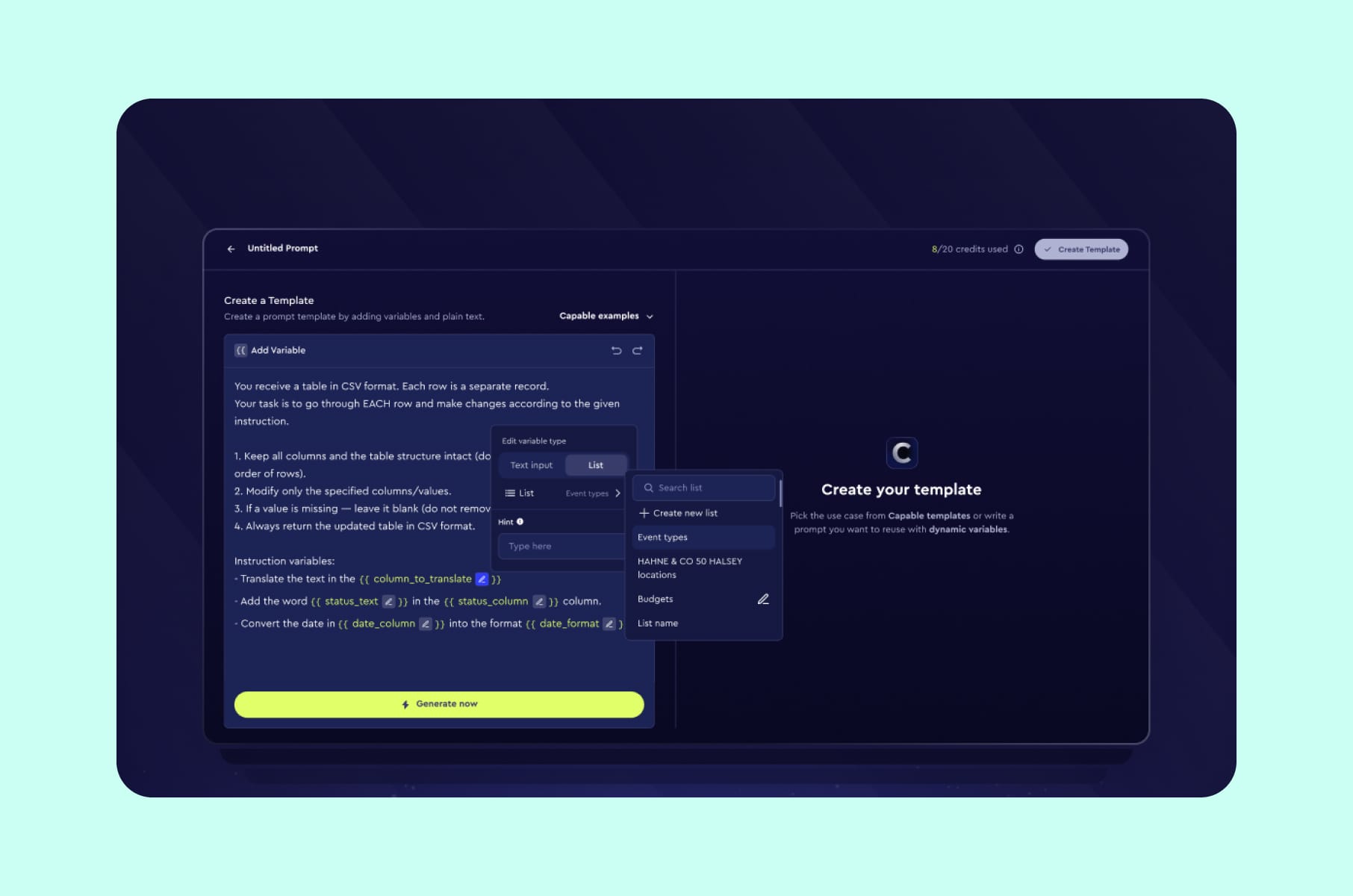
Capable is a B2B AI SaaS that helps teams turn prompts into reusable, dynamic templates. The early version was struggling with the exact problem we just described - free users weren't converting, the prompt builder UX was confusing, and the team couldn't satisfy B2B requests. So instead of pushing a louder "massive launch," we ran a deep UX revision and a full rebrand first.
Our user research process - 30-minute interviews, 10-20 insights per call - mapped real behavior to real friction. We rebuilt the prompt builder to need fewer clicks, highlighted paid features inside the platform to make the value of upgrading obvious, and added Organization Management to meet B2B demand.
The team also did a 3-hour brand workshop, ran through 40+ logo concepts, and landed on a name and identity that could hold up at scale. The product then launched on Product Hunt with a landing page converting at 13% from visitor to signup.
Lox: redesigning to take the launch from spike to retention
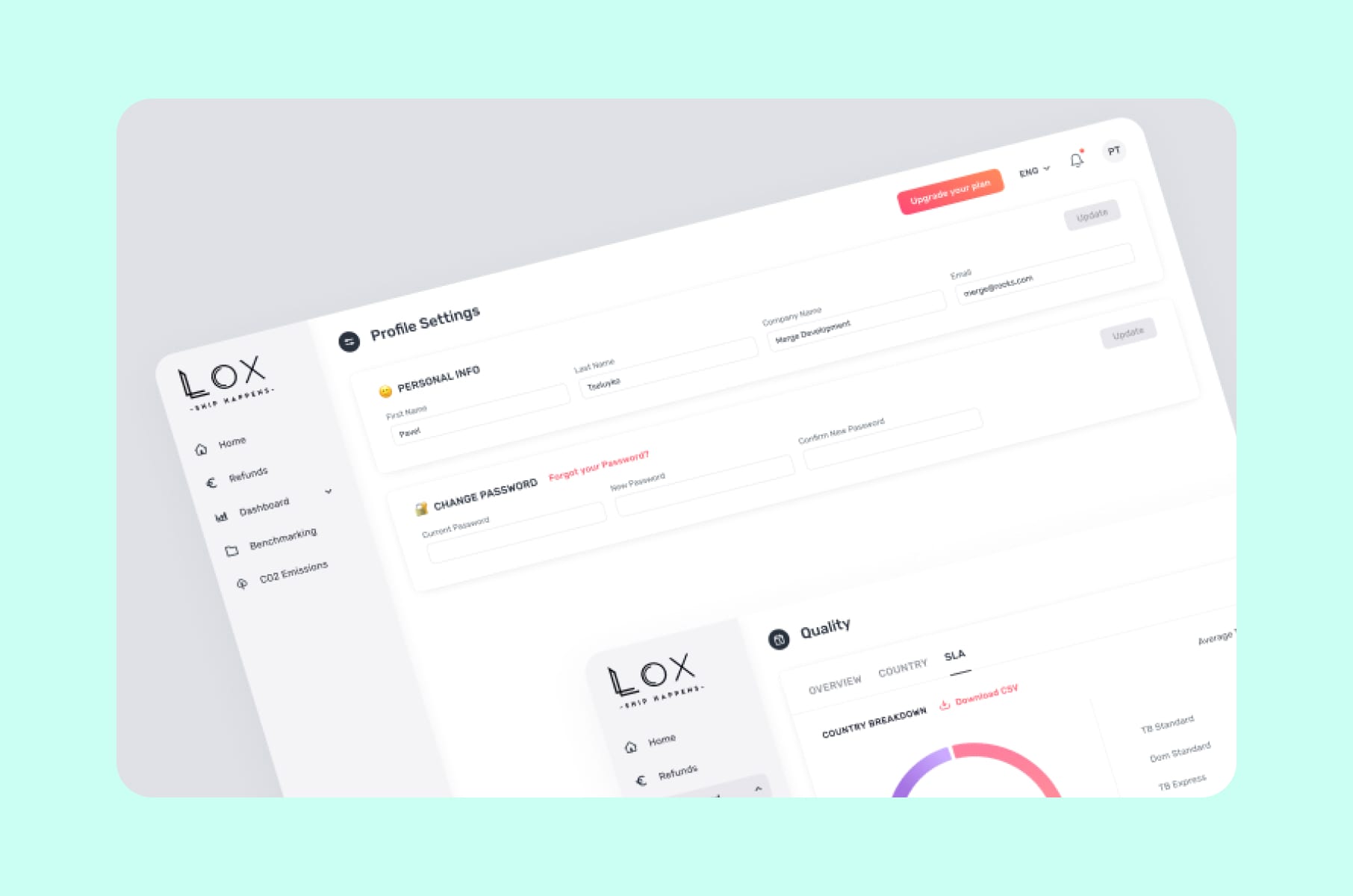
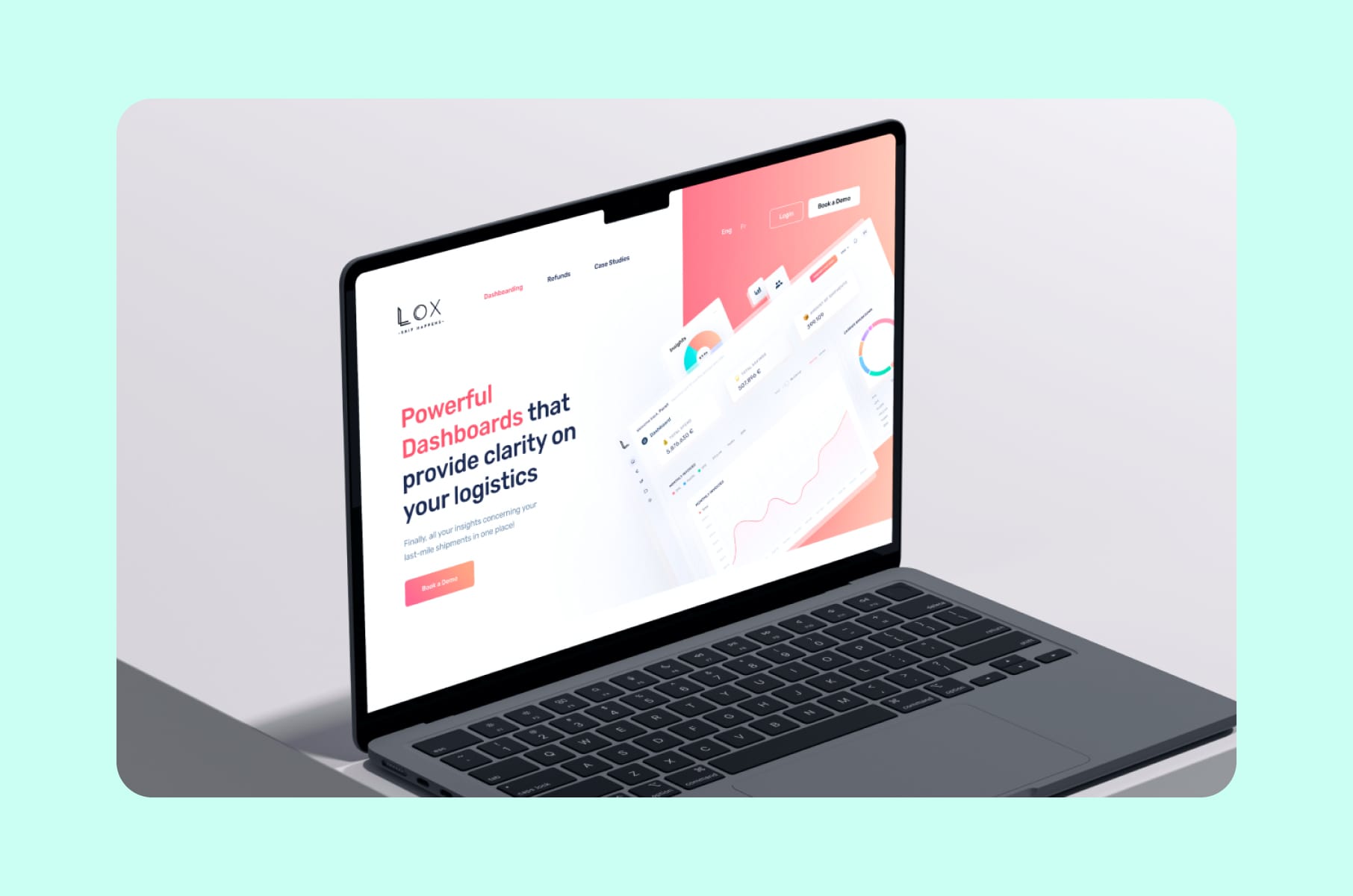
Lox is a SaaS that simplifies shipping logistics. Our work was less about the initial product launch moment and more about what happens after - the redesign, with AI algorithms embedded in the analysis flow, dropped their churn rate by 90%.
We wrote up the longer version in our shipping cost-reduction SaaS case study if you want to see the design decisions in detail.
HeyLady and Restream: design systems that hold up under scale
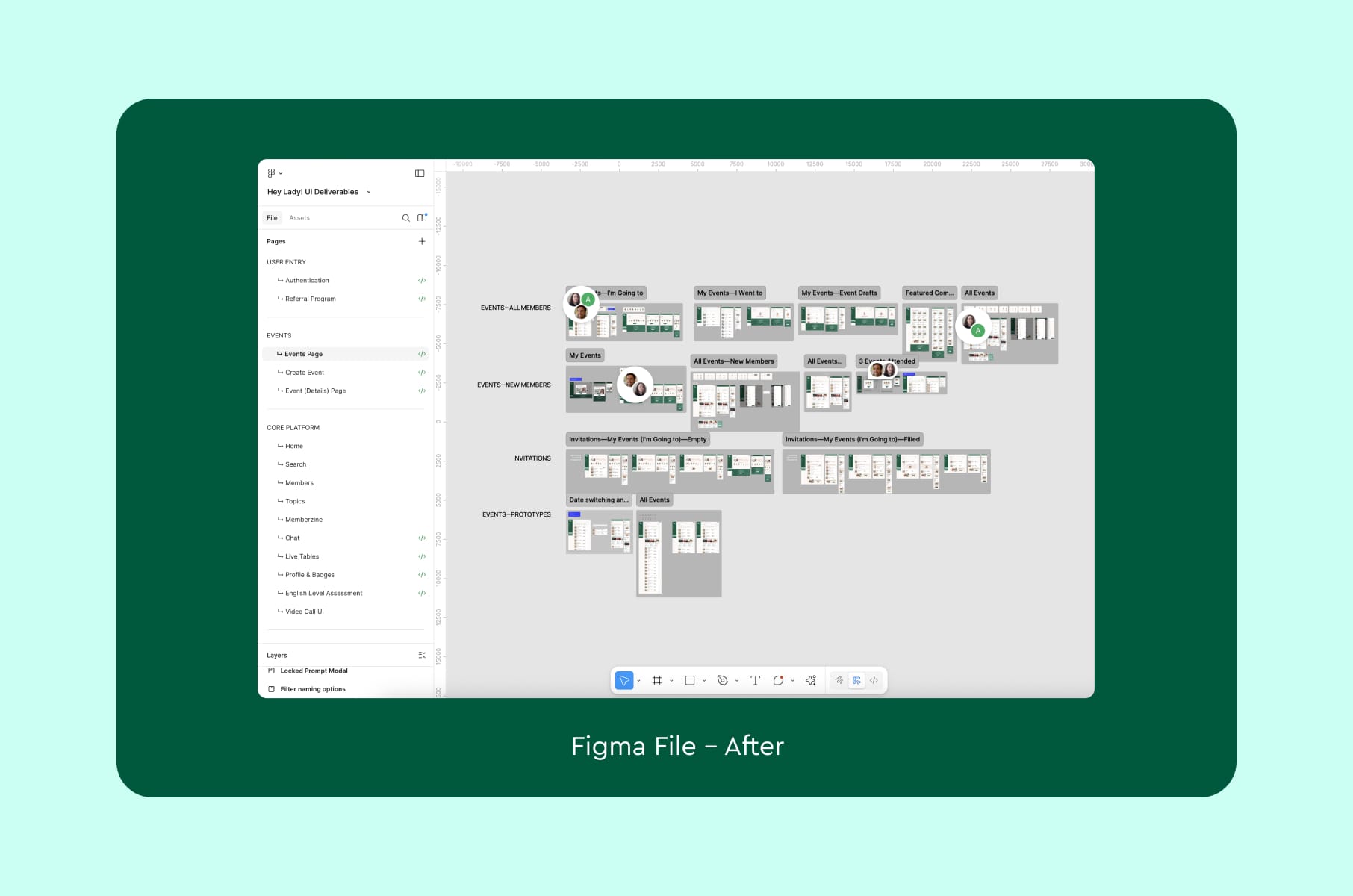
HeyLady is a women-only English-conversation SaaS that needed more consistency as a fast-moving product. We built a design system with tokens, components, and patterns, which reduced rework and let onboarding, events, and chat ship in lockstep.
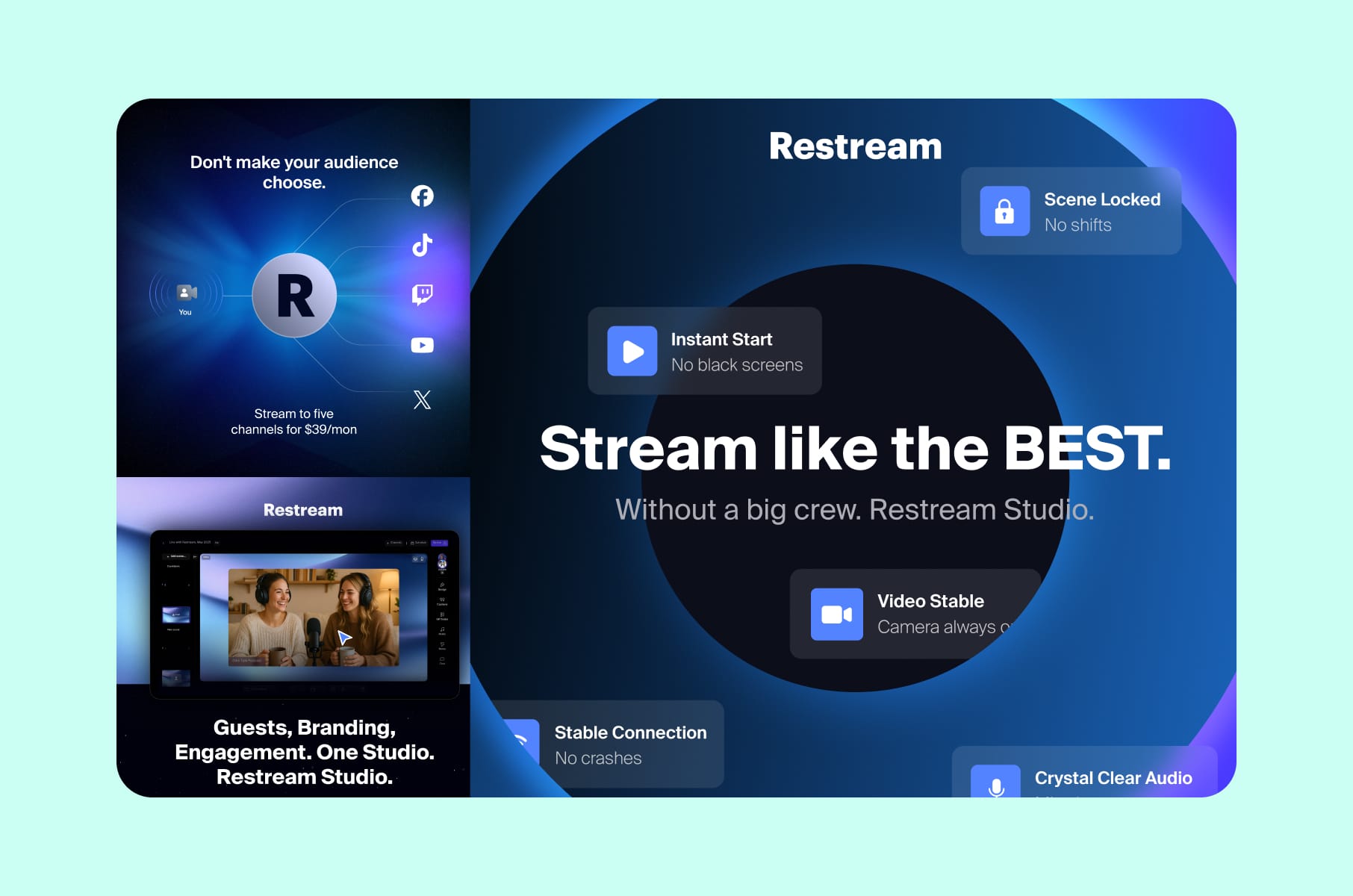
Restream, a multistreaming SaaS, partnered with us for ongoing web design and dev to speed up launches and provide steady campaign delivery. In both cases, the "launch" wasn't one moment - it was a rhythm of small, well-designed releases.
Across all these projects, the marketing product launch moment matters way less than the design and product quality that supports it.
FAQ
How do you launch a product in 2026 with no budget?
The honest answer: founder-led distribution and a soft launch to your circle. Spend your time on LinkedIn posts, podcast guesting, niche Slack/Discord communities, and direct DMs to your first 10 customers. Skip paid ads entirely until you have at least a few months of retention data. Most successful bootstrapped 2026 launches do basically zero paid for the first six months.
Is Product Hunt still worth it for a new product launch?
It's binary. If you commit 50-120 hours of prep, have a hunter lined up, and can mobilise a Slack/Discord push, it can be a credibility moment. If you can't, skip it and put the energy into a niche community launch instead. The middle ground gets you 200 visitors and a tab open in three browsers.
How long should a soft product launch last?
Roughly 60-90 days is what we see most often. The signal to graduate to a "massive" public launch is when you've got real retention data, a Sean Ellis score above 40%, a clear ICP, a working onboarding flow, and a few thousand MRR. Until those are in place, scaling marketing just inflates churn.
What does a product launch production cost in 2026?
It really depends. A bootstrapped soft launch can cost the price of a Notion subscription. A polished public launch with PR, paid, Product Hunt prep, brand work, and a landing page redesign can run anywhere from $15,000 to $150,000+. The bigger variable is the cost of not doing the soft launch first - a botched, massive launch with a leaky funnel can burn six figures with nothing to show for it.
Do I need a design agency for my SaaS product launch?
Not always. If you have an in-house designer who has shipped a few SaaS products and knows the activation patterns by heart, you're probably fine. If you don't, working with a SaaS design agency for the first 90 days is one of the highest-leverage moves you can make. The cost of design rework after launch is usually 3-5x the cost of getting it right beforehand. You can also run a focused design sprint before committing to a longer engagement.
Is SEO dead for SaaS in 2026?
No, but it's no longer a viable launch of a product channel for the first year. With AI Overviews on ~48% of SERPs and zero-click search dominating, informational SEO won't bring meaningful traffic for 6-12 months at best. Invest that energy in founder-led content first. SEO becomes worth investing in once you have a clear ICP and a brand worth searching for by name.
Wrap-up
As you see, the 2026 SaaS product launch looks pretty different from what worked even three years ago. No more vanity rituals now. What works is soft product launches, founder-led distribution, design as an advantage, hybrid PLG, and obsessive onboarding work. Those decisions are what actually turn into revenue. The good news is that this rewards small, focused teams who can move fast and stay close to their first customers. The bad news is that it requires patience.
If you're thinking about how to launch a new product in the next quarter, our advice is pretty simple: skip the massive launch instinct. Go small, go warm, go fast on iteration, and earn the right to a public launch later. We at Merge have helped startups from MVP to fully scaled SaaS - if you'd like a hand on the design, onboarding, or product UX discovery side of your launch, we're around.