0
Table of Contents
What a startup branding agency actually does (and how to get the most out of one)
A practical guide for founders thinking about hiring a startup branding agency.
When founders search for a startup branding agency, they usually find one of two things: roundups of “top agencies” or agency sites asking them to book a call (no bashing or anything like that, we also have both).
What they rarely find is a clear explanation of what the work actually looks like, when it is worth paying for, and how to tell a strategic partner from a vendor. We want this article to fill that gap.
If you're evaluating whether to hire a branding agency for startups, this is the guide you need before signing anything. We'll cover:
- What specialized agencies do differently from generalists;
- The specific moments when hiring one pays for itself;
- How to compare agencies against freelancers and in-house hires;
- What to look for during evaluation;
- How to be a better client;
- And what deliverables to expect.
Written by a UX design agency with deep branding experience, this guide draws on real startup work but is useful regardless of which partner you choose.
What a startup branding agency does differently from a generalist
A startup branding agency reduces go-to-market uncertainty faster than a small in-house team can. But we need to understand what "faster" means in practice.
Startups do not brand under normal conditions. Instead, what they have is:
- Short timelines
- Small team
- Positioning is still evolving
- The product may change direction
They also need scalable brand systems.
Generalist branding service companies typically run a 12- to 16-week enterprise process. When you run an established company with stable positioning and a dedicated brand team, that timeline works. But not for a seed-stage startup that needs a credible identity before a launch, a fundraise, or a demo day a few weeks away.
Startup branding agencies compress discovery-to-delivery from months to weeks. Branding services for startups can take 1.5 to 6 weeks, depending on the scope, ranging from a focused logo package to a full identity concept with app and website mockups.
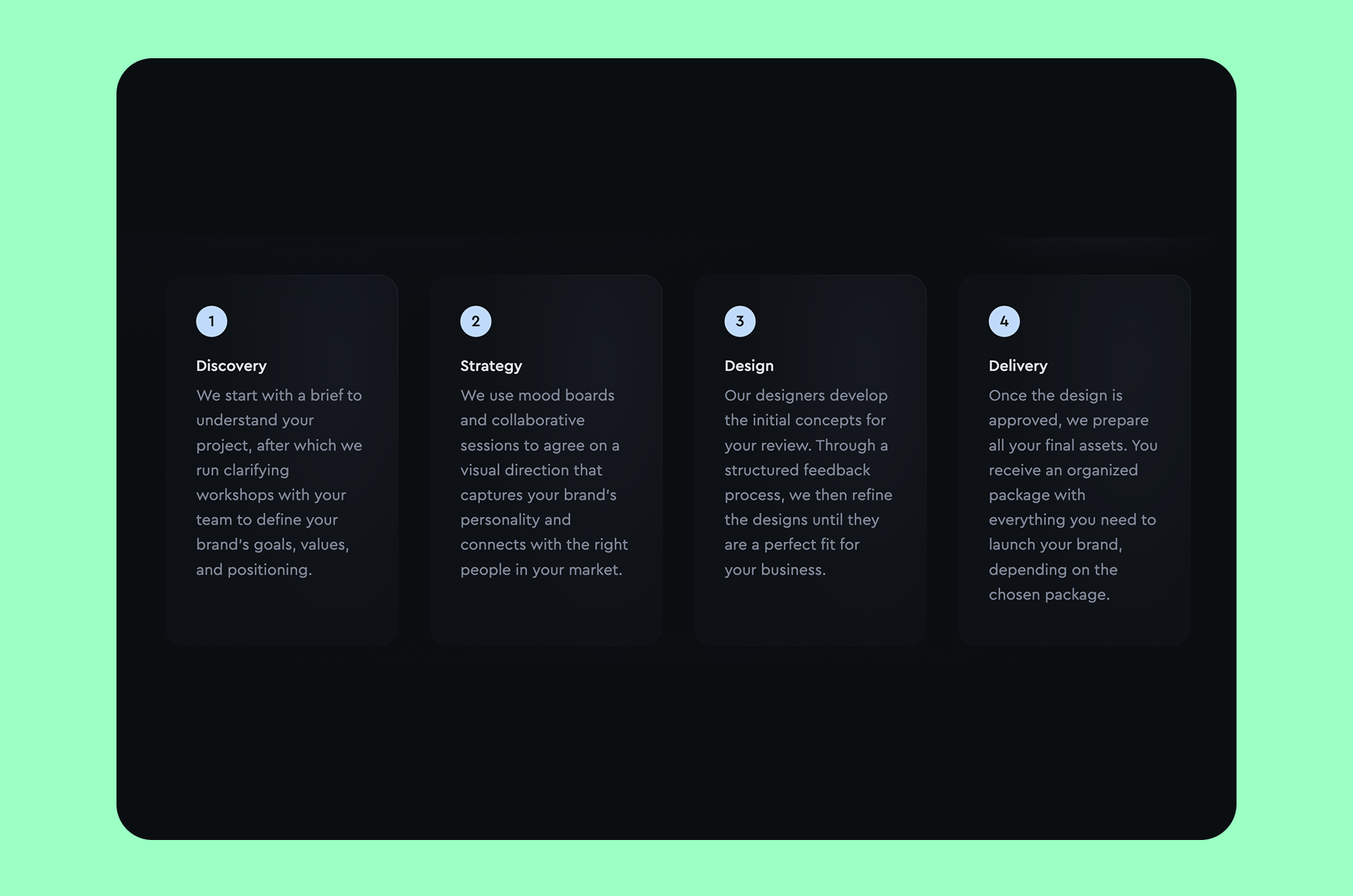
Our branding design step-by-step guide walks through the full process from discovery through delivery.
Relevant market context
A specialist design agency also brings context that a generalist often lacks. If a team has already worked across SaaS, fintech, AI, Web3, or healthtech, it will usually understand the category, common positioning, and credibility signals much faster. That does not replace research, but it does shorten the path to good decisions.
Evidence-led discovery
One of the clearest differences between a specialist and a surface-level agency is how they handle discovery. A specialist startup branding agency reframes your problem, maps constraints, and gathers evidence before making design decisions.
The final output of discovery is a problem-framing document, a set of constraints, research findings, and a clear plan for what to do next and what not to do.
Credibility and conversion
Startups often lose trust before they lose attention. People decide whether a company feels real, legitimate, and low-risk in a few seconds, often before they read much of the copy.
That is why it's too shallow to think of branding as just a visual layer. It actually sharpens the value proposition, lowers perceived risk, and makes the company easier and quicker to believe in.
Design systems
Specialists build reusable component libraries, patterns, and documentation because they anticipate scale.
Nielsen Norman Group defines a design system as a complete set of standards to manage design at scale using reusable components and patterns. However, design systems require sustained maintenance. Good specialists make this explicit and plan for adoption from the start.
Better handoff
A lot of branding work goes wrong after approval, not during design. Files are messy, usage rules are unclear, and the team ends up rebuilding assets from scratch.
Good design agencies reduce that risk with a cleaner handoff that has organized files, reusable components, clear rules, and designs that are easier to implement without losing the intent.
When hiring a startup branding agency actually pays off
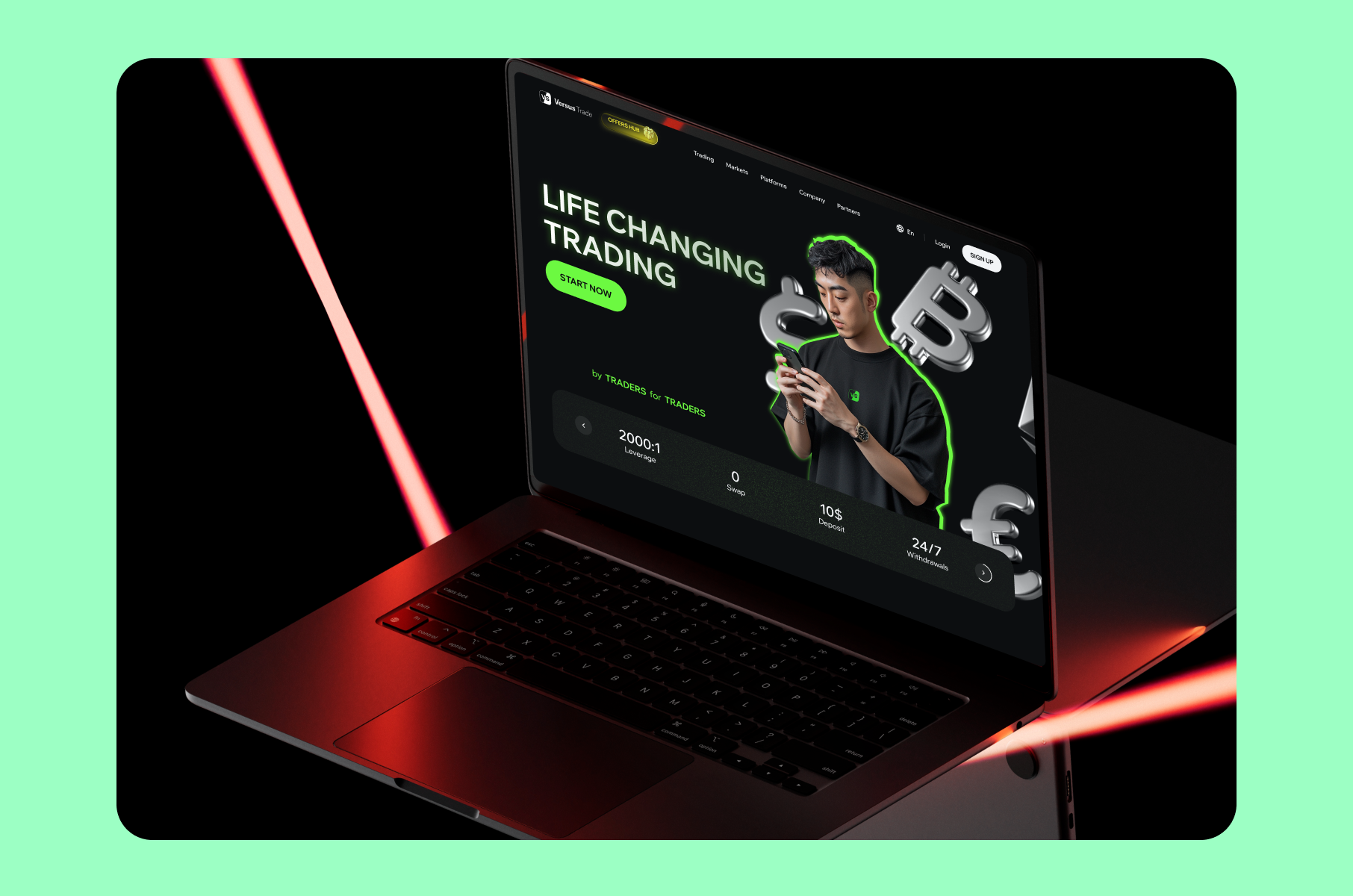
Three decision moments determine whether hiring a branding agency for startup companies makes financial sense. Each maps to a specific stage of company growth, and in each case, the return on a brand identity design investment is measurable.
Before fundraising or launch
Before fundraising, brand quality matters because investors form impressions quickly. 59% of investors even say that branding directly affects their perception of a startup's ability to scale.
The work of the branding agency here is typically focused and fast: a logo, a color system, typography, and enough mockups (a pitch deck, a landing page) to present a coherent story.
Branding services for startups at this stage should take two to four weeks and cost between $5,000 and $15,000, depending on scope.
After product-market fit, before scaling
The brand you taped together during your first sprint served its purpose. It got you to product-market fit. Now it starts working against you. Conversion rates on your marketing site plateau because the visual identity doesn't match the sophistication of your product. Hiring gets harder because top candidates Google you and see a brand that looks like a side project.
This is where a full identity system pays off. A brand strategy agency engagement at this stage typically includes competitive positioning, a complete visual identity, brand guidelines, and applied templates for marketing and product. Startups with strong visual identity report 23% higher valuations than those without.
During a pivot or market repositioning
The product evolves, but the brand still communicates the old story. This misalignment confuses existing customers and repels new ones. A pivot demands more than swapping a logo. It requires repositioning: new messaging, updated visual language, and a brand architecture that reflects where the company is headed rather than where it started.
Brand strategy agencies are equipped for this because they approach repositioning as a strategic exercise, not a visual refresh. They audit what's working, identify what's misaligned, and build a bridge between the old brand equity and the new direction.
When to Hire a Branding Agency (Decision Matrix)
Scenario | Typical trigger | What the engagement looks like | Expected outcome | Approximate budget |
Pre-fundraise / pre-launch | Demo day, investor meetings, or public launch in 4–8 weeks | Logo, color system, pitch deck skin, landing page mockup | Cohesive first impression that reduces perceived risk | $5,000–$15,000 |
Post-PMF scaling | Conversion plateau, hiring friction, enterprise partnership friction | Full identity system, brand guidelines, marketing templates | Brand that matches product maturity and supports growth | $10,000–$30,000 |
Pivot / repositioning | Product shifted but messaging and visuals still reflect old direction | Positioning audit, updated visual language, new brand architecture | Aligned brand that communicates the current and future product | $15,000–$50,000+ |
Startup branding agency vs. freelancer vs. in-house: an honest comparison
The right choice depends on your stage, budget, and what you actually need. A table below will help you quickly check and compare options.
Agency vs. Freelancer vs. In-House Comparison
Freelancer | In-House Designer | Startup Branding Agency | |
Typical cost | $2,000–$15,000 per project | $500,000+/year (full team) | $5,000–$50,000+ per project |
Timeline | 1–4 weeks | Ongoing | 1.5–8 weeks |
Strategy included | Rarely | Limited | Yes (positioning, competitive audit, verbal identity) |
Team composition | Single specialist | 1–4 roles (if budget allows) | Strategist + designer + copywriter |
External perspective | Varies | Low (too close to product) | High (cross-industry pattern recognition) |
Scalable system output | Logo and files | Ad hoc assets | Full brand system with guidelines |
Management overhead for founder | High (briefing, coordination) | Medium (hiring, onboarding) | Low (agency manages the process) |
Best for | Focused visual tasks, tight budget | Ongoing brand maintenance post-launch | Strategic brand creation or overhaul |
Cost
Specialist agencies and generalist agencies often fall in similar hourly bands ($100-$149/hr is common on Clutch). Freelancers are cheaper per hour, but the scope is narrower. In-house is a salary-level commitment plus ramp time.
Speed
Agencies are fast when the scope is contained, and decisions are rapid. Freelancers are fast for narrow deliverables but slow down when you need research, strategy, and system thinking from one person. In-house is slower initially but faster in the long term once embedded.
Quality
Specialist agencies are most reliable for complex, cross-surface work (brand, product, website). Freelancer quality varies widely. In-house quality can be excellent with strong senior talent and design ops.
Strategic depth
Specialists combine discovery, research, positioning, and measurable success criteria. Generalists are often strong in brand communications but weaker in product discovery. Freelancers tend to focus on execution rather than strategy unless you hire a senior strategic specialist.
Risk
Agency key risks are misfit, over-scoping, and "pitch team vs. delivery team." Freelancers' key risks are a single point of failure and inconsistent processes. In-house key risks are hiring the wrong level and under-supporting the design.
How to evaluate a startup branding agency
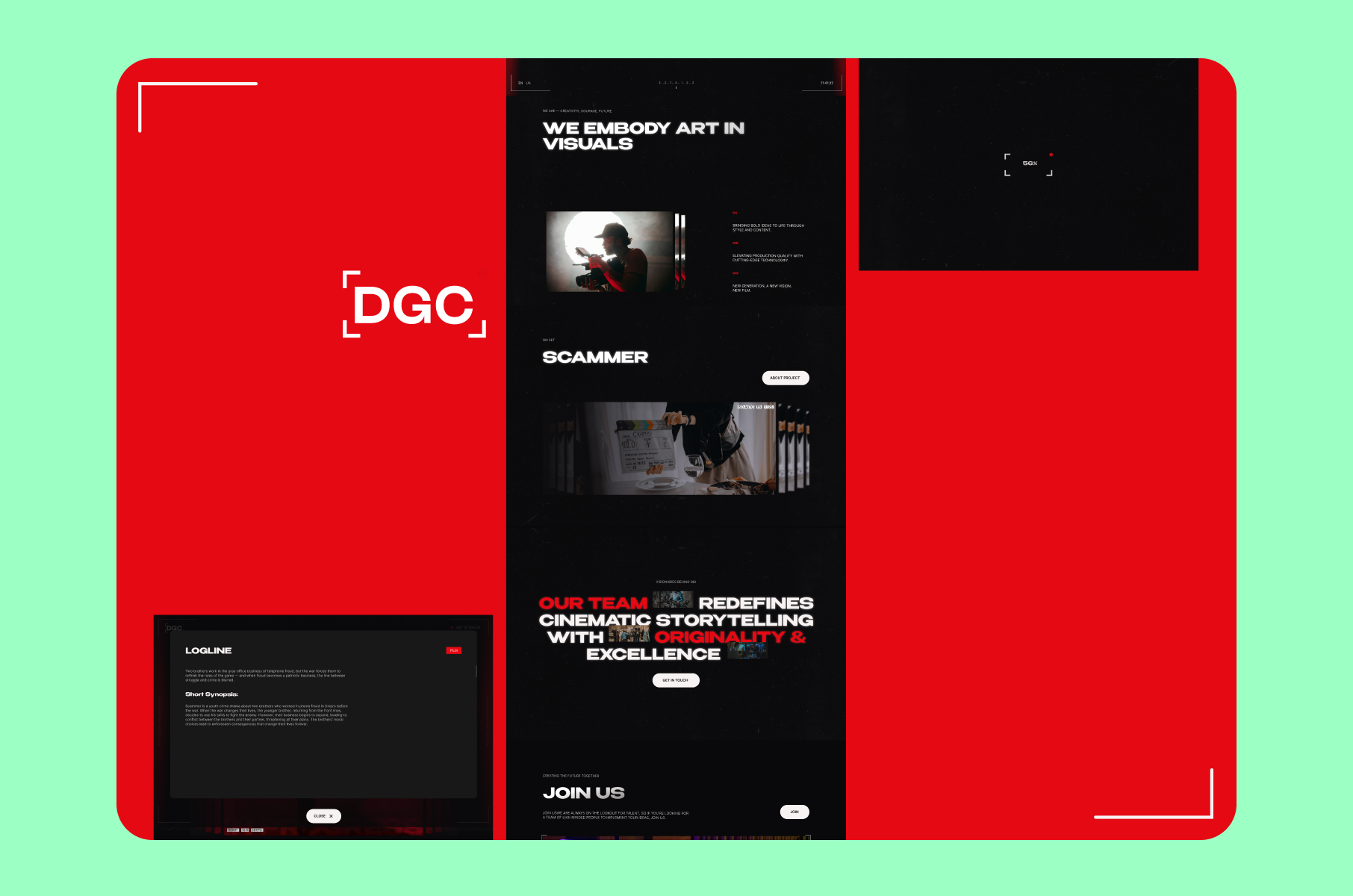
"Check their portfolio" is obvious advice. Here's what separates a strong startup branding agency from one that just looks good on its own homepage.
Strategy alongside visuals
The best branding agency options show their thinking, not just their output. Look for positioning documents, moodboards, competitive audits, and brand strategy frameworks in their case studies. The strategy artifacts reveal whether the agency understands why design decisions were made, not just what they produced.
Startups at your stage in their portfolio
Ask to see work from companies at your stage and in adjacent industries. The needs of a pre-seed startup, a post-PMF SaaS company, and a later-stage platform business are different. An expert agency should be able to show that it understands those differences and adjusts its process accordingly.
How they handle discovery
If an agency jumps straight into packages and pricing without asking about your audience, competition, or business goals, that's a red flag. A good product discovery phase involves hard questions about your positioning, your competitive environment, and who your brand is actually for. The briefing process reveals whether the agency treats branding as a strategic exercise or a production task.
Revision structure and turnaround times
Ask how revisions work before you sign. The number of revision rounds, the format for feedback, and the expected turnaround for each round should be defined up front. Agencies with clear revision structures deliver better work because the constraints force both sides to be deliberate about feedback.
Systems, not just files
The deliverable matters less than how it's organized. Better to have a smaller style guide with downloadable assets and clear usage rules than a huge brand book that nobody opens. The branding companies for startups that deliver the most value organize their output for actual use, not for a portfolio screenshot.
How to work with a startup branding agency (from both sides)
The quality of a branding project depends on the client almost as much as it depends on the agency. The best work usually comes from a simple setup: one decision-maker, honest input early, clear feedback, and enough trust to let the process work.
The client side
Appoint one decision-maker.
This does not mean other people cannot give input. It means one person owns the brief, consolidates feedback, and makes the final call. Without that, the project slows down, and the work gets watered down.
Be honest during discovery.
If you hate the current logo, say so. If a co-founder has a strong preference that could shape the direction, it's better to find that out early. Hidden opinions have a way of showing up late, when they are more expensive (e.g, they can waste revision rounds).
Trust the process through the uncomfortable middle.
Early concepts can feel wrong. That's normal. The first round of brand exploration is meant to test directions, not deliver finished work. Instead of pixel-level demands, share your reactions and offer direction. (see some examples in the table below)
Respond quickly.
Delayed feedback kills momentum and stretches timelines. Set an internal deadline for consolidating feedback and stick to it. If you need more time, tell the agency upfront so they can adjust the schedule.
How to Give Effective Brand Feedback (Client Cheat Sheet)
Instead of this | Try this | Why it works |
"I don't like it." | "This feels too corporate for our developer audience." | Gives the agency a direction to adjust toward |
"Make the logo bigger." | "The logo feels lost on this page. Can we test a version where it's more prominent?" | Describes the problem, not the pixel-level fix |
"Can you make it pop more?" | "The color palette feels muted compared to competitors like X and Y." | Provides a concrete reference point |
"My co-founder thinks the font is wrong." | "We tested this with three team members, and all felt the typography felt too formal for our brand personality." | Consolidates feedback into one directional note |
"I liked the first version better." | "The first version felt warmer and more approachable. Can we keep that tone while incorporating the structural changes from v2?" | Identifies what specifically worked and what to preserve |
Sending feedback from 5 different people in 5 different emails | One consolidated document from a single decision-maker within 3–5 days | Avoids contradictory direction and keeps the project on schedule |
The agency side
The best branding agency startups can hire will:
- Push back when the brief is misaligned with market reality.
- Present rationale alongside every concept. Not just "here's option A and option B" but "here's why option A solves your positioning problem and option B optimizes for a different audience."
- Prototype in context, showing the logo on a real app screen or a product landing page rather than isolated on a white background.
The best agencies want your input at key decision points and balance their expertise with your knowledge of the product.
N.B If you want to know more about the verbal side of brand identity, our guide on website copy and brand strategy covers why messaging consistency matters as much as visual consistency.
What deliverables should you expect?
Many founders think they are buying a logo. The actually useful part of a branding engagement is the system around it: the rules, assets, and applied examples that help the brand stay coherent once the work leaves Figma.
Here are the typical deliverable tiers and what each component is for.
Branding Deliverable Tiers
Deliverable | Logo Package | Full Identity System | Complete Brand Concept |
Primary logo + variations | ✓ | ✓ | ✓ |
Custom color palette | ✓ | ✓ | ✓ |
Logo usage guide | ✓ | ✓ | ✓ |
Typography system | — | ✓ | ✓ |
Custom graphic elements (patterns, icons, illustration style) | — | ✓ | ✓ |
Brand book/guidelines | — | ✓ | ✓ |
Social media templates | — | ✓ | ✓ |
Website concept mockups | — | — | ✓ |
App UI screen concepts | — | — | ✓ |
Pitch deck template | — | — | ✓ |
Marketing collateral mockups | — | — | ✓ |
Motion design direction | — | — | Sometimes |
Typical cost | $3,000–$7,000 | $7,500–$20,000 | $11,500–$50,000+ |
Typical timeline | 1–3 weeks | 2–4 weeks | 4–6 weeks |
Focused logo package
This is the minimum viable brand. It typically includes a primary logo, logo variations (horizontal, stacked, icon-only), a custom color palette, and a short logo usage guide. This works for very early-stage companies that need to look credible without investing in a full system.
Expect to pay $3,000 to $7,000 and receive delivery in one to three weeks.
Full identity system
A full identity system adds typography selection, custom graphic elements (patterns, icons, illustration style), a comprehensive brand book, and social media templates.
Budget $7,500 to $20,000 with a timeline of two to four weeks.
Complete brand concept
The most comprehensive tier adds applied mockups: website concepts, app UI screens, marketing collateral, pitch deck templates, and sometimes motion design.
It's the tier that makes the biggest difference for startups heading into a fundraise or major launch because investors and partners see a company that looks operational, not theoretical.
Merge's startup branding package includes all of this + delivery in four to six weeks.
Red flags
These warning signs apply whether you're evaluating branding startups, established firms, or anything in between:
Red Flags vs. Green Flags When Evaluating an Agency
Red Flag | What it signals | Green Flag (the opposite) |
No discovery phase | They treat branding as production, not strategy | Structured discovery with stakeholder interviews and competitive review |
No written strategy before design | Design decisions lack a strategic foundation | Brand strategy document delivered before any visual work begins |
Pricing with no scope definition | Risk of scope disputes and hidden costs | Itemized scope with clear deliverable list per tier |
"Unlimited revisions" | No structured feedback process | Defined revision rounds (typically 2–3) with a clear feedback format |
Portfolio only shows large enterprises | They lack startup-specific experience | Case studies from companies at your stage and in adjacent industries |
Logo treated as the entire deliverable | You're buying graphic design, not a brand system | Deliverables include brand book, templates, and applied mockups |
Can't explain design rationale | Decisions are arbitrary, not strategic | Every concept presented with written rationale tied to positioning |
What to do
Hiring a startup branding agency isn't automatically the right move for everyone. For some companies, a freelancer is enough. For others, in-house makes more sense later. But when the problem is not just visual, a strong specialist agency can give a startup something much more useful than a new logo: a brand system that helps the company look credible and stay coherent as it grows.
Choose a partner with genuine startup experience, then be the kind of client that brings out their best work.
If you're ready to explore what working with a branding agency for startups looks like in practice, Merge's branding services for startups are built for the exact scenarios this article covers, from pre-seed logo packages to full identity systems for growth-stage companies.
FAQ
What does a startup branding agency do?
A startup branding agency develops brand strategy, visual identity, and brand systems tailored to early-stage and growth-stage companies. This includes competitive positioning, logo design, color and typography systems, brand guidelines, and applied mockups for marketing and product. The key difference from generalist agencies is speed, startup-specific expertise, and deliverables designed to scale.
How much does a startup branding agency cost?
Costs range from $3,000 to $50,000+, depending on scope. A focused logo package runs $3,000 to $7,000. A full identity system costs $7,500 to $20,000. A comprehensive brand strategy engagement with applied concepts, website mockups, and extended deliverables can reach $50,000 or more at premium firms. Merge's branding agency packages start at $5,000 for a logo-level engagement.
When should a startup hire a branding agency?
The three highest-ROI moments are before fundraising (brand perception affects investor decisions), after reaching product-market fit (when the original brand starts limiting growth), and during a pivot or repositioning (when the brand no longer reflects the product).
What's the difference between a branding agency and a freelance designer?
A brand-building agency provides strategy and execution through a multi-disciplinary team, typically a strategist, designer, and sometimes a copywriter. A freelance designer provides execution in a single discipline. Agencies are the better choice for strategic branding work that includes positioning, competitive differentiation, and a complete identity system. Freelancers work well for focused visual deliverables when the strategy is already defined.
What deliverables should I expect from a branding engagement?
At minimum: a logo with variations, a color palette, and usage guidelines. A full engagement adds typography, graphic elements, a brand book, and applied templates. Premium engagements include website and app concepts, pitch deck templates, social media kits, and sometimes motion design. Always confirm deliverables in writing before the project starts.
How long does a startup branding project take?
Focused logo projects take one to three weeks. Full identity systems take two to six weeks. Comprehensive brand concepts with applied mockups and strategy take four to eight weeks, depending on the agency and scope. Startup branding agencies typically work faster than generalist firms because their process is built for startup timelines.